




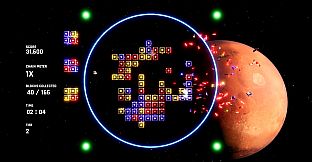
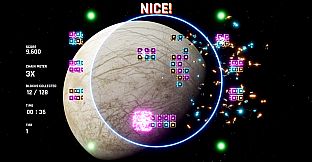
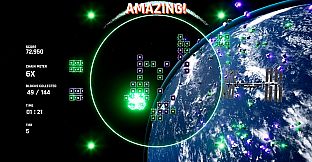
Aurora Sol is a zero-gravity puzzle game developed for PC that places players in the role of a Space Salvager navigating the solar system. The core experience centers on clearing drifting debris and compounds inside specialized spheres while progressing through stages set against authentic NASA imagery of planets and moons. Released as an indie title in the casual genre, it emphasizes deliberate block placement and chain reactions rather than traditional falling-piece mechanics.
Gameplay
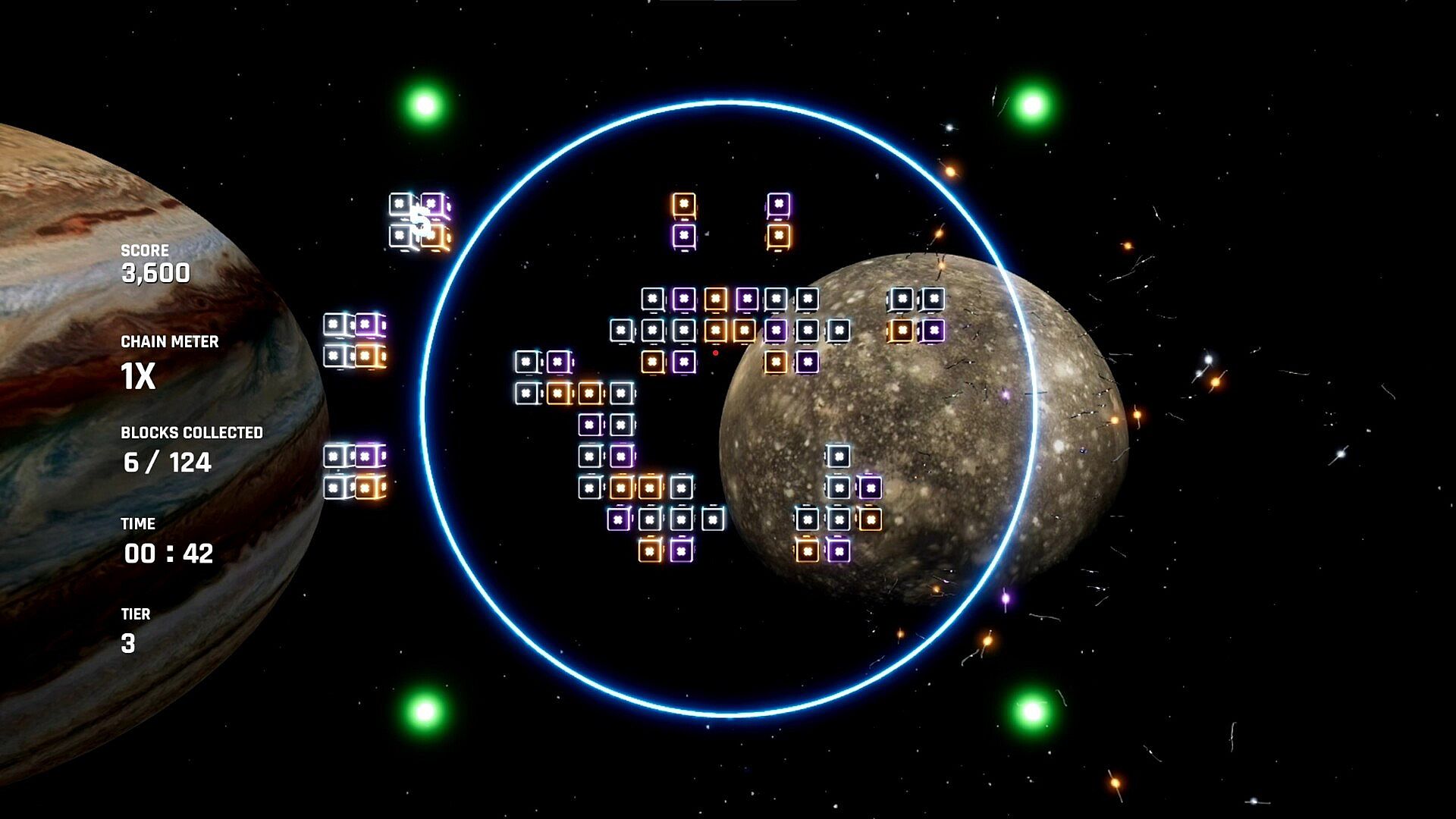
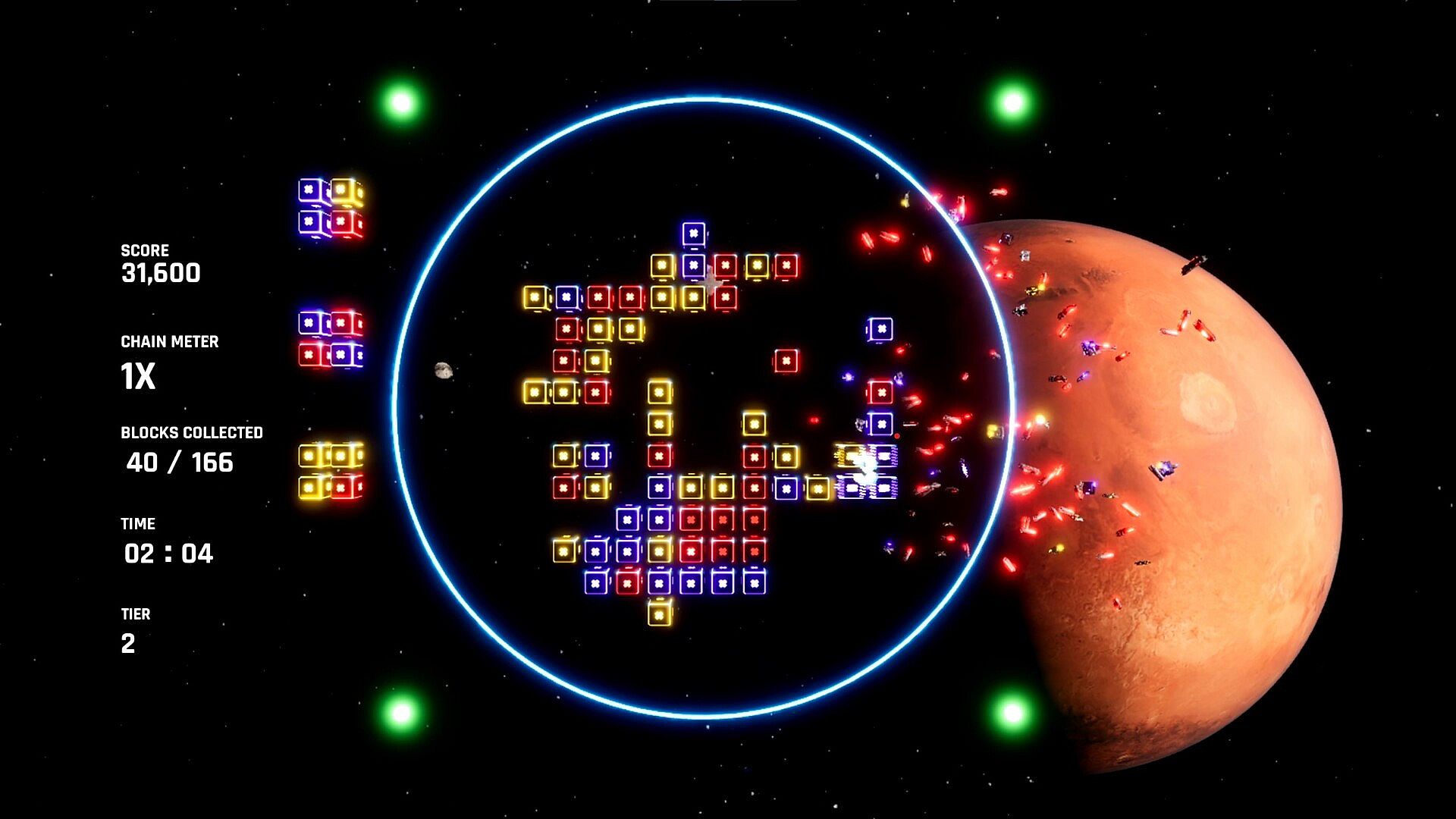
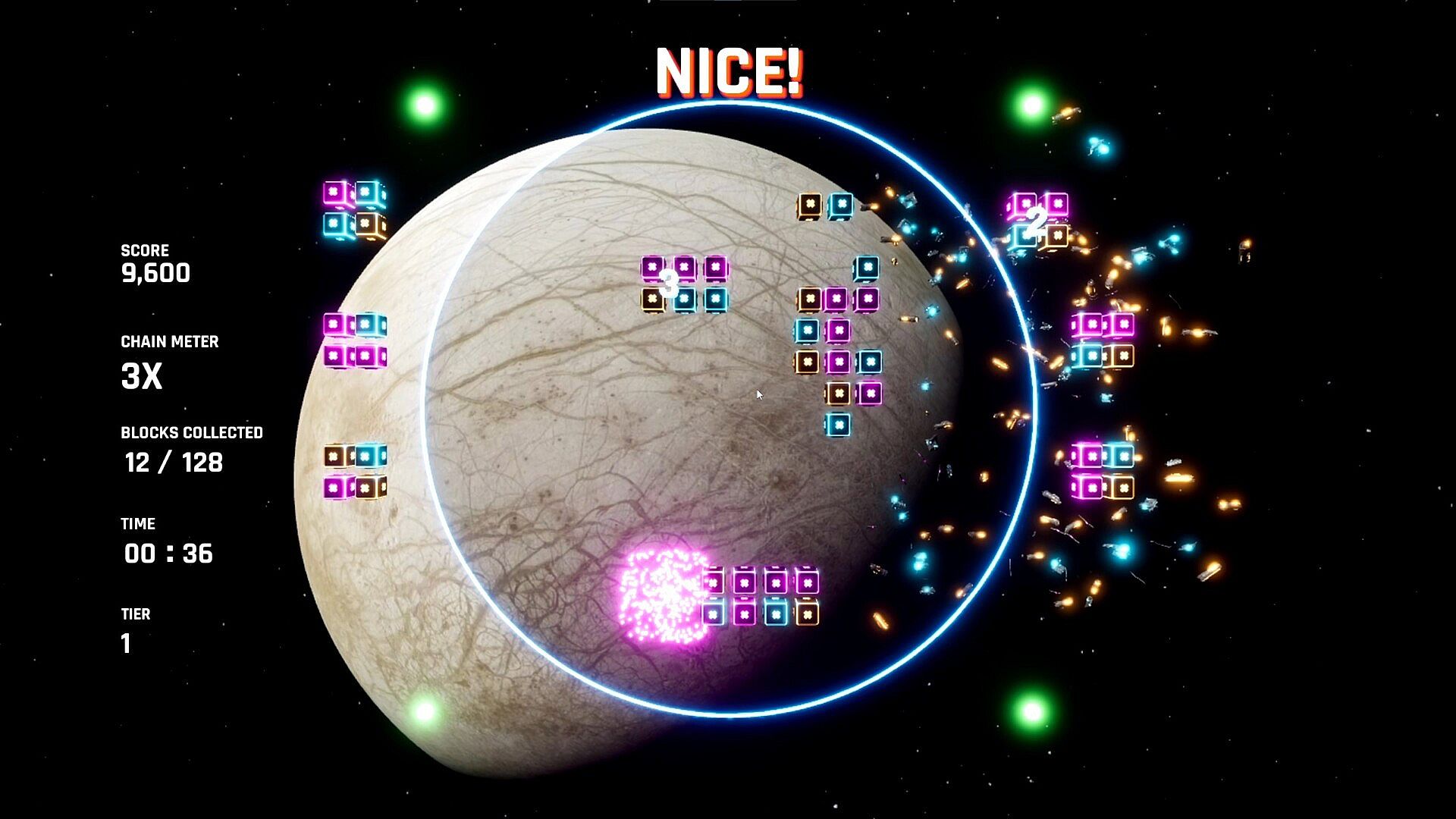
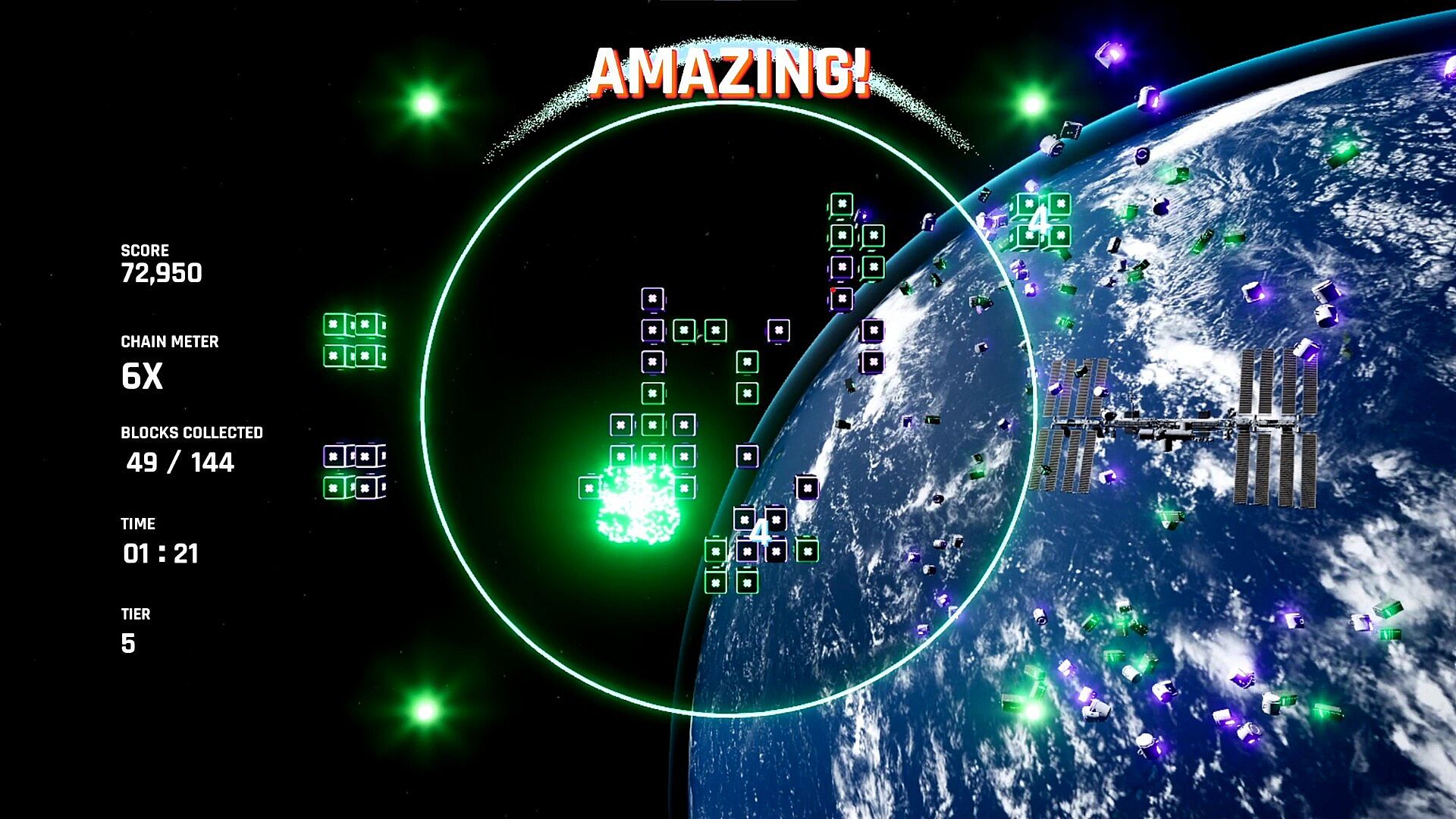
The central loop revolves around guiding bundles of colored blocks into an AURA sphere. Unlike conventional puzzle titles where gravity dictates downward movement, blocks here drift in the chosen direction until redirected. Players tap controls to steer a bundle, positioning it precisely so it remains suspended in place. Touching the sphere's boundary ends the attempt, which demands careful path planning across the open space.
Activations form the scoring foundation. Aligning four blocks of matching color into a square triggers an ignition and countdown timer. During this window, additional matching squares can extend the cluster to extend the timer. Completion clears the entire group at once. Successive activations without interruption create chains, while incorporating multiple colors amplifies the rewards. This system rewards foresight in placement and timing over rapid reflexes.
Entry flexibility adds another layer. Bundles approach from any of the four corners, each offering two possible drift directions upon entry. A Switcheroo rotation lets players adjust the approach angle before commitment, granting a score multiplier for optimal use. The combination of drifting physics, timed activations, and directional choice creates a methodical yet engaging rhythm distinct from gravity-based puzzles.
Game Modes
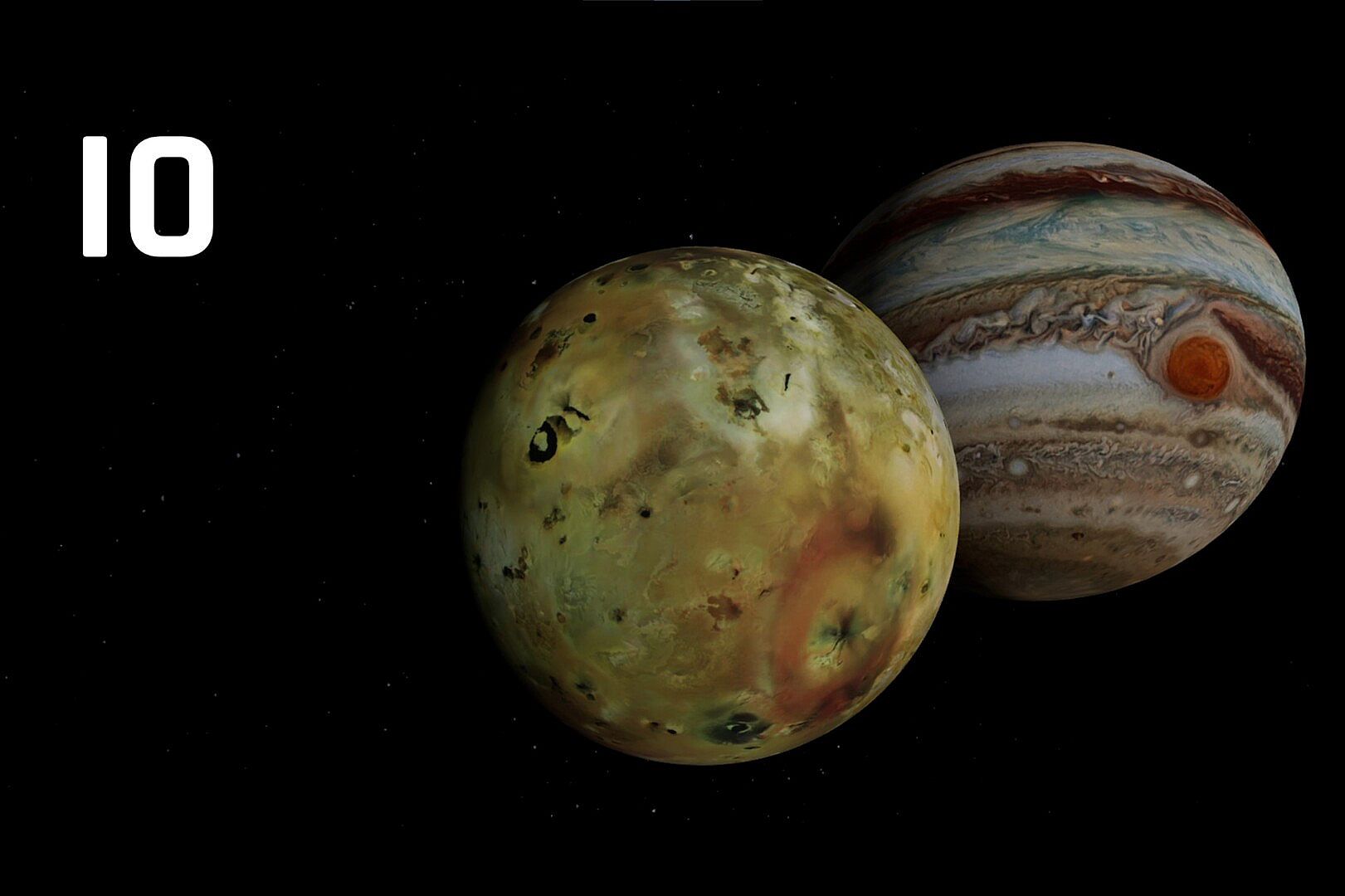
Single-player sessions form the primary experience, guiding the salvager outward from Earth through increasingly distant stages. Each stage incorporates real solar system visuals, from Jupiter's storms to Saturn's rings and Enceladus's cryovolcanoes, while an original soundtrack supports the atmosphere.
Salvage Battles provide the confirmed competitive option. Two players share a single sphere in local play, each controlling separate corners. The objective is to clear a target number of blocks faster than the opponent. This head-to-head format emphasizes efficient chaining and spatial awareness within the shared zero-gravity environment. Online PvP support appears in the feature list, though detailed implementation centers on the local battle structure.
Optional VR integration expands immersion for compatible headsets. The perspective shift allows players to inhabit the salvager role more directly amid the planetary backdrops, though standard display play remains fully supported.
Setting and Progression
The narrative frames the player as a salvager accused in a Kessler syndrome incident that isolated Earth from space access. Clearing wreckage across stages serves both practical resource conversion through AURA spheres and investigative purposes. Stages advance outward, revealing solar system details through NASA-sourced visuals without altering core mechanics.
Resource themes tie into the AURA Initiative, where collected materials undergo thermal plasma pyrolysis for usable output. This backdrop motivates continued play across the solar system's edge without introducing separate progression systems or factions beyond the salvager role.
Is It Worth Playing?
Aurora Sol targets players who enjoy thoughtful puzzle mechanics with a spatial twist. The zero-gravity drifting and activation chaining reward planning and precision, suiting those drawn to indie casual experiences over high-intensity action. Local Salvage Battles add replay value for shared sessions, while VR support offers an alternative viewpoint for headset owners.
The game remains in a pre-release state with no user reviews available yet. Public showcases have highlighted its relaxing qualities and distinctive soundtrack. Those seeking a fresh take on block-based puzzles set against real astronomical imagery will find the verified systems align well with that interest. Availability on PC with cross-platform considerations for VR makes it accessible once launched, particularly for fans of deliberate, chain-building gameplay.