






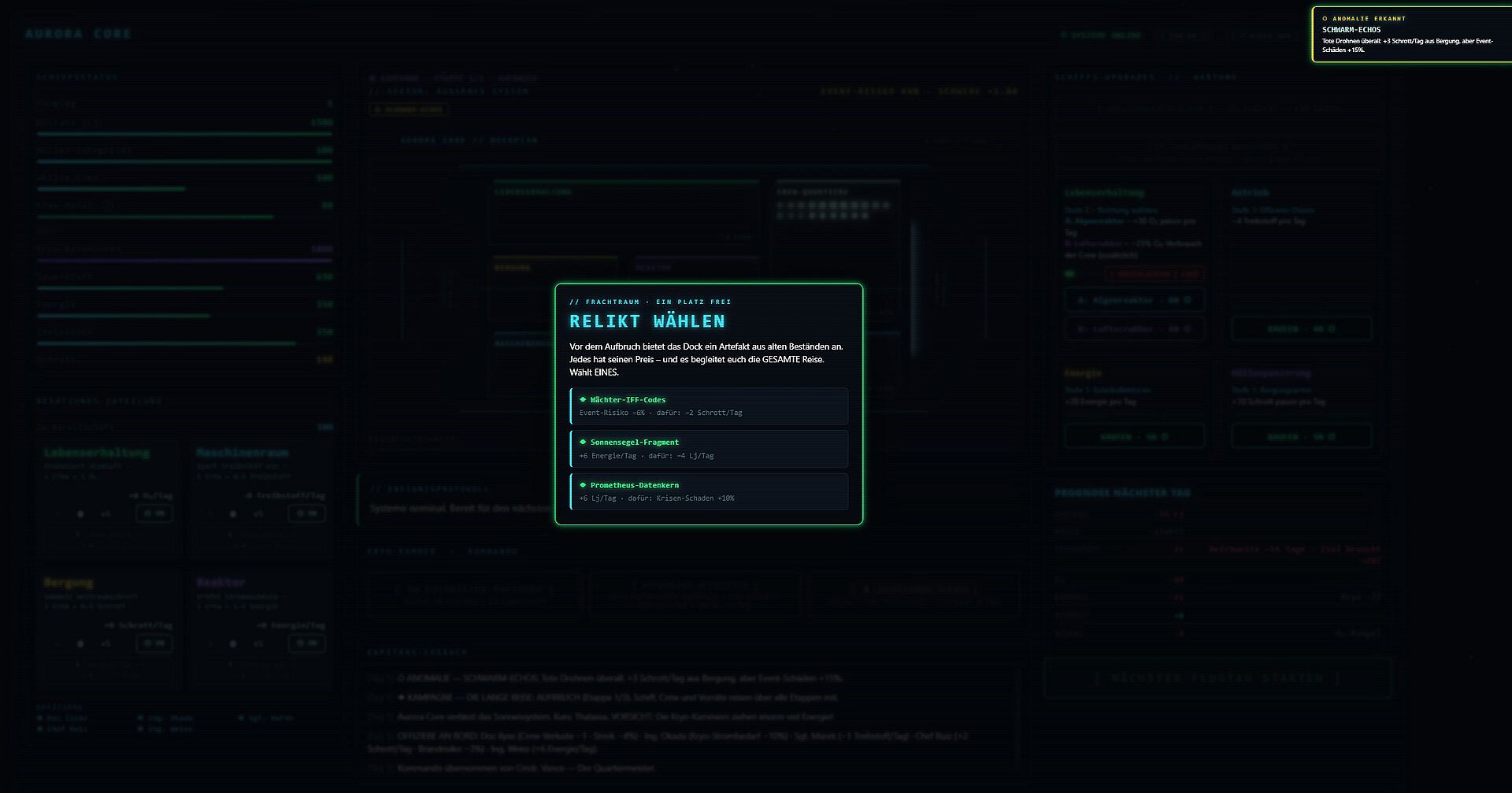
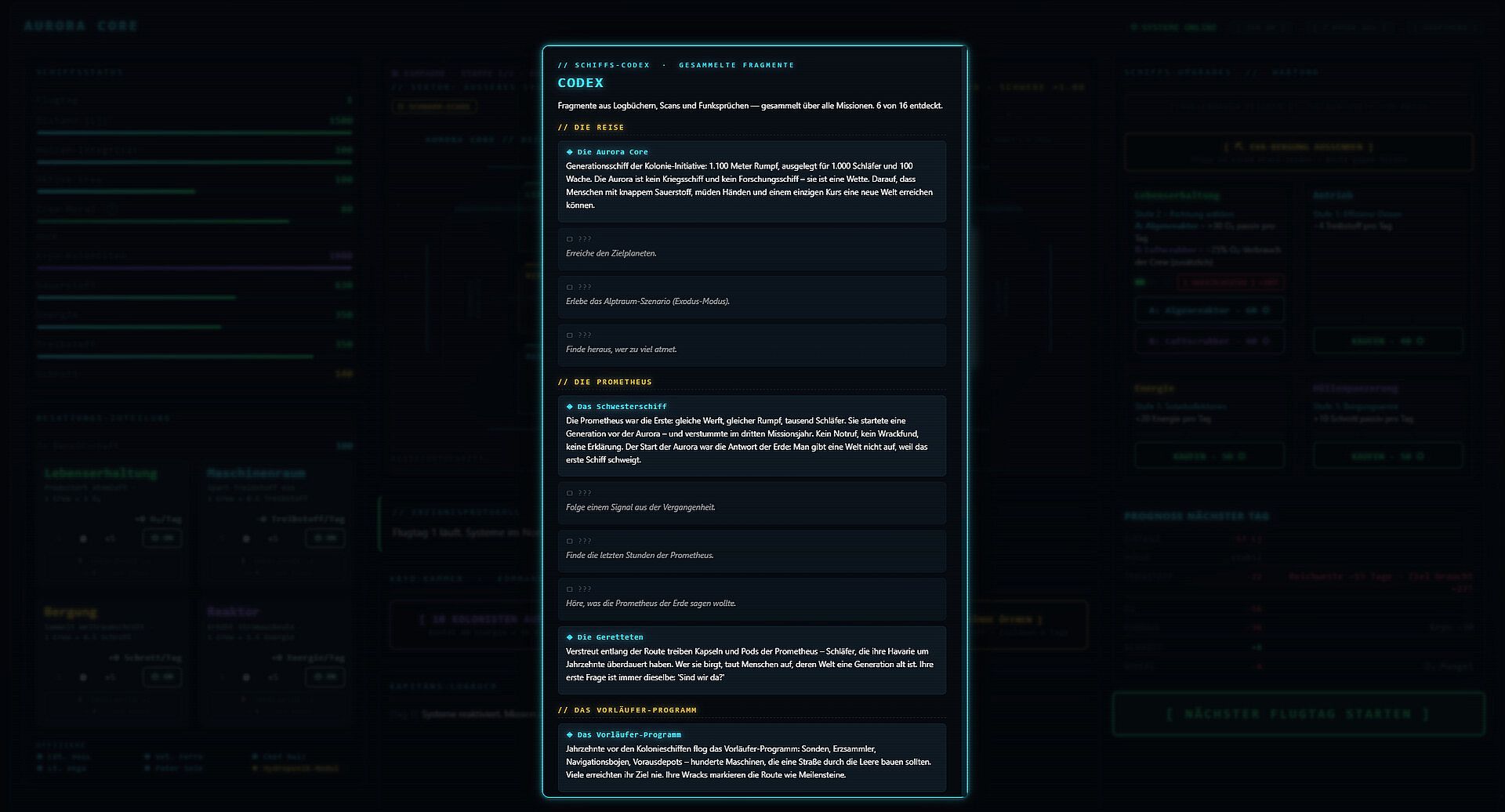
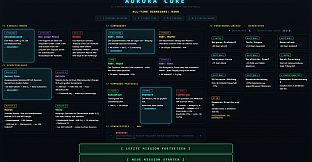
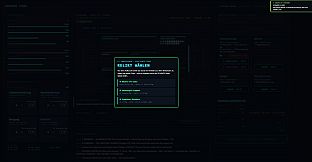
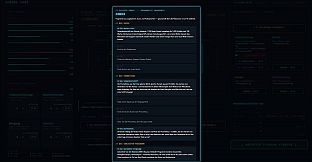
Aurora Core é um jogo indie de simulação estratégica que coloca o jogador no comando de um posto avançado espacial remoto, onde a sobrevivência depende do gerenciamento de sistemas em falha por meio de uma interface de terminal em texto. Em vez de assumir o papel de piloto ou explorador, o jogador atua como operador de sistemas, emitindo comandos pelo teclado para equilibrar recursos escassos enquanto a estação permanece isolada. O foco está na tomada de decisões deliberadas, já que cada ação afeta diretamente o fornecimento de energia, o suporte de vida e a integridade estrutural.
Gameplay
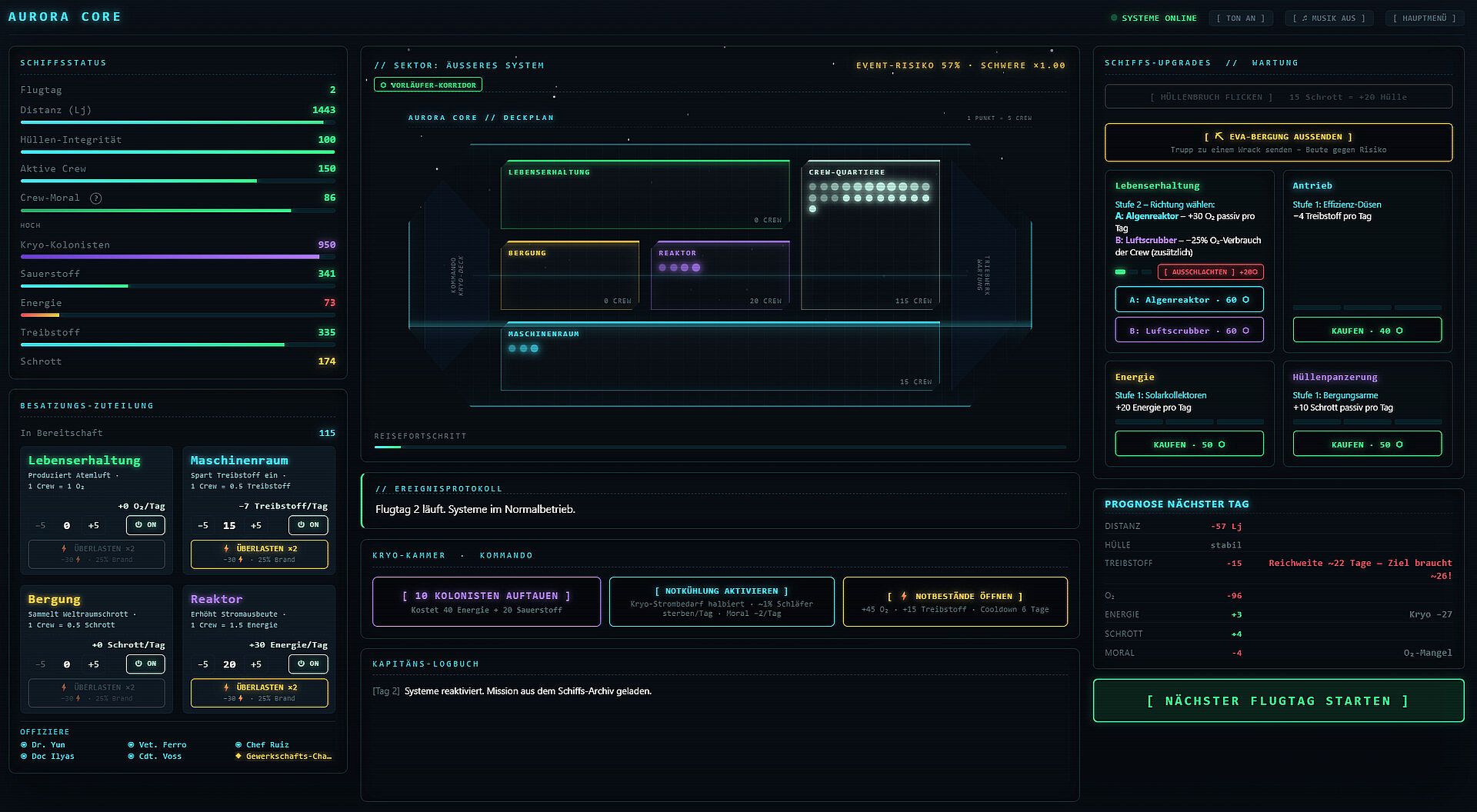
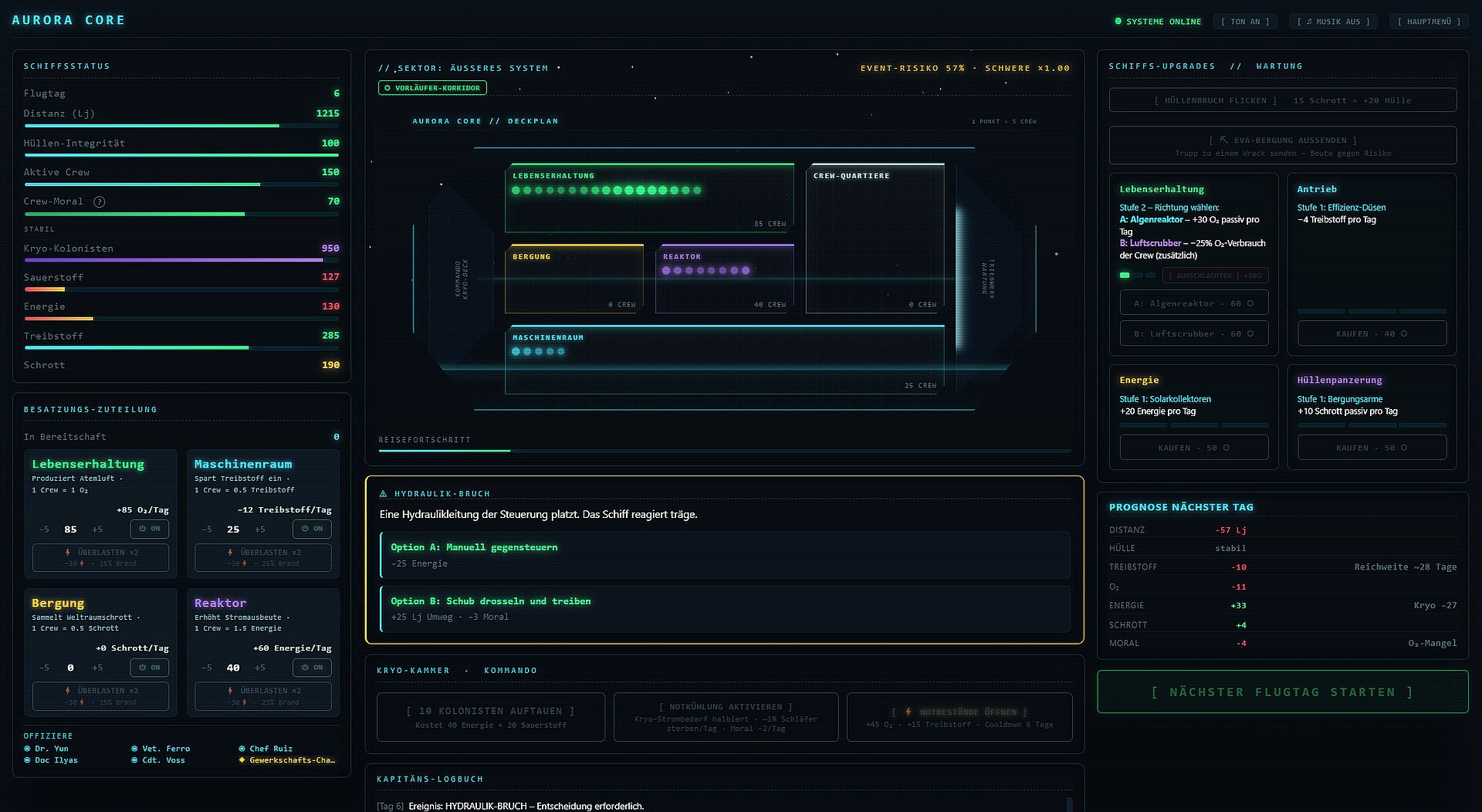
O ciclo central consiste em monitorar e ajustar as funções críticas da estação em tempo real. Recursos como energia, oxigênio, combustível e escudos diminuem continuamente, exigindo trocas constantes. Desativar a gravidade artificial pode economizar energia para os sensores, mas aumenta os riscos para a tripulação e os equipamentos. A interface minimalista em 2D apresenta todas as informações por meio de linhas de texto, registros de erro e relatórios de status, exigindo que o jogador interprete os dados rapidamente e responda antes que falhas em cadeia ocorram.
Pane nos sistemas adicionam tensão ao gameplay. Reatores superaquecem, tubulações rompem e a IA de bordo age de forma imprevisível. O jogador analisa os relatórios para identificar problemas e aplicar contramedidas, como redirecionar energia ou iniciar sequências de desligamento. Isso cria um ritmo de observação, análise e entrada precisa, que recompensa o planejamento cuidadoso e a adaptação rápida. A narrativa surge de forma orgânica por meio de diários de bordo, transmissões de rádio e alertas de sistema, revelando detalhes sobre a missão e o estado da estação sem recorrer a cutscenes ou dublagem.
Os visuais são propositalmente retrô e funcionais. A interface imita uma tela de terminal antiga, sem gráficos elaborados que desviem a atenção do texto e dos números. O design de som prioriza zumbidos ambientes e alertas que reforçam a sensação de uma nave em colapso. O resultado é uma simulação íntima e concentrada, onde a atenção do jogador permanece focada no console e nas escolhas que ele exige.
Game Modes
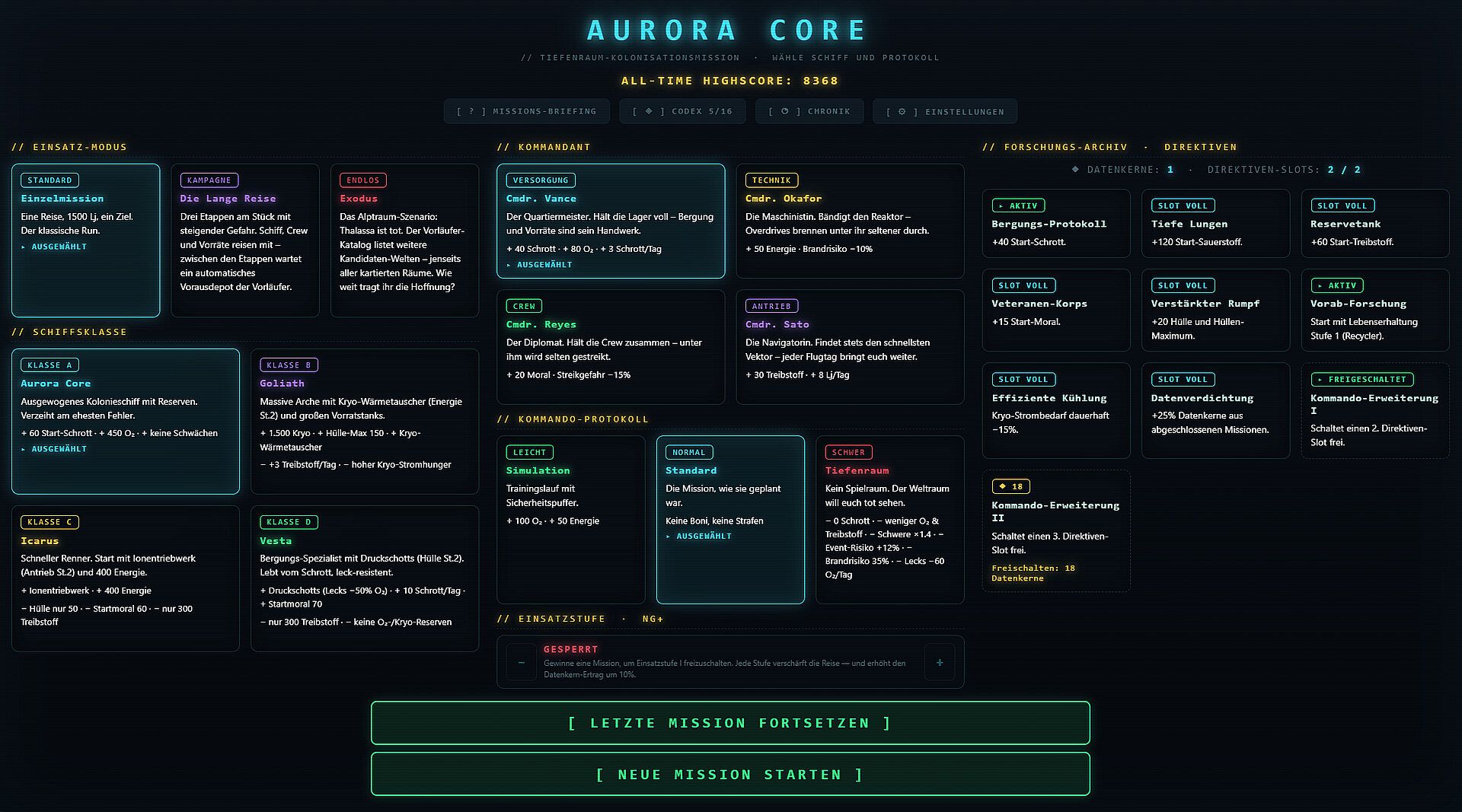
Aurora Core se concentra em um único cenário de sobrevivência contínuo, sem modos distintos. Toda a experiência se desenrola em uma sessão ininterrupta de gerenciamento da estação, com a dificuldade aumentando conforme os sistemas falham e os recursos escasseiam. Não há ramificações de campanha, arenas competitivas ou opções cooperativas confirmadas. O progresso vem da extensão da vida operacional da estação por meio de melhor alocação de recursos e resolução mais rápida de problemas, em tentativas repetidas ou sessões mais longas.
O jogador pode ajustar condições iniciais ou parâmetros de dificuldade, se disponíveis na configuração do terminal, mas o desafio fundamental permanece o mesmo: manter os sistemas centrais estáveis pelo tempo necessário para descobrir mais da narrativa em desenvolvimento. Essa estrutura agrada quem prefere um engajamento profundo e contínuo com as mecânicas em vez de variedade de formatos.
Atmosphere and Narrative Delivery
A narrativa do jogo depende de métodos indiretos que combinam com a interface de terminal. Mensagens recebidas e registros automatizados transmitem uma sensação de isolamento e crescente desespero sem exposição explícita. Cada nova transmissão ou atualização de status pode alterar prioridades, transformando manutenção rotineira em respostas urgentes. Essa abordagem constrói tensão gradualmente, permitindo que o jogador monte o quadro maior a partir de informações fragmentadas.
Som e texto se combinam para criar um ambiente claustrofóbico. A ausência de espetáculo visual mantém o foco nos fluxos de dados e no peso de cada comando. Com o tempo, padrões nas falhas e comunicações sugerem problemas mais profundos com a IA da estação e ameaças externas, incentivando múltiplas partidas para explorar diferentes estratégias de resposta e seus desfechos narrativos.
Is It Worth Playing?
Aurora Core atrai principalmente jogadores que apreciam simulações hardcore de gerenciamento de recursos e experiências baseadas em texto. Seu ponto forte está na integração entre mecânicas e atmosfera, onde cada decisão parece relevante e a apresentação retrô reforça o tema de isolamento. Quem busca ação acelerada ou mundos expansivos provavelmente achará o ritmo e a interface muito limitantes.
O jogo oferece um teste puro de raciocínio sistêmico e atenção aos detalhes. O sucesso depende de reconhecer padrões nas falhas e otimizar recursos limitados sob pressão. Para fãs de títulos indie de estratégia que priorizam profundidade de simulação em vez de valores de produção, ele entrega um desafio focado e com alto potencial de repetição. Disponível no PC, é acessível para quem tem interesse em jogos minimalistas de gerenciamento sci-fi, embora sua natureza exigente o torne mais adequado para sessões dedicadas do que para jogatina casual.