




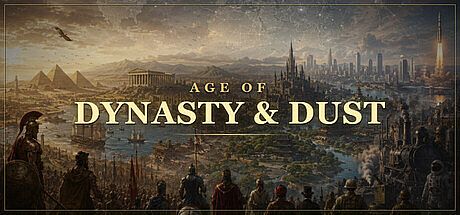


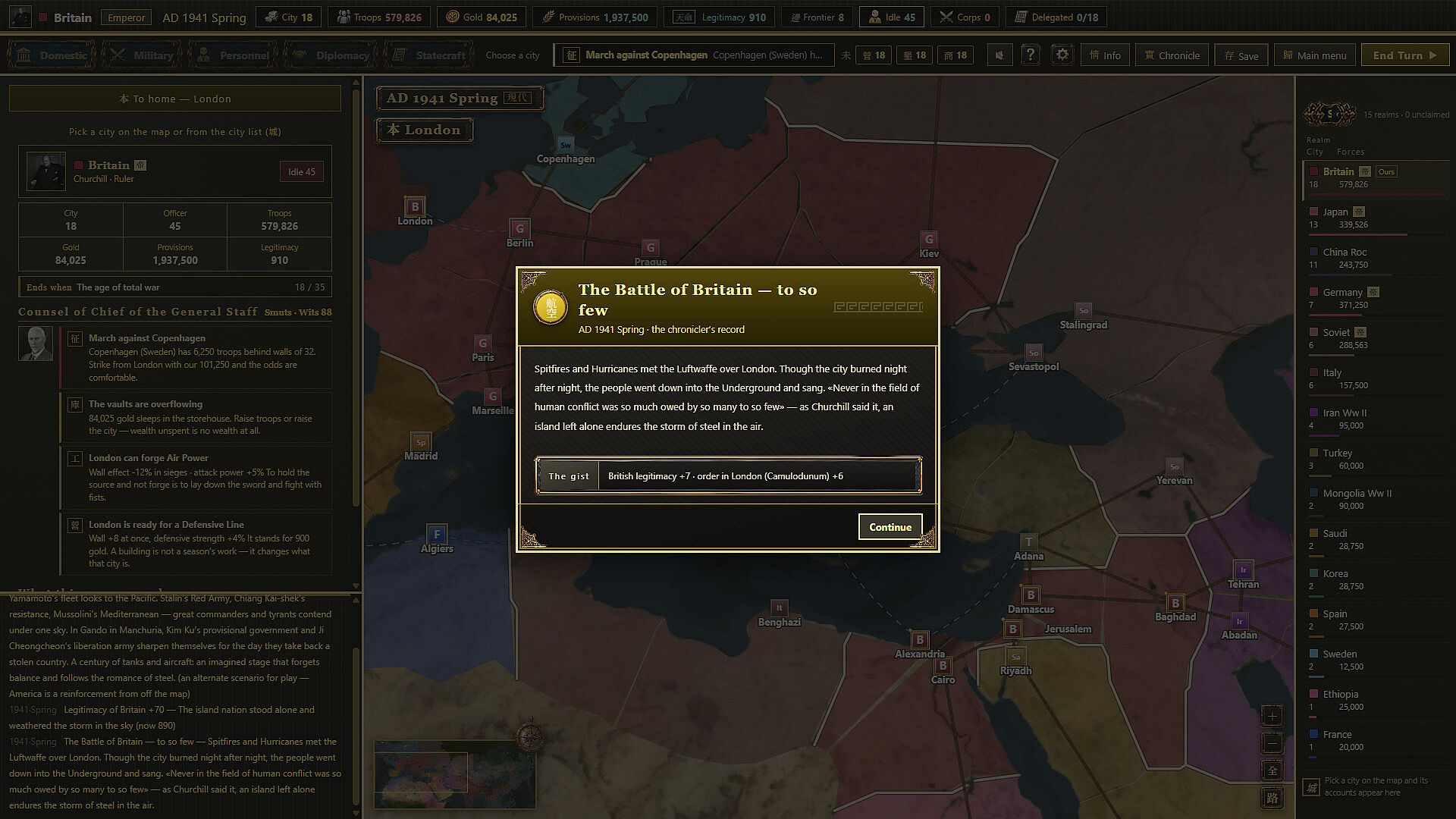
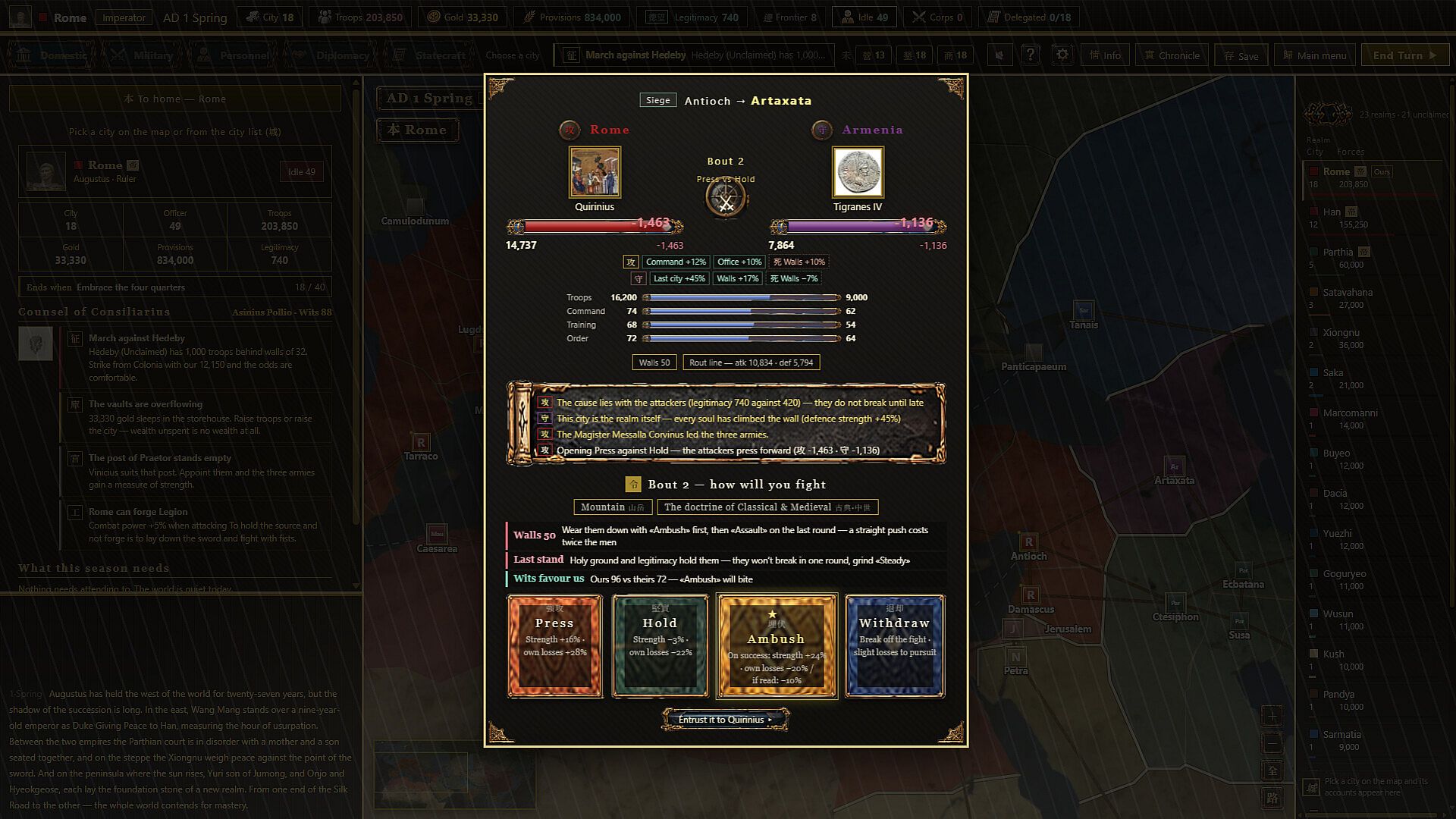
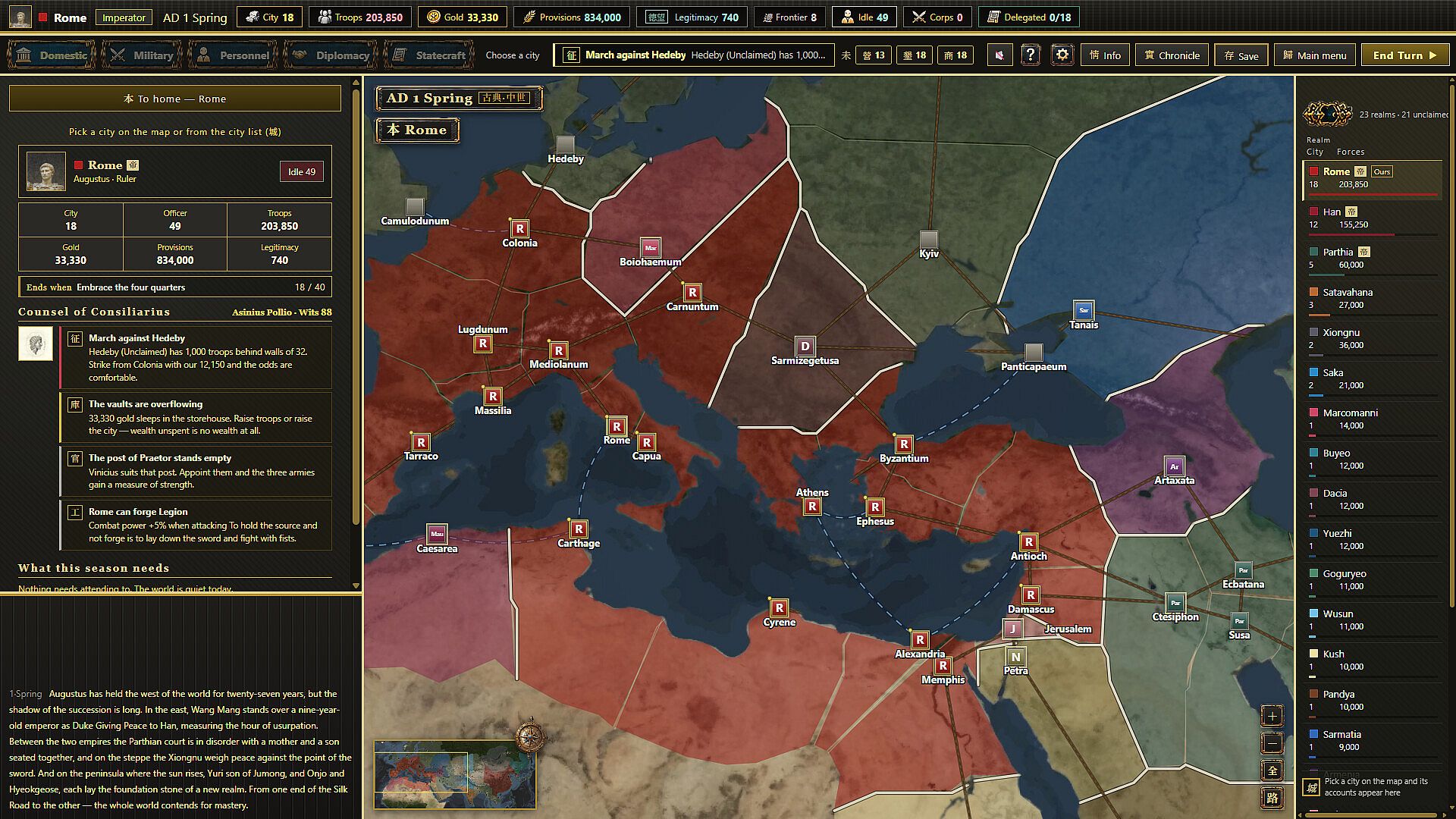
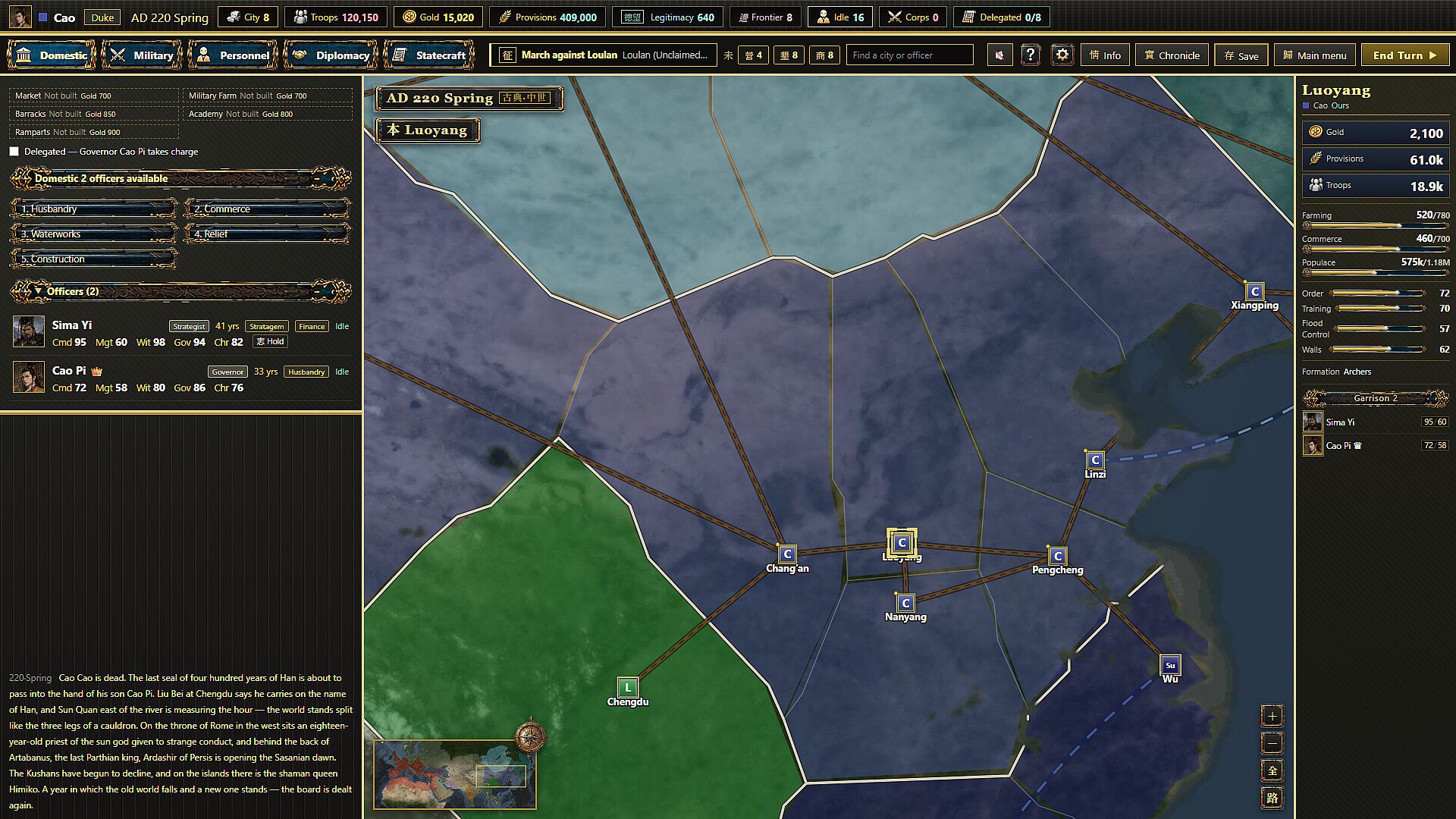
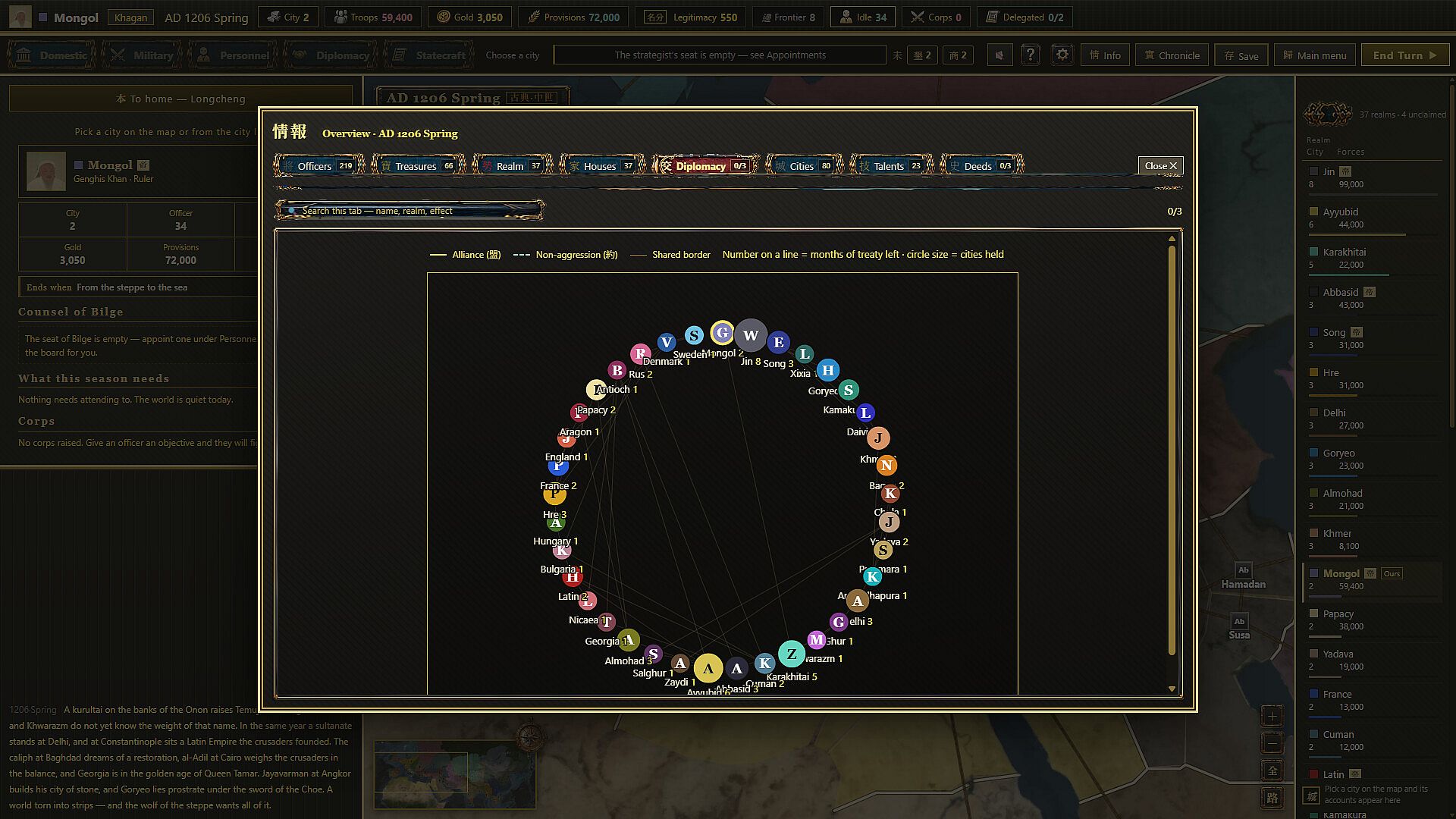
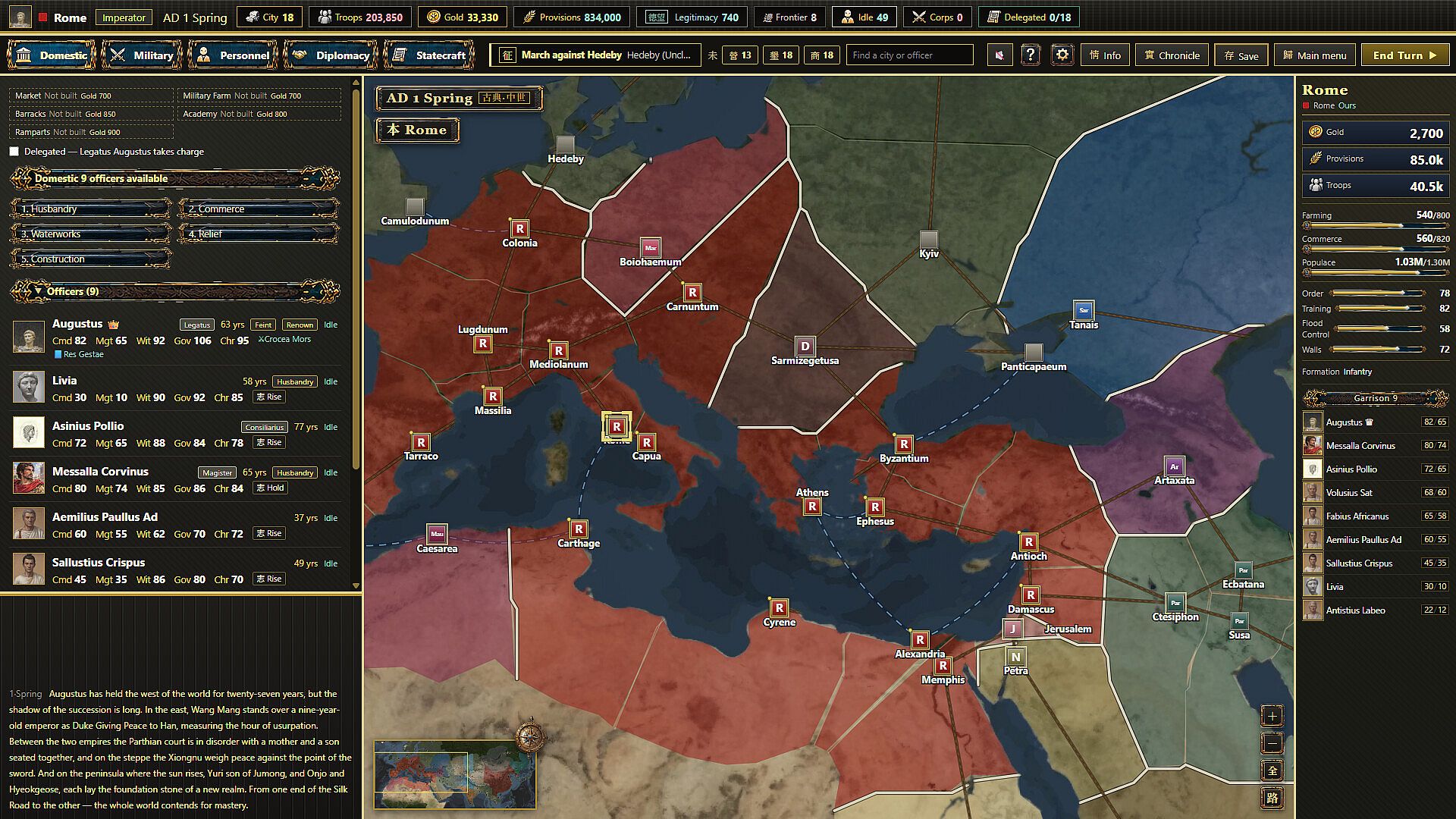
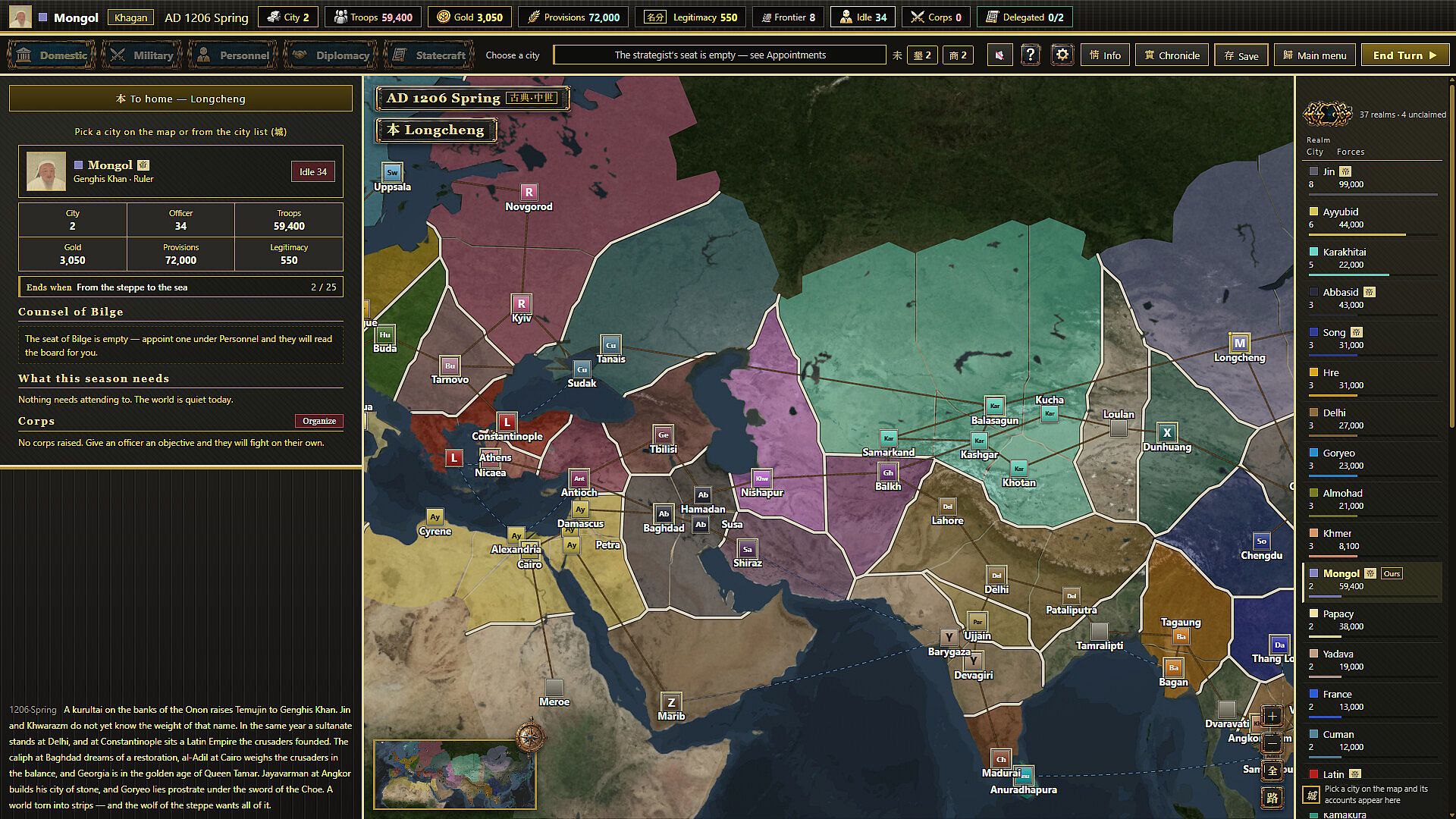
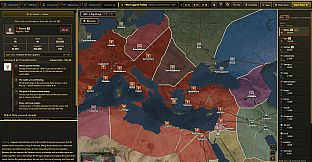
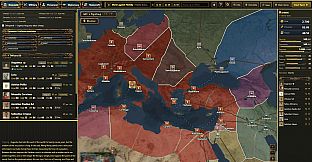
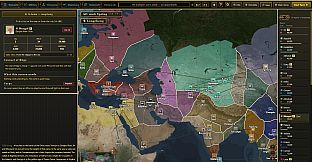



Age of Dynasty & Dust is a turn-based grand strategy game set across the Old World from 1200 BC to 1941. Players start by managing a single city and work toward broader control, with the entire map spanning dozens of historical periods on one continuous board.
Gameplay
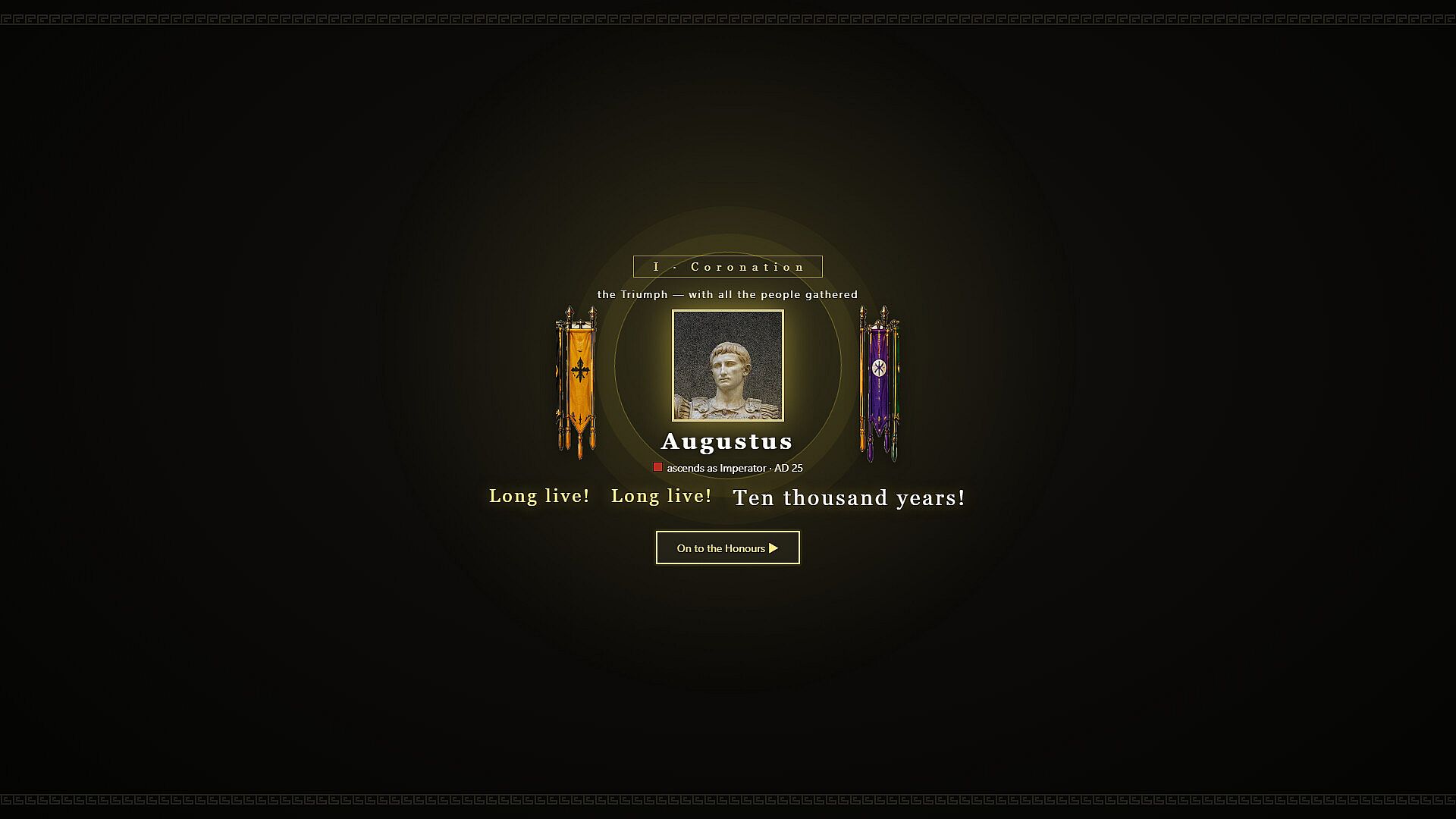
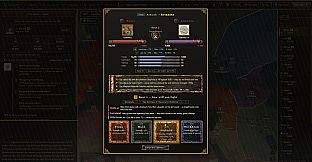
The core loop centers on ruling through generations. Each ruler has a finite lifespan, and succession passes leadership to family members or tests legitimacy when lines break. A full campaign spans sixty to one hundred twenty years, covering two or three generations. Conquest forms one part of expansion, yet cultural differences affect troop types and governance. Different faiths add layers of difficulty to integration, and actions such as damaging holy sites carry lasting consequences remembered across turns.
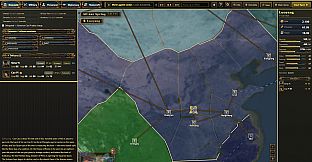
Trade routes add economic depth. Controlling key cities along major historical paths like the Silk Road generates caravan tolls, while timing sales of goods such as Khotan jade or Chang'an silk responds to market conditions. Historic sites number eighty-four on the map, from the Great Pyramid of Giza to Angkor Wat. Officers who reach them first gain recognition in the records, and sites change availability according to the era, such as the oracle at Delphi ending activity in 391 or Cologne Cathedral appearing in 1248.
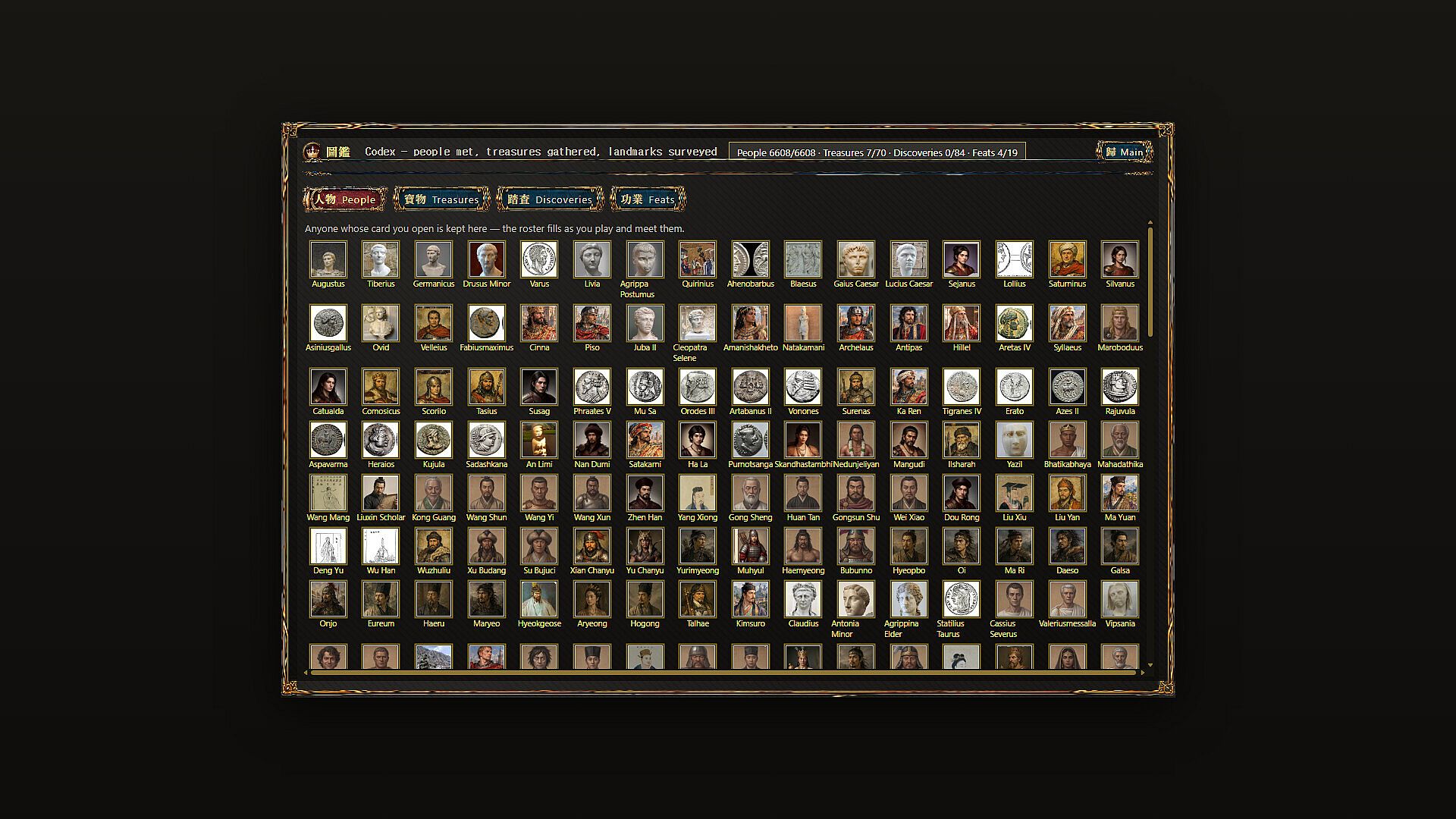
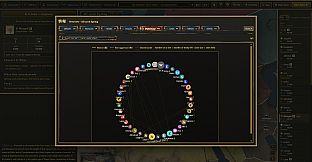
Every element draws from documented history. The game features eighty cities and 6,608 real historical figures with no invented characters. Portraits and biographies reflect this focus, though biographies appear in Korean for most languages outside Korean and Japanese support.
Game Modes
Forty-six distinct scenarios each present a separate starting world within the overall timeline. These scenarios function as the primary structured play options, allowing players to select different entry points from the fall of Troy onward. A single game session follows the generational succession rules across the chosen scenario's timeframe, emphasizing long-term planning over short matches.
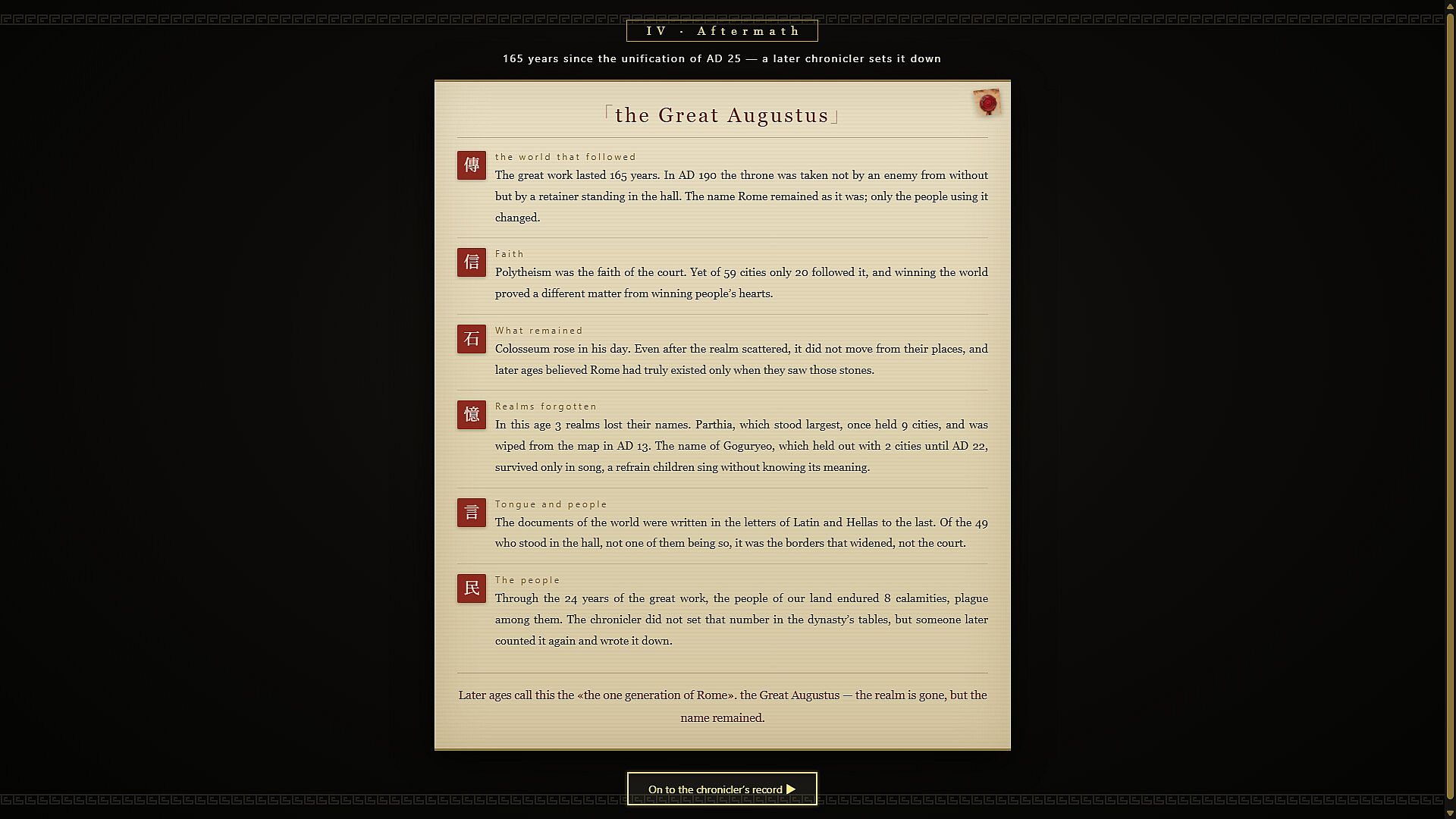
Single-player focus defines the experience. No multiplayer elements appear in the design, keeping attention on individual campaigns that end with unification options or detailed epilogues describing the lasting impact of the player's rule.
Historical Depth and Mechanics
The map integrates real locations and figures without fabrication. Rulers manage internal stability alongside external pressures, where cultural and religious factors influence control more than military strength alone. Economic systems tie directly to geography, rewarding players who secure trade corridors and respond to shifting commodity values.
Exploration rewards appear through site visits that record officer achievements. These elements combine with succession risks to create campaigns where early decisions affect later generations. The absence of fictional content keeps every choice grounded in the provided historical framework.
Is It Worth Playing?
The game remains in a pre-release state with a coming soon listing and no user reviews available yet. Its appeal lies in the detailed succession system and emphasis on non-military factors like trade and cultural management within a broad historical span. Players interested in turn-based strategy that prioritizes generational continuity and verified historical elements may find the approach distinctive. Those seeking immediate release or established community feedback should monitor updates for launch details. The single-player structure suits focused, lengthy campaigns rather than quick sessions.