





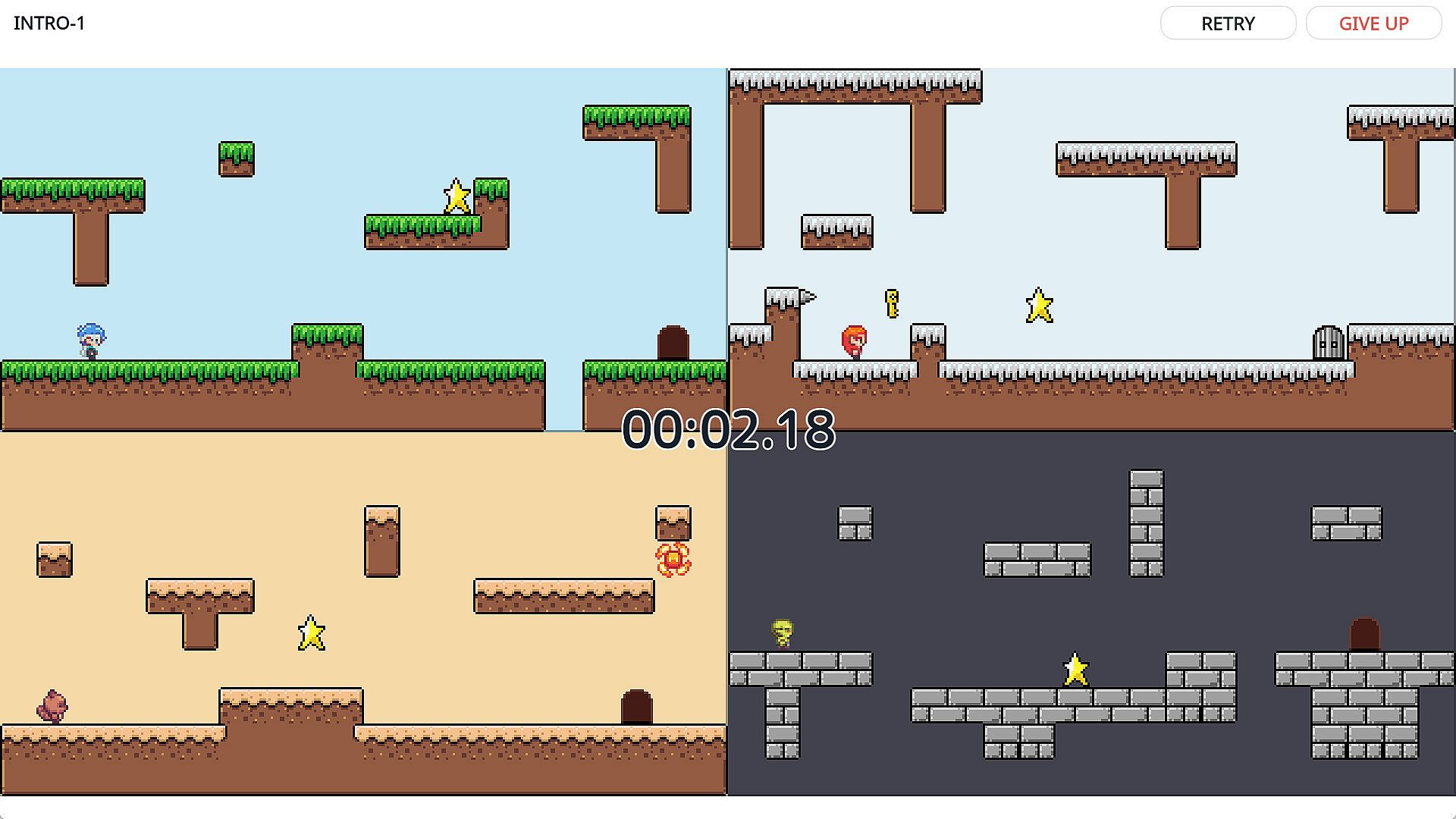
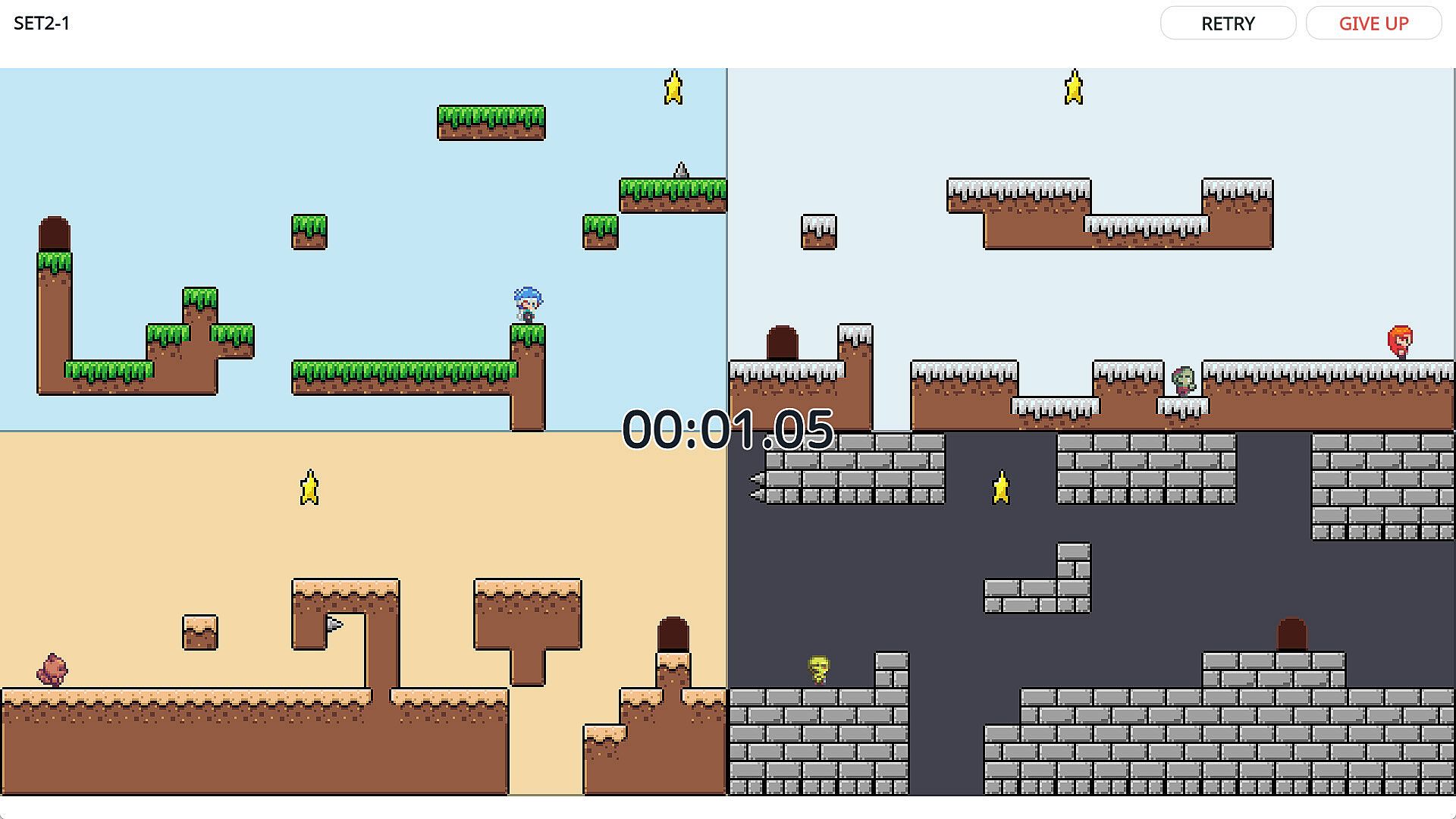
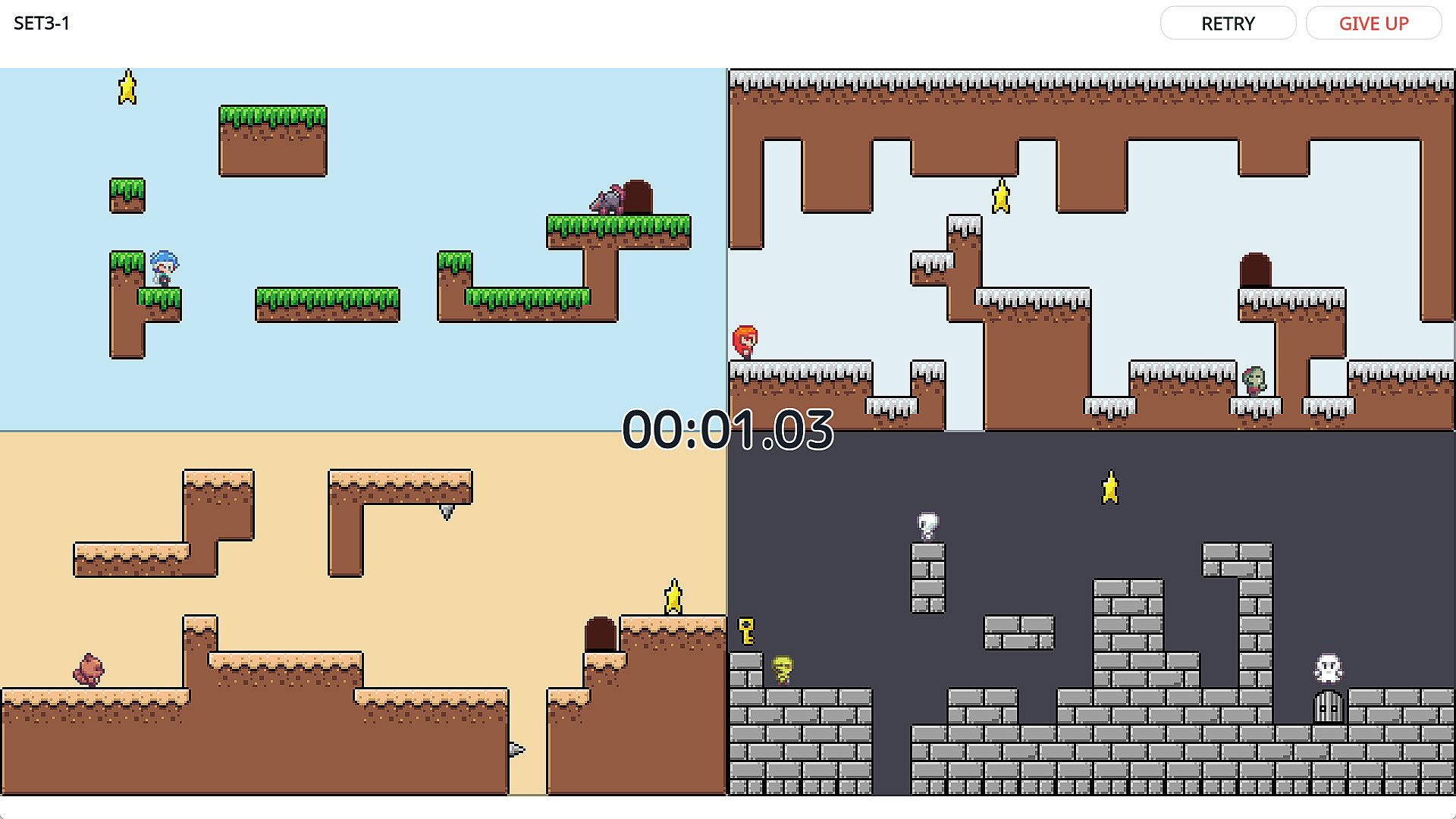
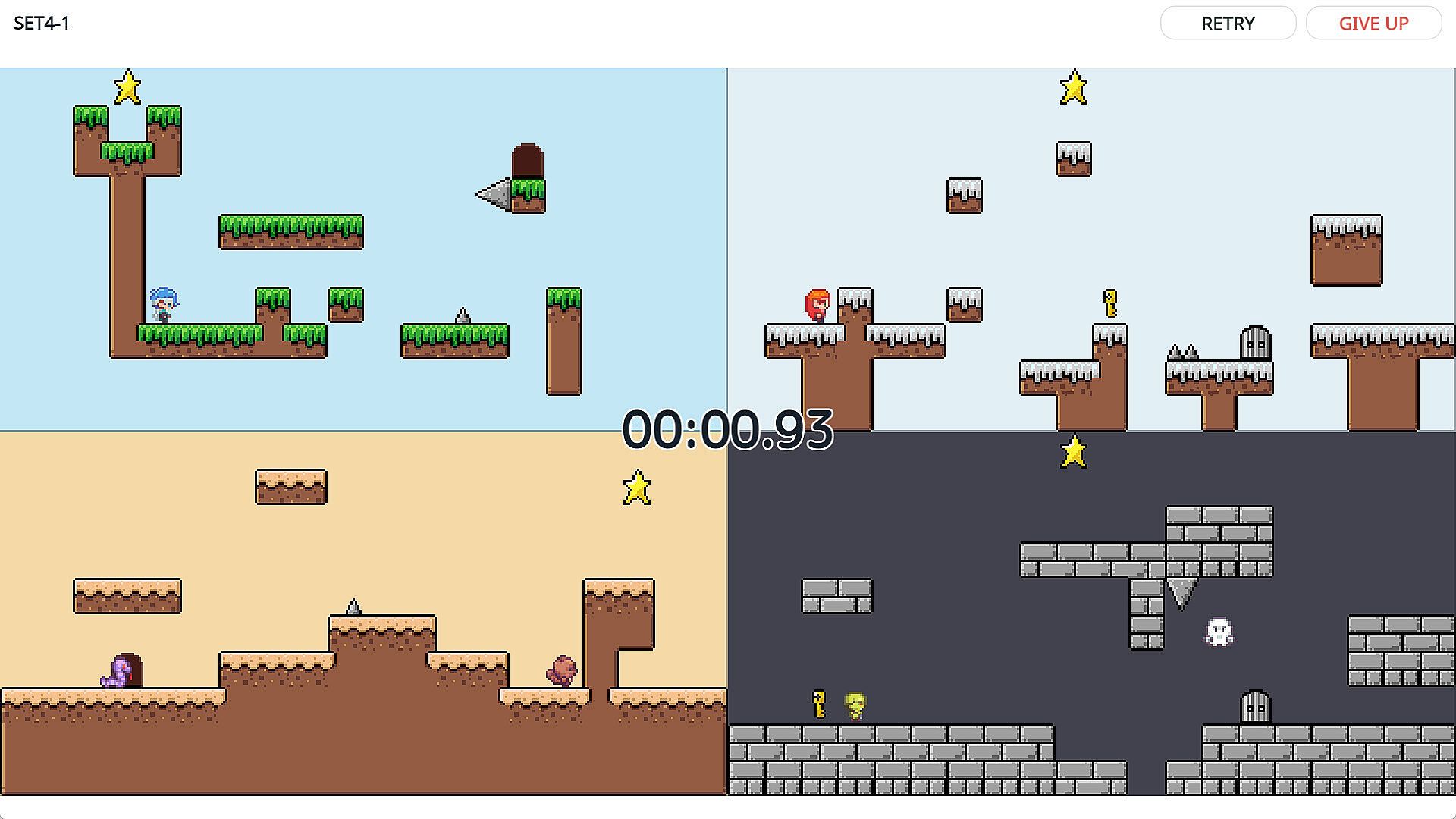
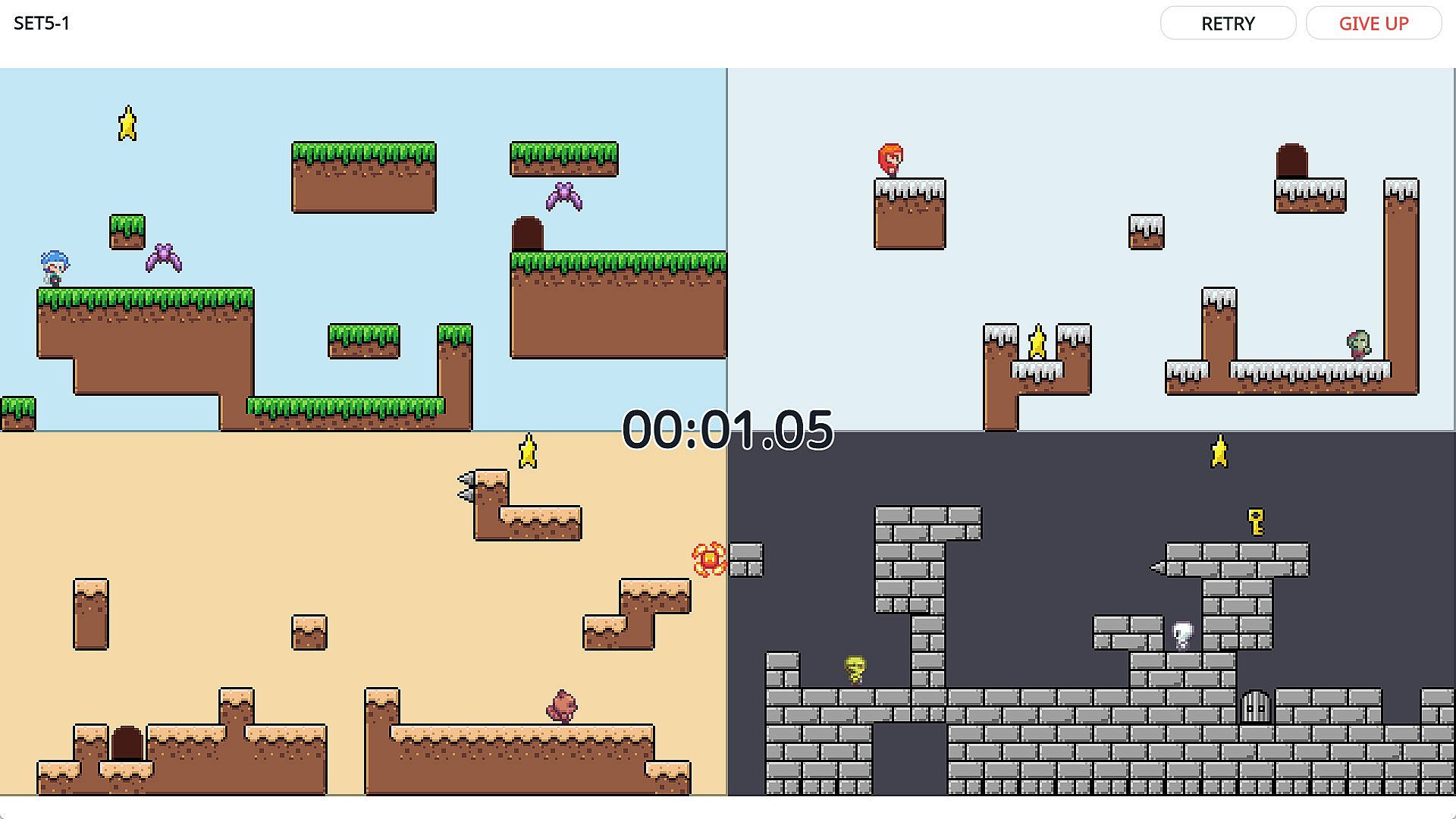
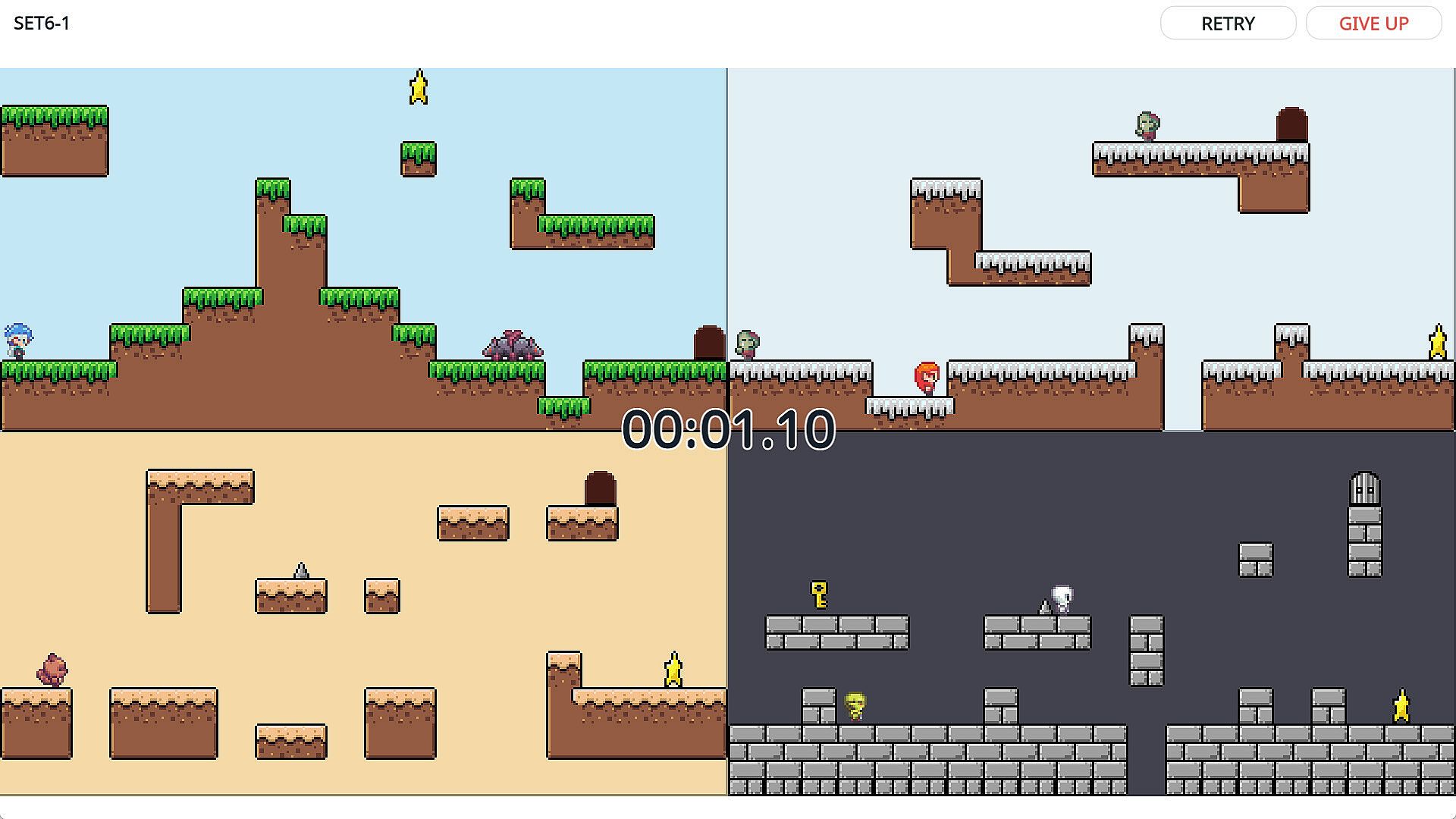
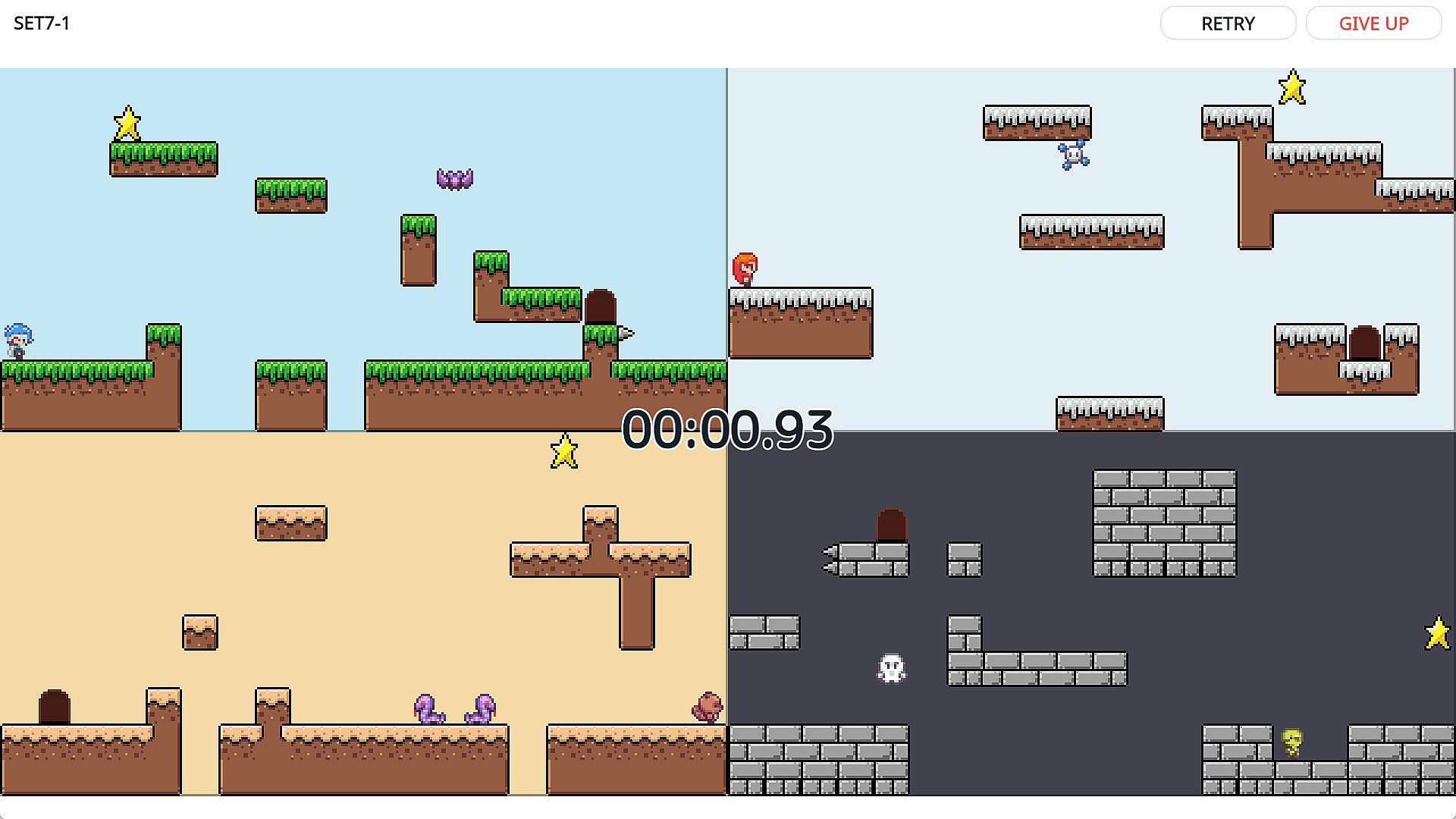
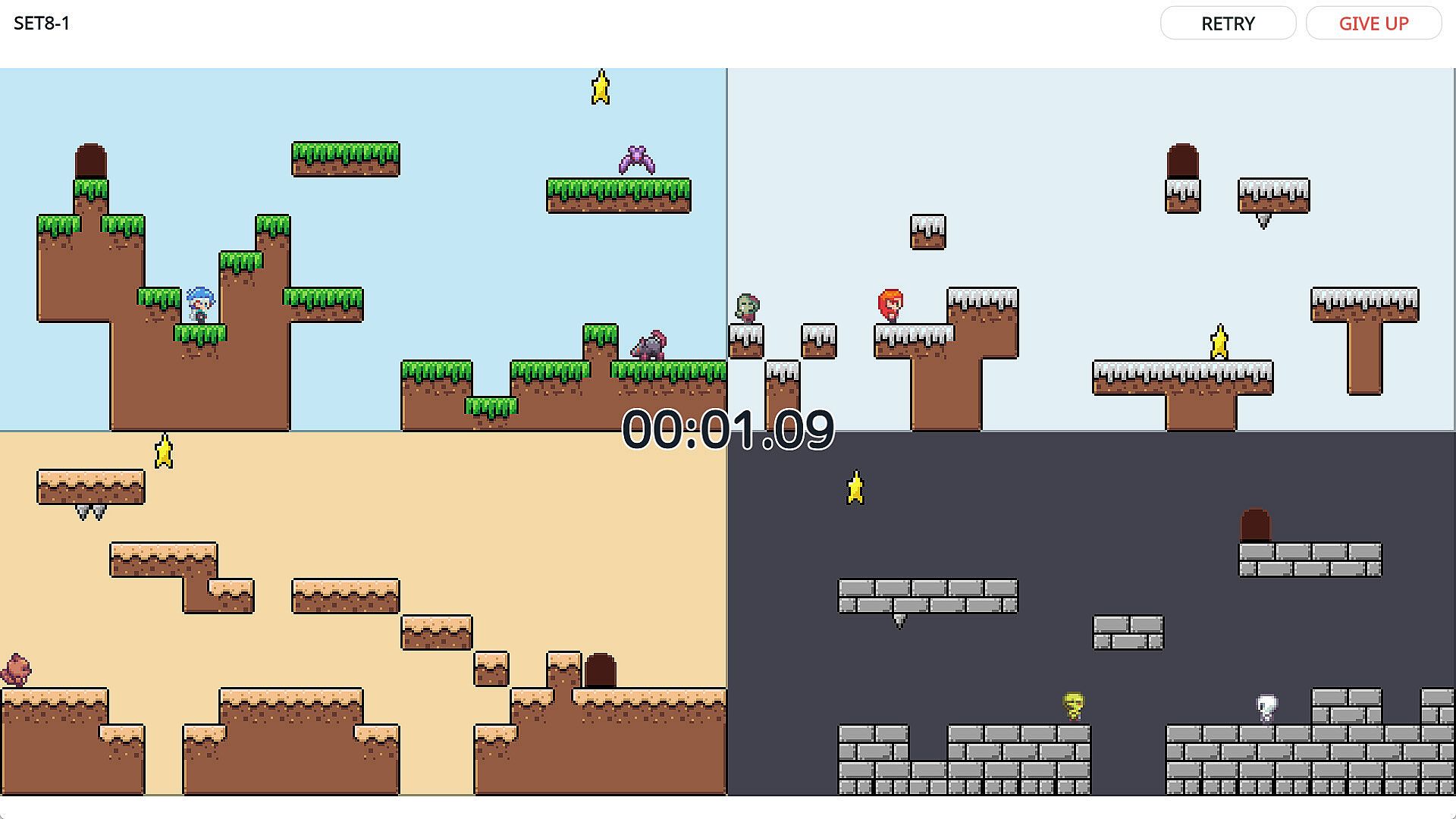
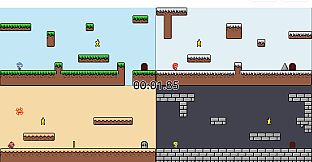
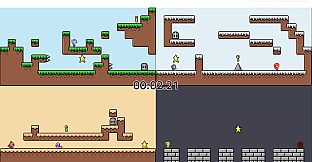
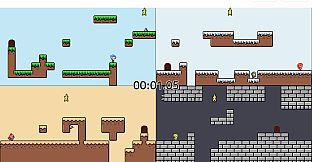
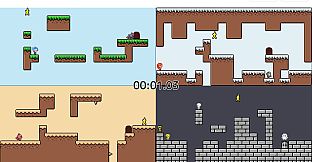
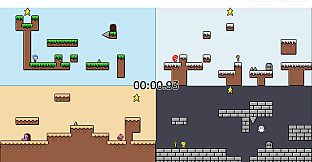
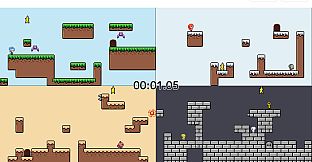
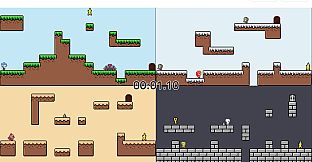
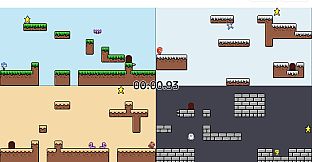
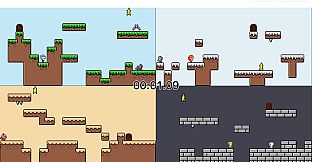
4 Screens, 1 Life is a single-player 2D platformer that puts one set of controls in charge of four separate characters on four distinct screens. The core challenge comes from moving everyone at once while adapting to different terrain and hazards on each screen. A single mistake sends all four back to the start of the stage, even if some had already reached safety. This setup turns basic left, right, and double-jump inputs into a constant exercise in timing and positioning.
Gameplay
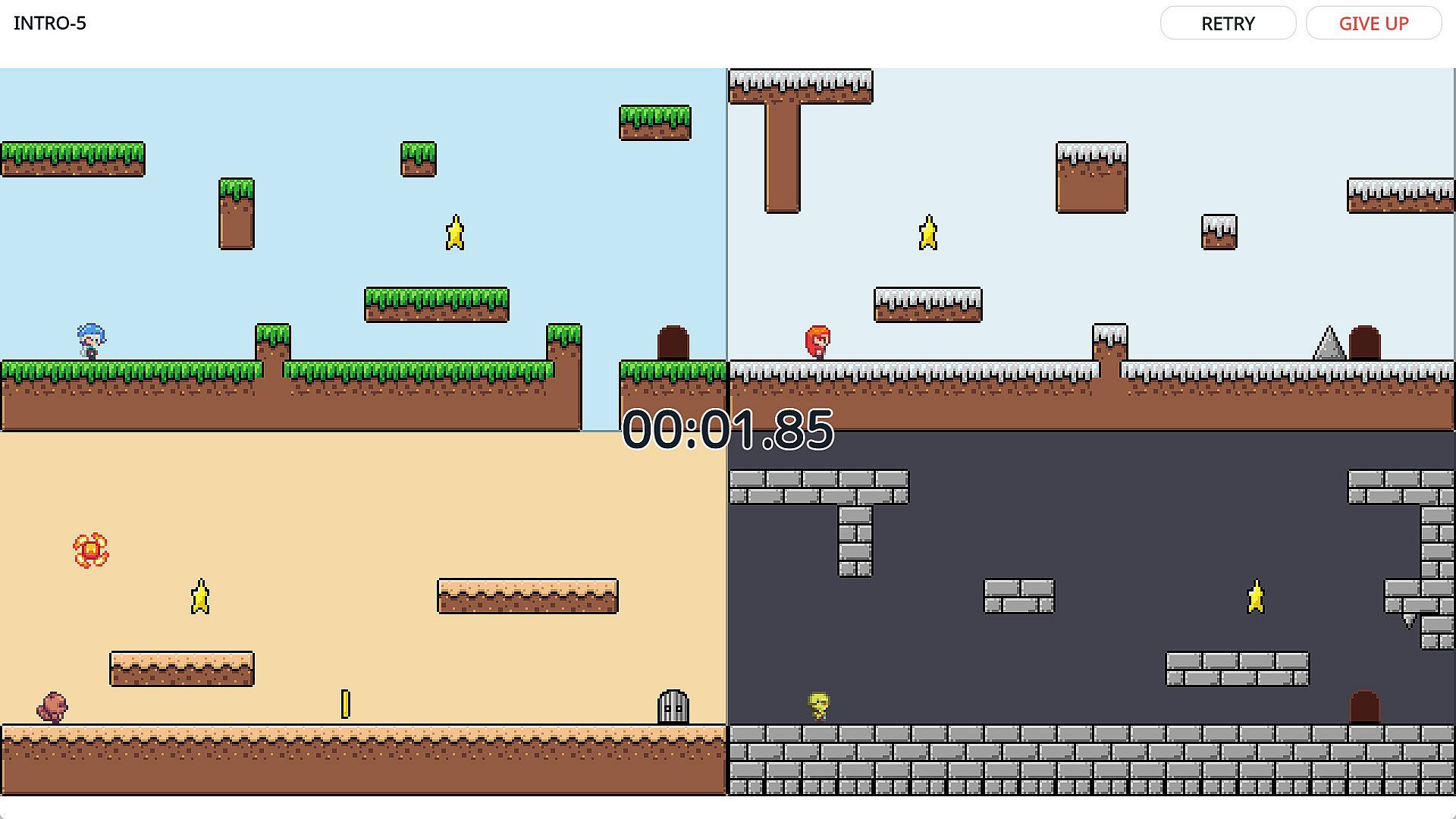
The shared input system forces players to plan routes that account for every character simultaneously. Moving right advances all four, and jumping sends everyone into the air at the same moment. Each screen features its own layout of platforms, spikes, pits, patrolling enemies, and airborne hazards. Players learn to use walls, ledges, and gaps to stagger the characters so they avoid dangers at different times. Once a character reaches an exit, that screen stops responding to inputs, reducing the number of active characters and shifting focus to the remaining ones. The final stages often hinge on the order in which exits are taken, because the last character must still complete its path alone.
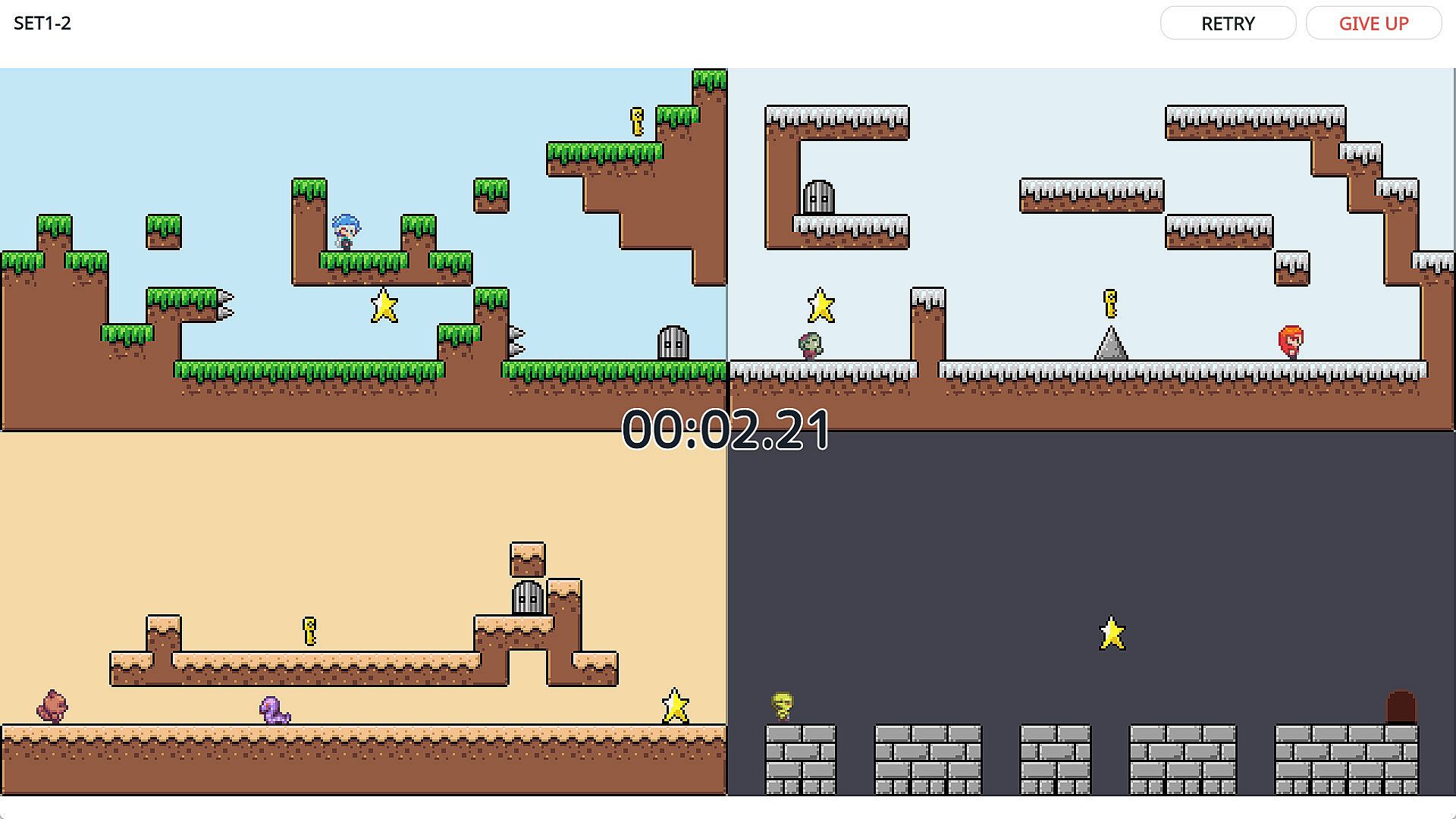
Double jumps and terrain alignment provide the main tools for differentiation. A well-timed wall jump or ledge drop can create the spacing needed for one character to clear a hazard while another waits in safety. Grassland, snow, desert, and dungeon environments each introduce unique platform patterns and obstacle combinations. The game emphasizes quick retries after failure so players can test new approaches immediately. Collecting a star on every screen in a single run adds an extra layer of planning, as the detours required often conflict with the safest exit routes.
Game Modes
The main experience consists of 360 stages divided into 12 sets of 30, each set building on previous lessons with increasing complexity. Ten introductory stages ease players into the four-screen control scheme before the full challenge begins. All-star runs require every character to collect its star and reach the exit without any deaths, demanding entirely different paths from standard clears. Personal best times are tracked separately for regular completions and all-star attempts, encouraging both reliable routes and riskier optimizations.
A built-in stage maker lets players place terrain and obstacles to create custom layouts. These creations can be tested instantly and shared through the workshop system for others to attempt. Keyboard and gamepad inputs are supported, with the same controls applying across all screens regardless of input method.
Stage Design and Progression
Progression moves from simple synchronized movements in the early sets to intricate puzzles that require precise exit ordering and hazard avoidance across all four screens. Locked exits, moving enemies, and vertical sections appear more frequently as players advance. The design rewards observation of how small differences in starting positions or terrain features can produce varied outcomes from identical inputs. Completing stages consistently builds familiarity with the double-jump timing and the way one character's safe position can serve as a reference point for the others.
Is It Worth Playing?
4 Screens, 1 Life suits players who enjoy precise 2D platformers that blend action with puzzle-like planning. The single-life reset mechanic creates tension that persists even after many attempts, while the four-screen view keeps attention divided in a way that feels distinct from standard platformers. Those who appreciate short, repeatable stages with clear goals and optional star challenges will find plenty to refine. The included stage maker extends the experience for creators who want to design their own synchronized or deliberately chaotic layouts. The game delivers a focused, demanding loop without additional systems or modes beyond the core platforming and workshop features.
