


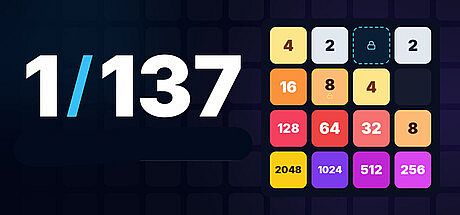


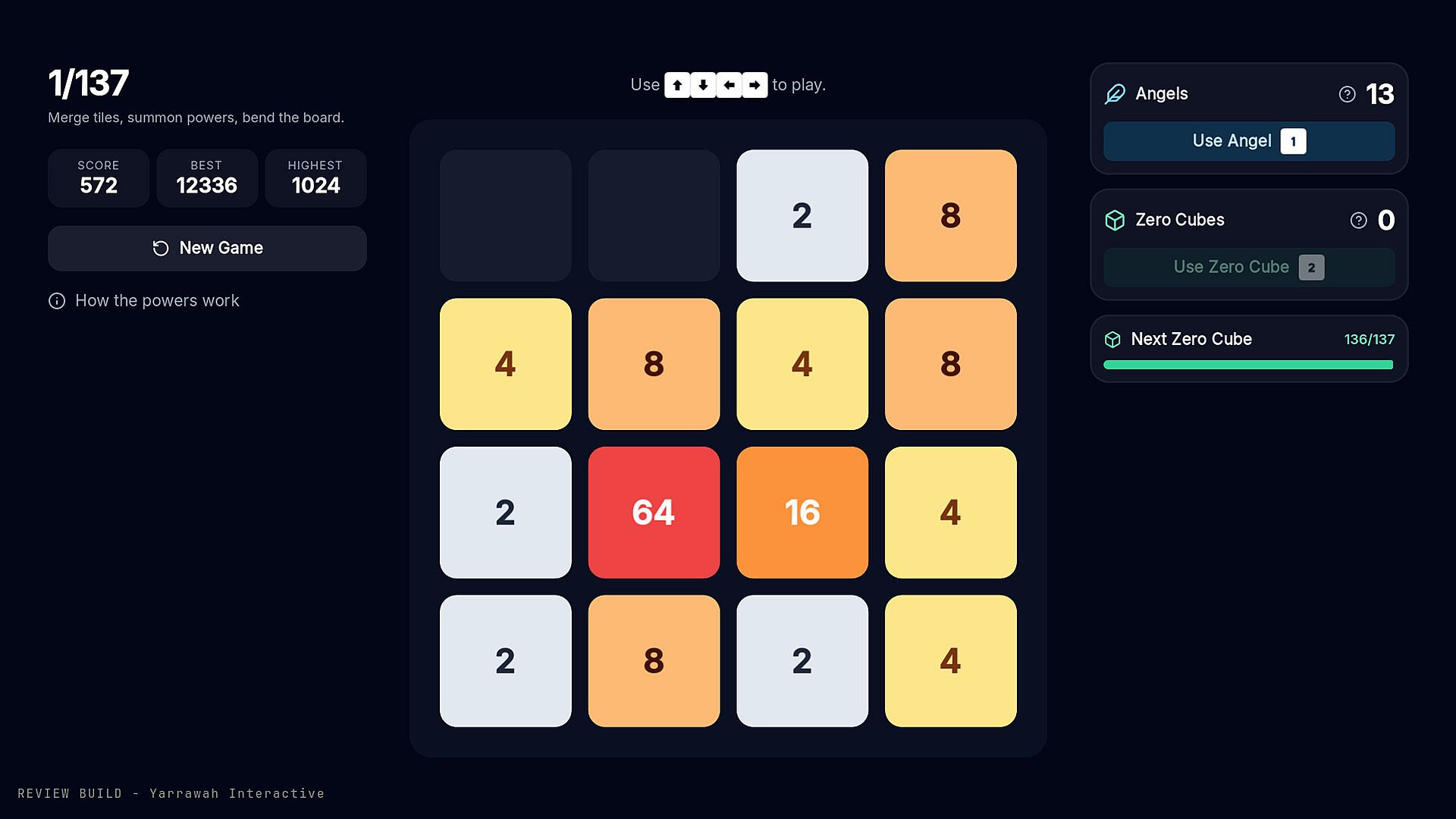
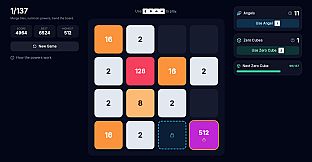
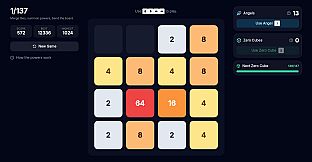
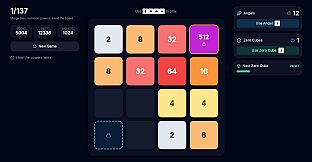
1/137 is a casual puzzle game for PC centered on tile manipulation and strategic merging. Players slide tiles across a board to combine identical ones, clearing space while managing limited turns and building up resources for later use. The experience emphasizes thoughtful placement and timing rather than speed or reflexes, making it suitable for short sessions or longer focused play.
Gameplay
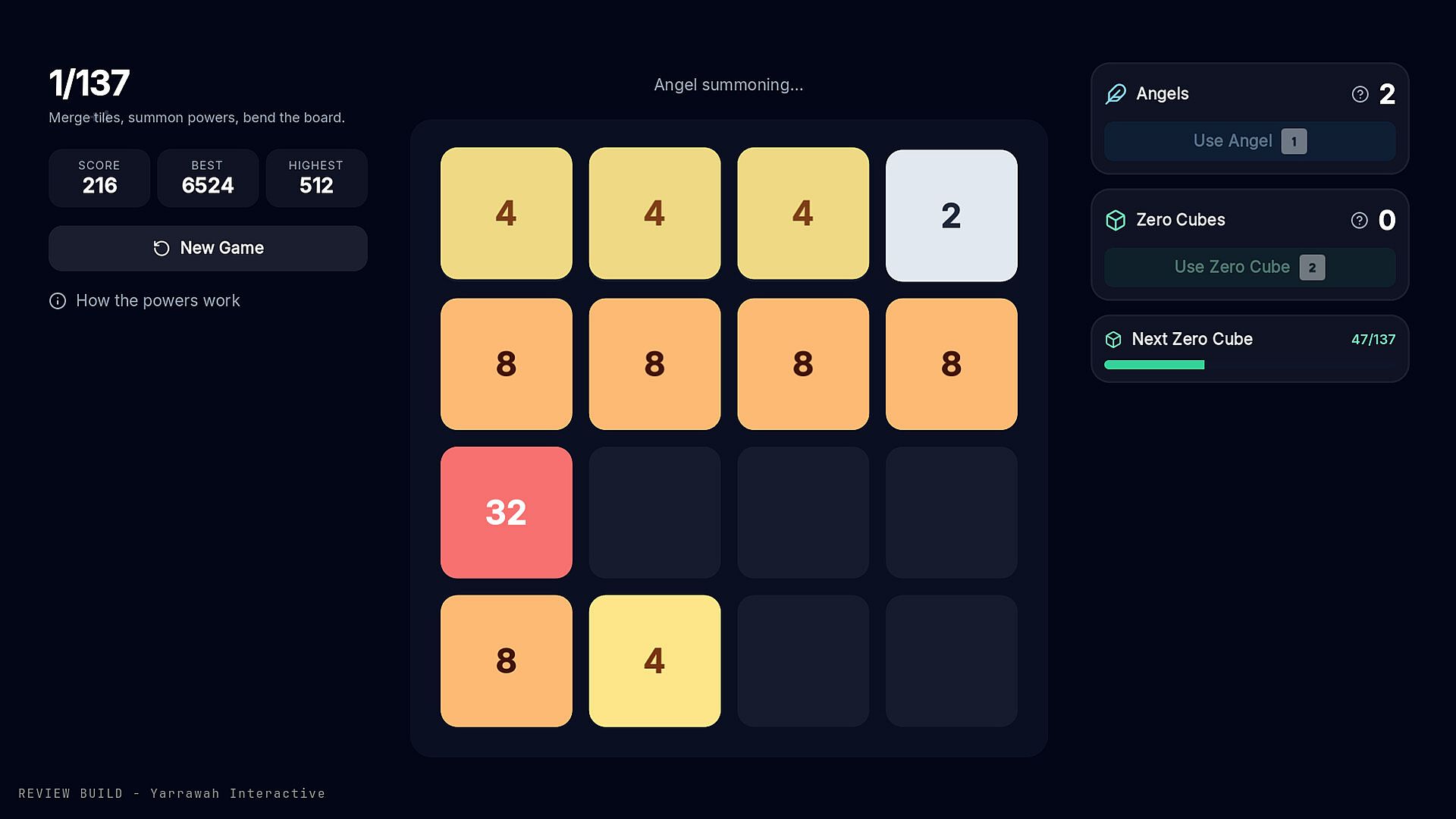
The core loop involves slamming tiles side to side to bring matching pieces together. When identical tiles connect, they merge and remove themselves from the board. This process frees up space and can trigger special combinations that award bonuses. These bonuses accumulate over successful turns and become available for activation when the board fills up or progress stalls. Players survive additional turns to unlock varied bonuses, each offering different ways to interact with the remaining tiles.
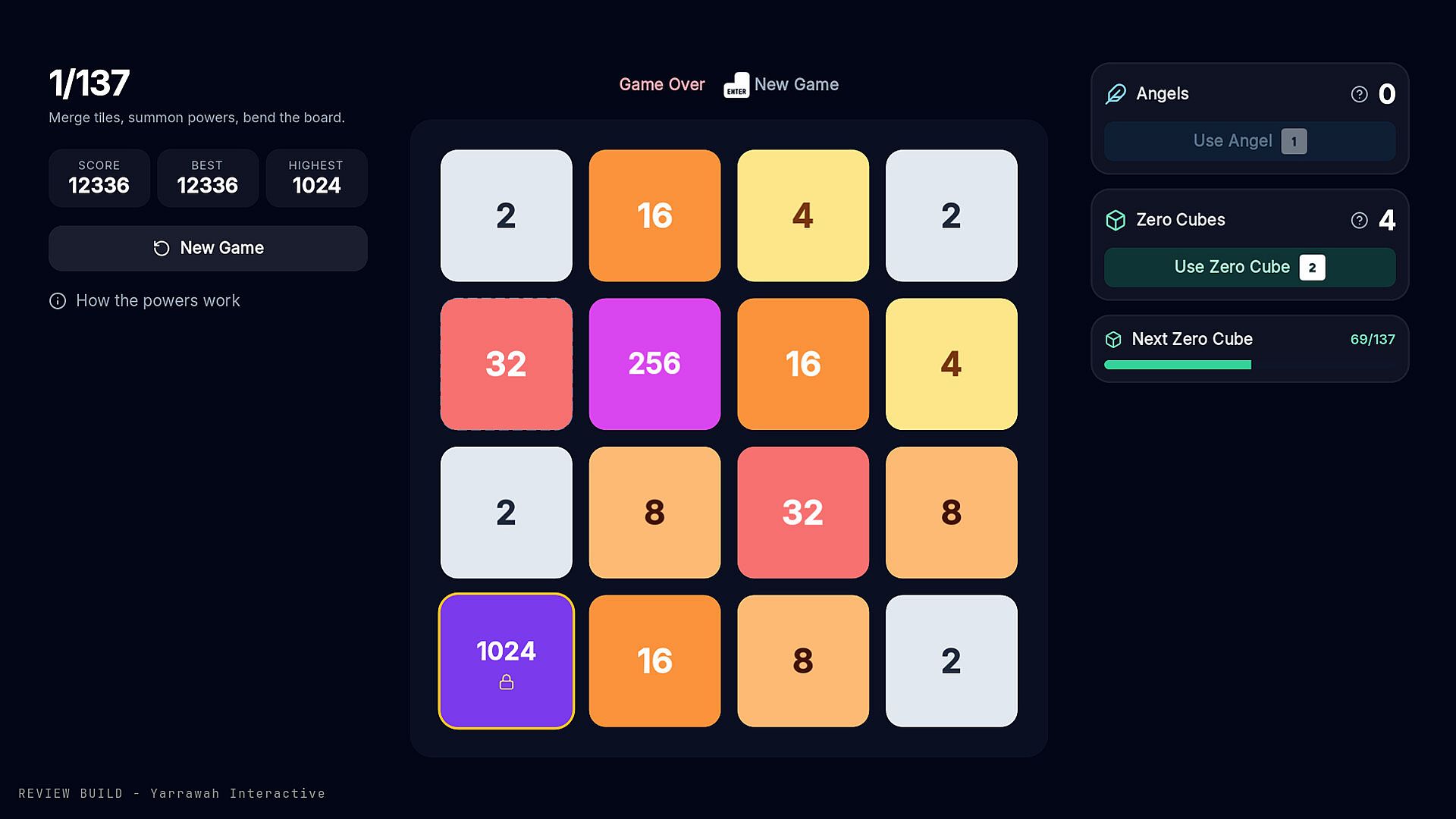
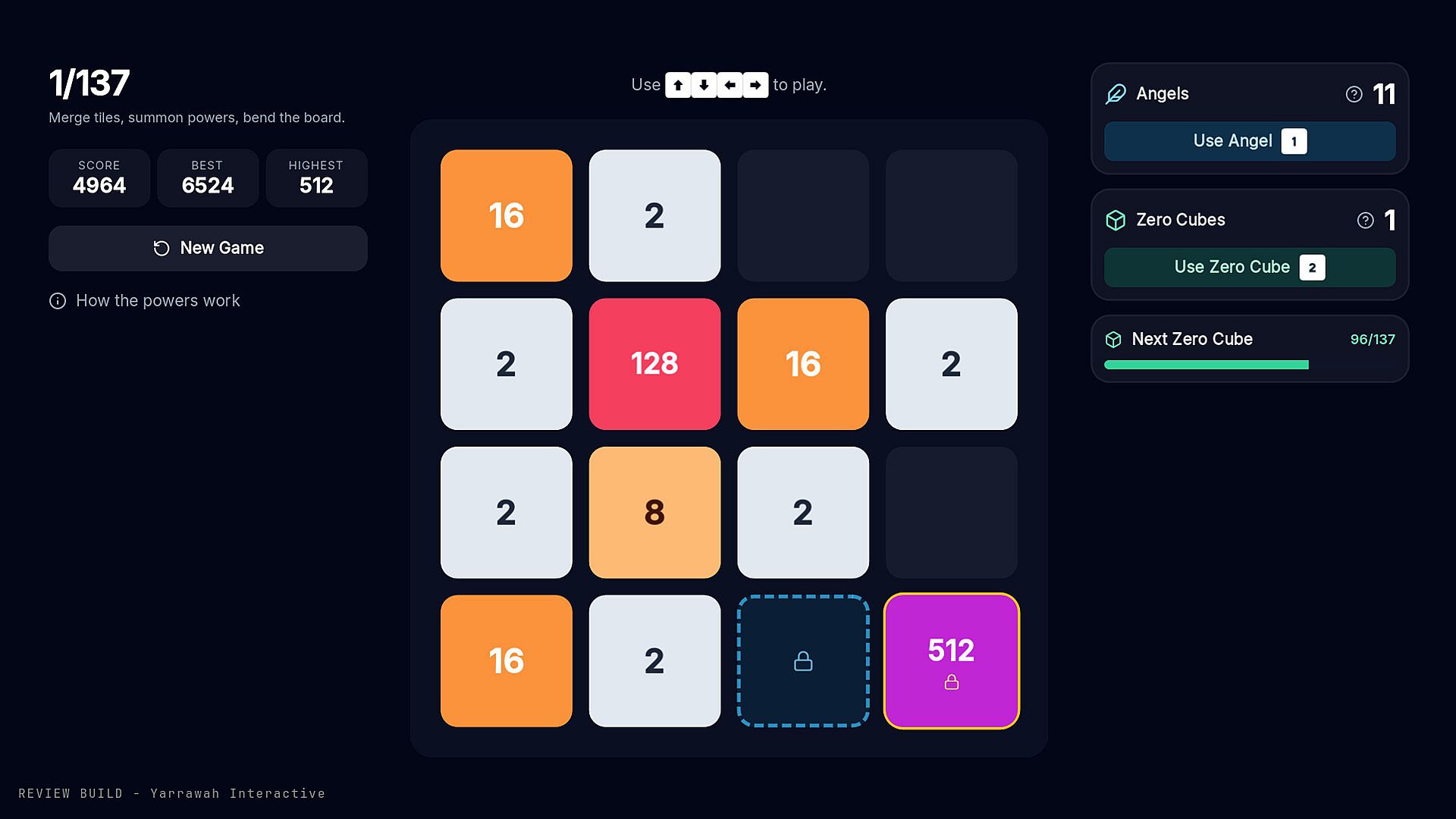
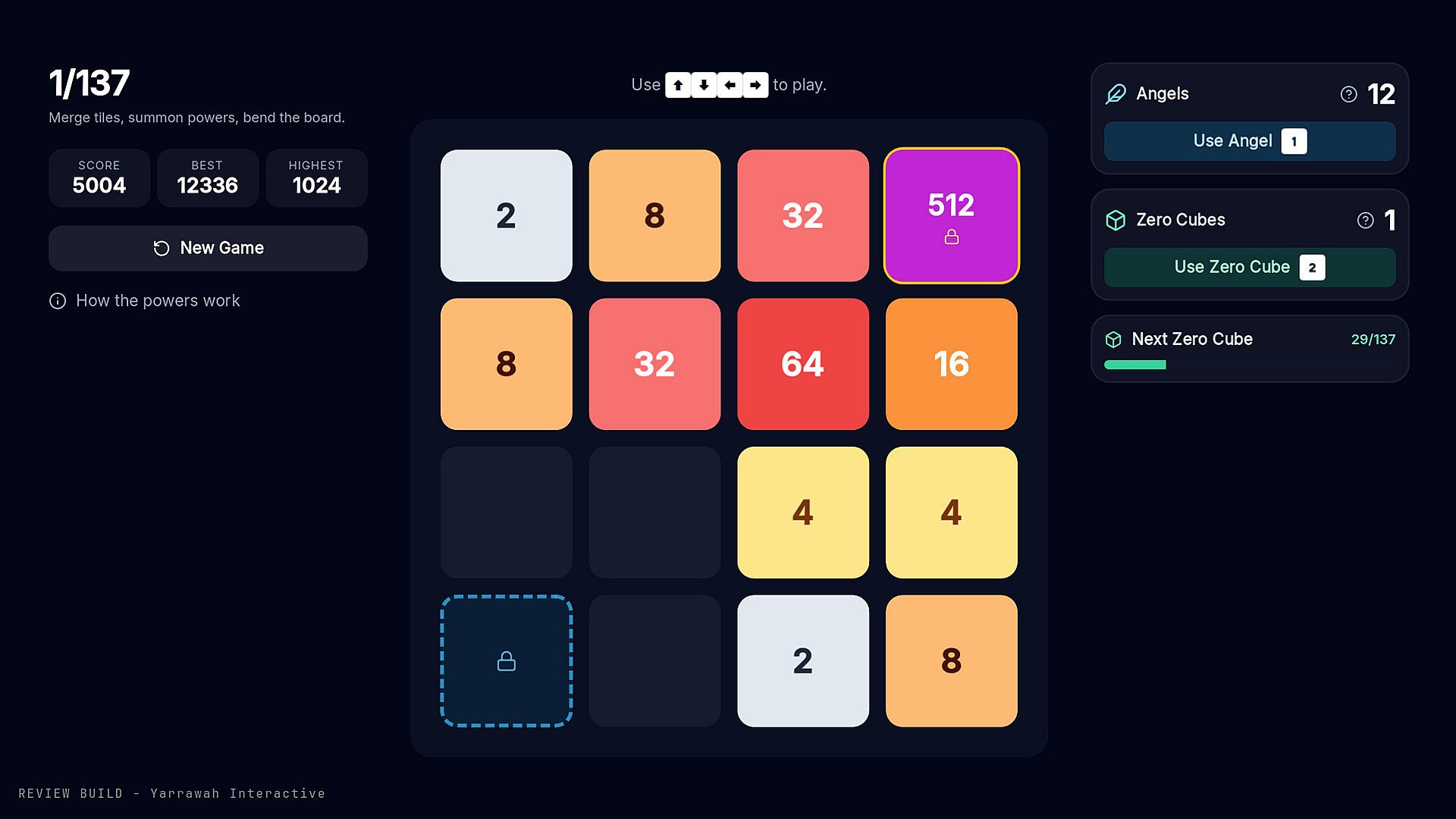
Bonuses serve two primary purposes. One type clears obstructing tiles to reopen movement options. The other isolates rare tiles by locking them in place, allowing focus on clearing more common pieces first. This creates a cycle of merging, bonus collection, and selective clearing that rewards planning ahead. The board state changes with every move, so decisions about which tiles to merge or save directly influence how long a session lasts and which bonuses become accessible.
Game Modes
The game revolves around a single sustained play experience built around surviving successive turns. Each turn advances the board state, and the goal centers on extending the run through efficient merging and bonus management. There are no separate named modes, but the mechanics naturally support different approaches within the same framework. Some sessions emphasize rapid clearing of common tiles to maintain momentum, while others prioritize locking high-value pieces to shape the board for longer survival.
Progression comes from the bonuses earned through sustained play. Early turns focus on basic merges to build an initial stock of resources. Later turns introduce more complex board layouts where bonuses become essential for continuing. The absence of timers or competitive elements keeps the focus on personal improvement and experimenting with bonus combinations.
Key Mechanics and Strategy
Tile placement requires constant awareness of the board layout. Slamming tiles moves them in straight lines until they hit another piece or the edge, so positioning determines which matches become possible. Over time, the board tends to fill with a mix of common and rare tiles. Effective play involves using merges to reduce clutter while reserving bonuses for moments when the board threatens to lock up completely.
Bonus timing adds another layer. Activating a clear bonus too early wastes potential, while holding one too long risks running out of moves. Locking bonuses work best when rare tiles would otherwise block progress toward larger merges. Players learn to read the board for patterns, such as clusters of common tiles that can be cleared in sequence or isolated rares that benefit from being set aside.
The system encourages repeated attempts as each run reveals new ways to combine merges and bonuses. Short sessions can focus on reaching a personal best number of turns, while longer ones explore how different bonus sequences affect overall survival.
Is It Worth Playing?
1/137 suits players who enjoy deliberate puzzle games with merging and resource management. The mechanics reward observation and planning over quick reactions, creating a relaxing yet engaging loop. Those who appreciate games where small decisions compound into longer runs will find the bonus system and tile interactions satisfying. The casual nature means it works well as a break from more intense titles, with sessions that can end naturally when the board fills or continue through careful bonus use. Without external pressure or complex systems, the game delivers straightforward enjoyment for anyone drawn to tile-based puzzles on PC.