

Necromancer Idle: The Endless Drain is a strategy indie RPG with casual idle elements available on PC. Players select from base classes such as Soldier, Ranger or Mage and progress through a fantasy world cursed by a powerful necromancer. The goal centers on defeating the necromancer by improving skills, automating actions and using reincarnation to retain innate experience across deaths.
Gameplay
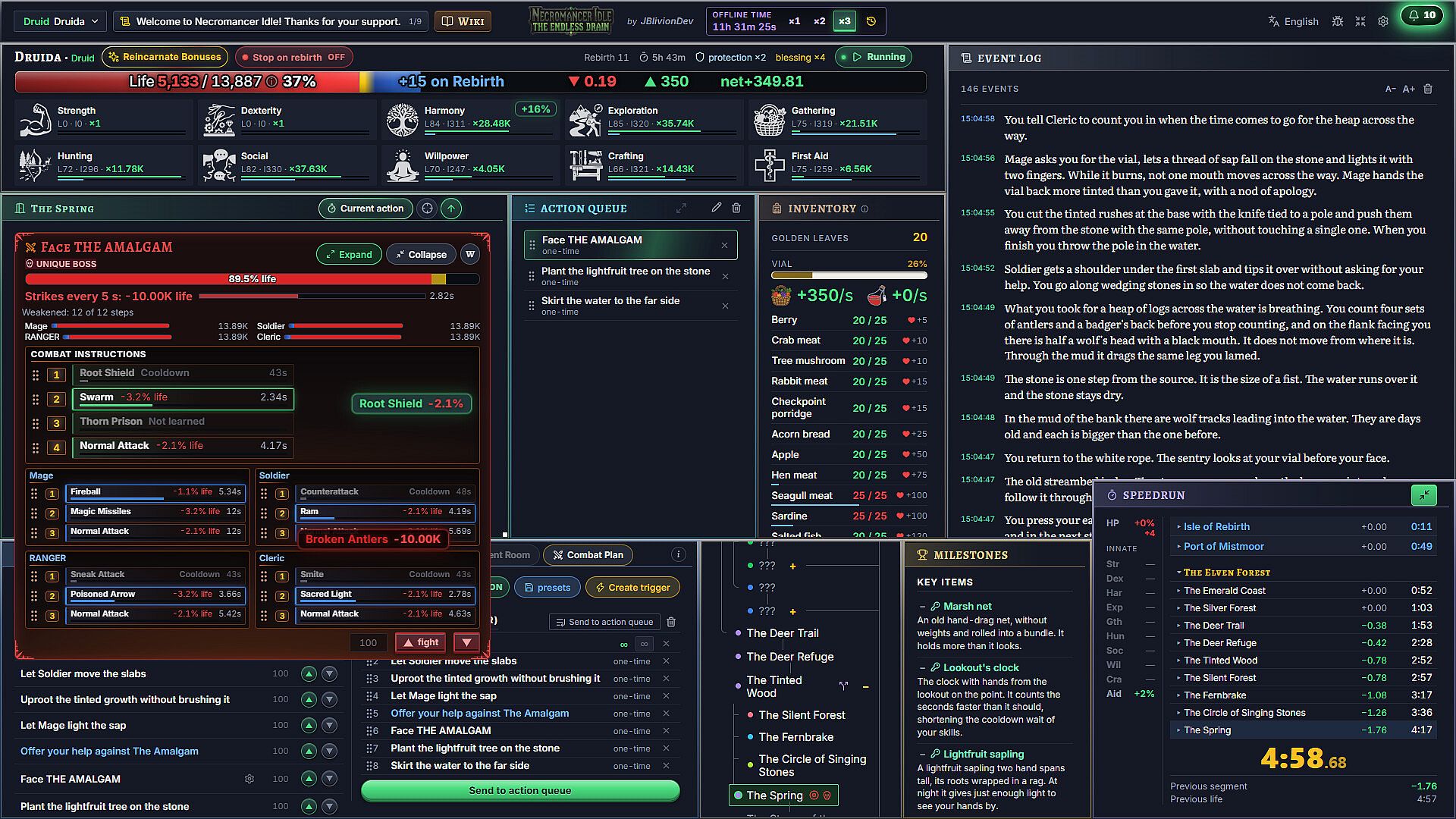
The core loop revolves around performing actions in rooms across multiple chapters to gain learned and innate experience in various skills. Stats grow through repeated practice, and characters automate sequences once presets are created in the automation panel. Rebirth returns the character to an earlier point while preserving innate experience, allowing faster progress in subsequent lives. Reincarnation serves as a deeper prestige layer that trades some progress for permanent bonuses to speed up future runs.
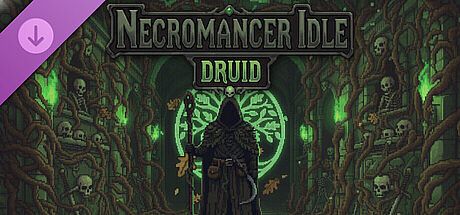
The Druid class unlocks from the character menu and functions alongside the base classes in every chapter. Druids rely on harmony to cast spells with damage output comparable to other classes while providing distinct support options. Root Shield strikes an enemy and shields the ally with the lowest health using roots. Swarm damages a primary target and spreads minor damage to surrounding enemies. Thorn Prison traps a foe for several seconds. These abilities integrate into turn-based combat and room actions.
Druids contribute to group efforts by leaving lasting assistance in locations they visit, which benefits other characters during later playthroughs. They gather fruit at an accelerated rate and can escort companions through routes. All classes participate in raid battles, where reincarnation upgrades transfer between characters in both directions.
Game Modes
Progression unfolds through numbered chapters that feature main routes, optional side paths and unique bosses. New routes added in updates introduce class-specific passages, shared challenges and collaborative offerings that grant combat skills. Academy trials test specific skills and reward items that aid progression for any class.
Reincarnation and rebirth systems function as core progression modes. Rebirth preserves innate experience for quicker advancement, while reincarnation resets more elements in exchange for lasting bonuses. A speedrun panel tracks chapter completion times across reincarnates for comparison. Daily rewards provide offline time bonuses, and automation allows characters to repeat action sequences without constant input.
Class Variety and Progression
Base classes emphasize different strengths in combat and exploration, while the Druid adds harmony-based spells and support mechanics. Escorts and shared routes encourage creating multiple characters that assist one another. Fruit gathering, market purchases and temple actions supplement combat and story advancement. Updates continue to expand routes, rebalance life mechanics and refine automation tools.
Is It Worth Playing?
The game suits players who enjoy incremental idle systems combined with light RPG progression and story elements across chapters. Active development has delivered multiple patches since the July 2026 release, including new routes, rebalanced systems and quality-of-life features such as improved automation and daily rewards. Reviews on the platform stand at mostly positive. The low price point and offline progress make it accessible for short or extended sessions focused on automation and reincarnation loops. Those seeking deep narrative or competitive multiplayer will find less emphasis here, while fans of class experimentation and steady number growth will find consistent engagement through the Druid and base classes.