


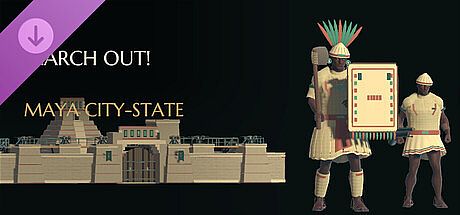


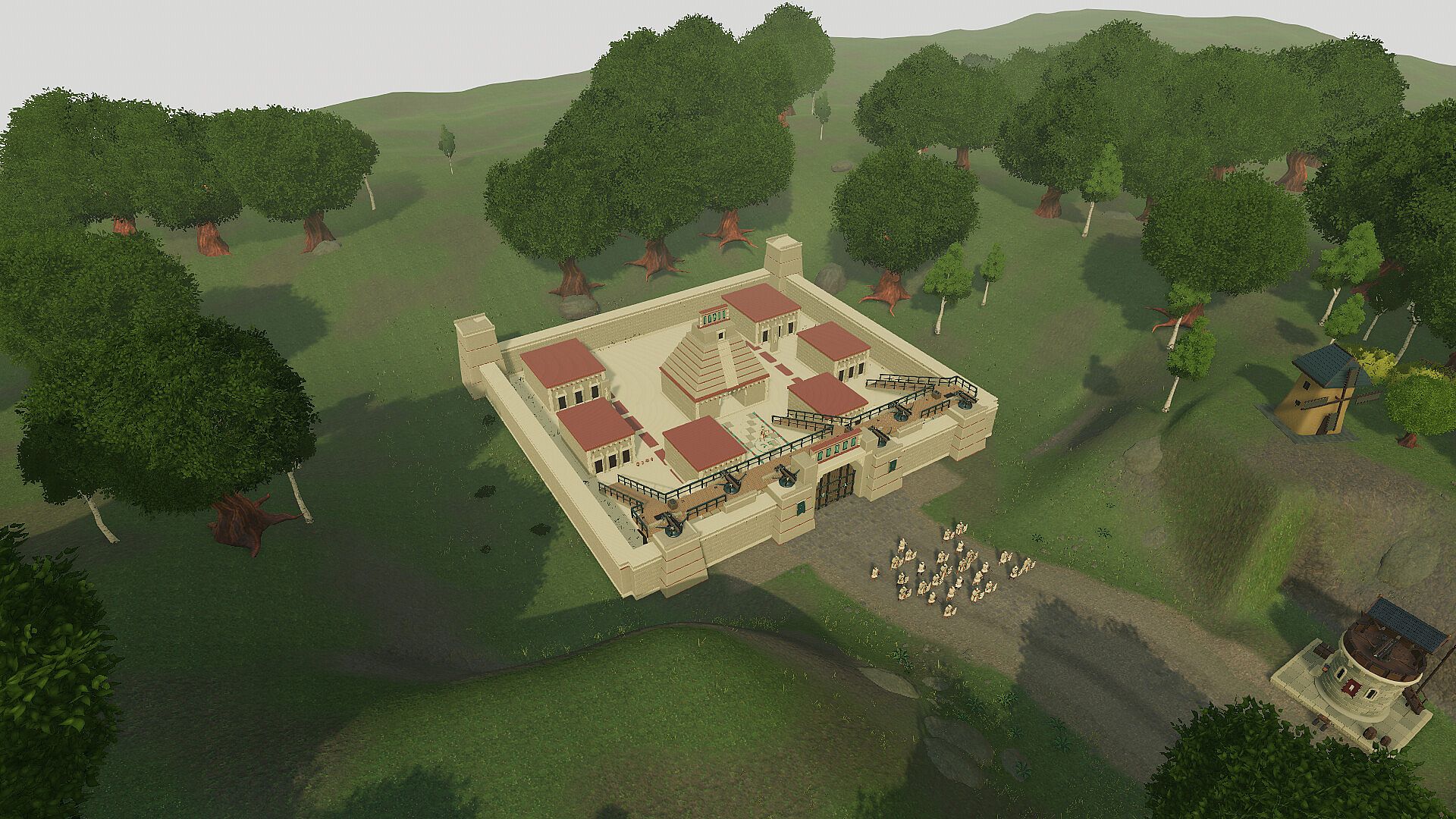
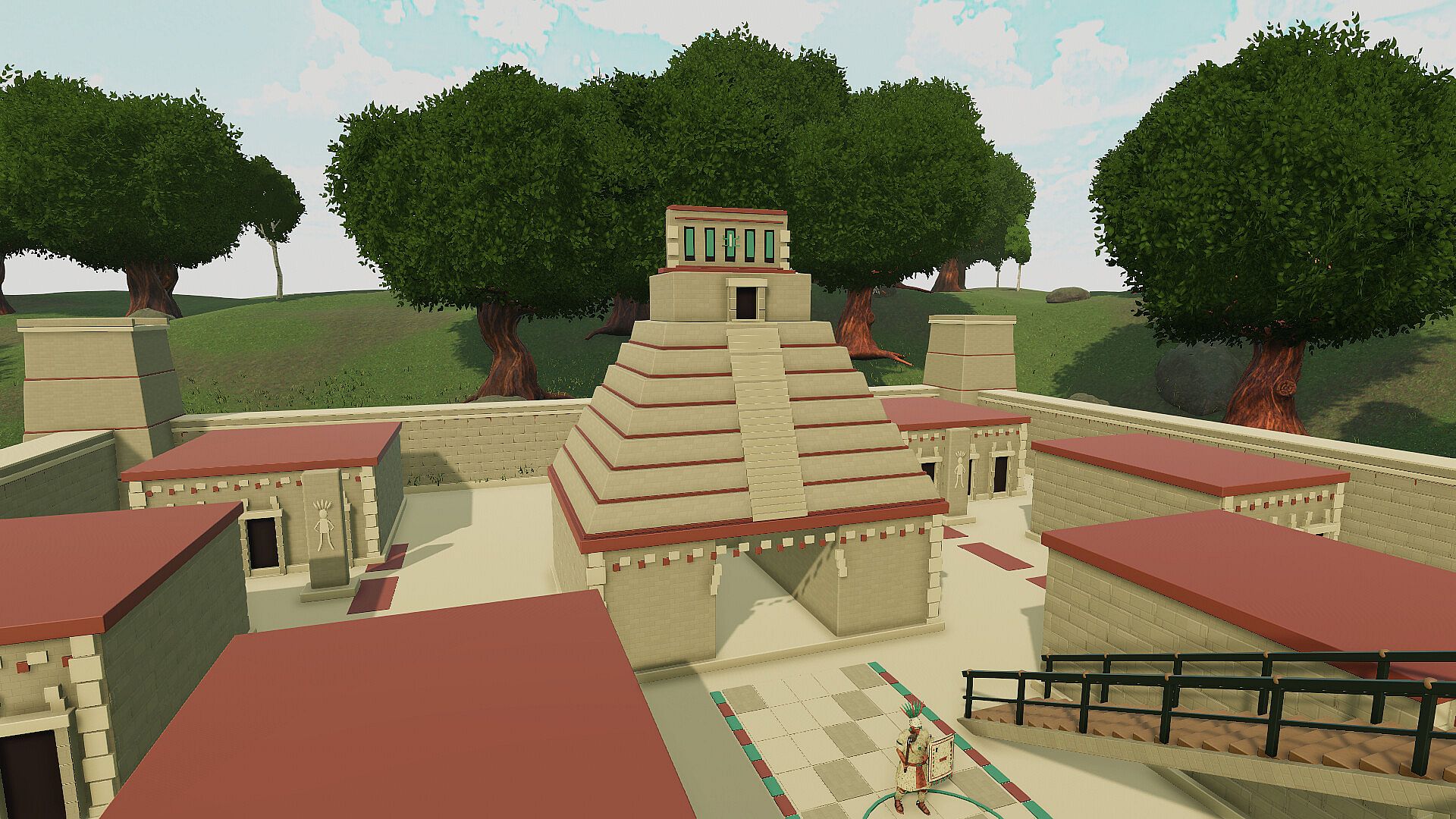
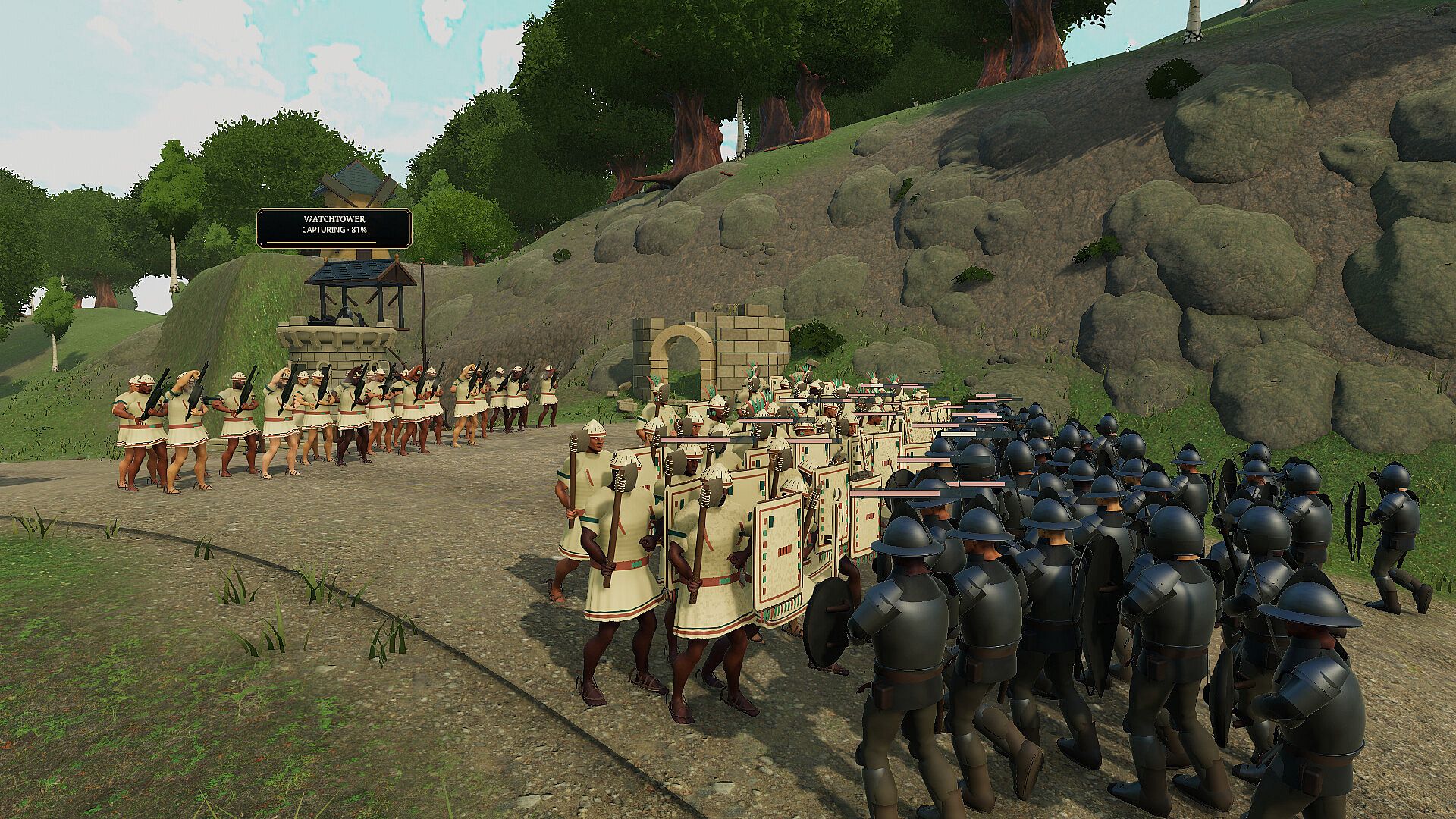
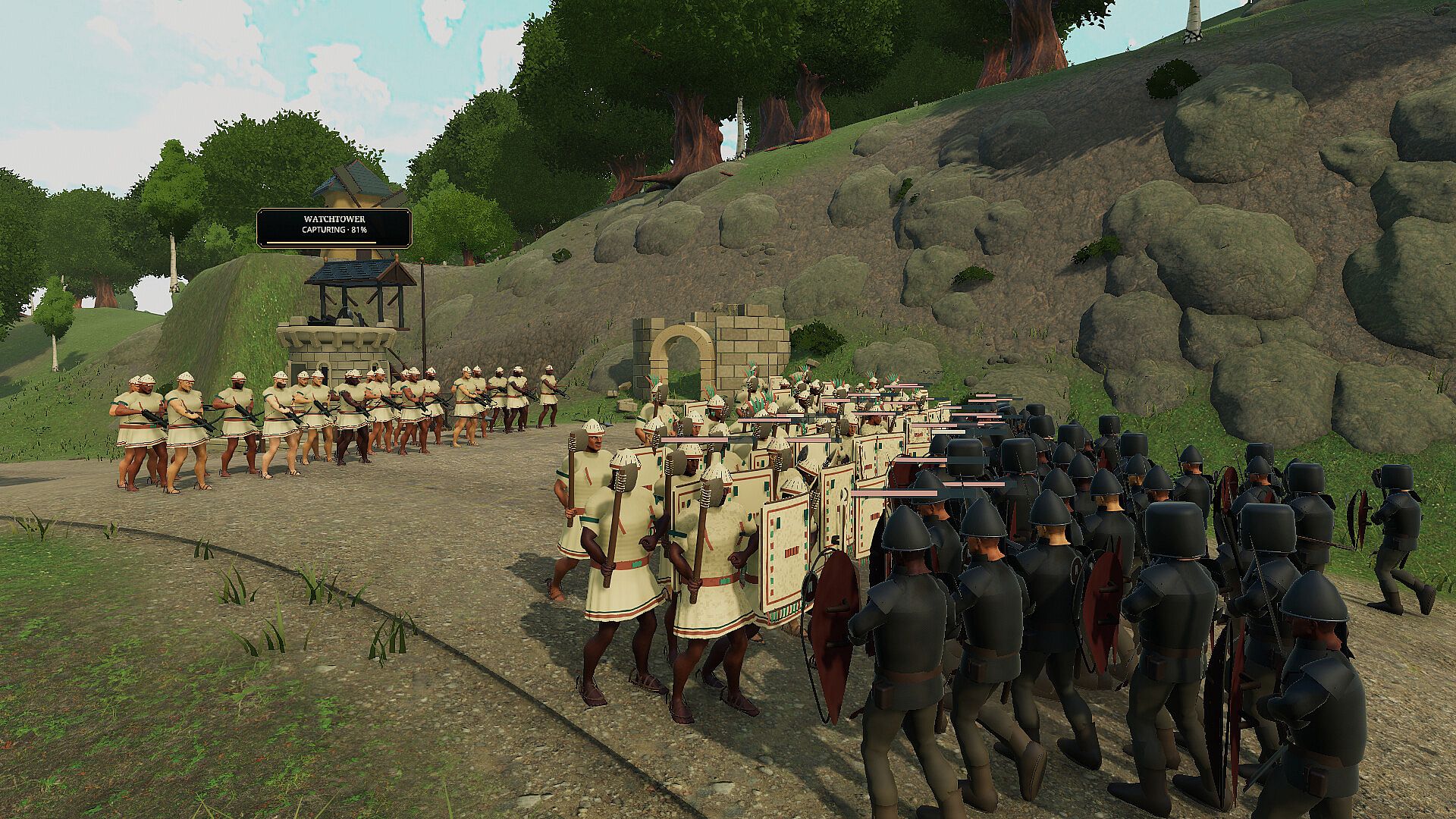
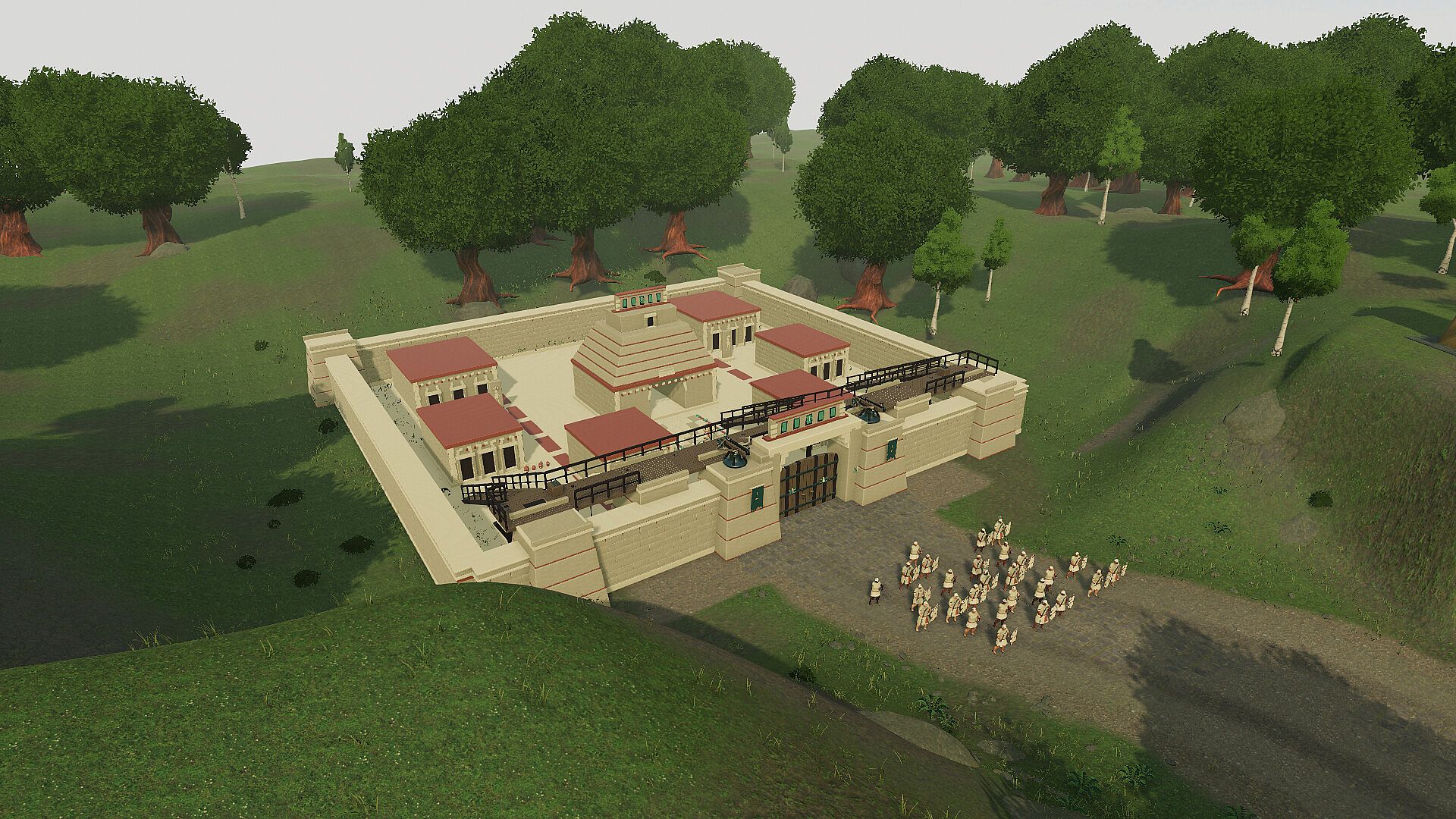
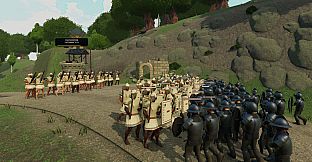
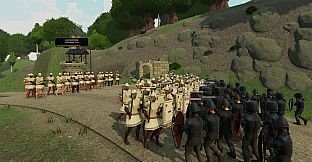
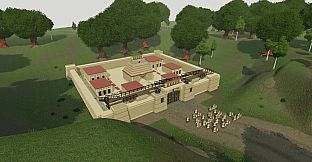
March Out! is an action strategy indie game that blends real-time army command with direct third-person combat on the battlefield. Players recruit troops, advance through three technology eras, and lead their forces from the command hall straight into sieges where they fight alongside their units. The Maya City-State collection adds a complete set of themed cosmetics, including woven armor, jade ornaments, featherwork, and matching castle architecture with painted limestone compounds, stepped temples, and carved roof combs. This pack supplies a themed commander along with melee, ranged, and heavy troops for every era, plus consistent details on wear, damage, and destruction. All of it remains purely visual, leaving unit strength, prices, castle health, and match rules unchanged.
Gameplay
The core loop centers on building an army at the castle, issuing orders from the command hall, and then stepping out to fight personally as the commander. Troops advance across three eras with access to specialists such as field cannons, mounted lancers, war elephants, and war dogs. Players can rally nearby soldiers, retreat behind gates, or seize control of wall weapons during an assault. Recent updates introduced optional settlements with villages and farms that affect gold income, making control of the ground outside the walls a meaningful factor in longer engagements. Experimental day and night cycles plus weather effects alter lighting, reflections, and atmosphere without changing combat rules. The walkable commander's hall serves as the main menu, allowing players to prepare outfits, inspect collections, and gather friends before marching out.
Game Modes
Single-player offers a six-siege campaign where a surviving army carries forward into the next battle. Multiplayer supports up to four players across several formats. Castle War pits two kingdoms against each other in an extended contest between opposing strongholds. King of the Keep has two to four sides competing to capture and hold a central fortress. Capture the Banner requires teams to seize and return a contested banner. Last Castle Standing focuses on defending home castles while eliminating opponents. Co-op Last Stand lets two to four players defend a shared castle together. A weekly siege challenge provides an additional timed encounter with permanent rewards. Proximity voice chat is available but can be disabled for quieter sessions.
Customization and Kingdoms
Kingdom selection happens through the army and castle menu, where the Maya City-State pack stands out for its consistent visual identity across troops, commander, and fortifications. Players unlock additional options through play and spend earned Royal Marks at the Royal Outfitter for further cosmetic changes. The pack works in every single-player and multiplayer mode, and other participants can view the themed elements even without owning the collection themselves. Settlements and battlefield details receive the same cosmetic treatment when the pack is equipped.
Current State and Updates
The game launched on PC in late October 2026 and continues to receive patches focused on balance, visuals, and new systems. Recent additions include larger army limits in eligible matches, battlefield cleanup mechanics, and refinements to siege combat such as gate damage and repair limits. Experimental features like expanded settlements remain available alongside the classic battlefield layout. The solo developer maintains an active playtest branch for community feedback on upcoming changes.
Is It Worth Playing?
March Out! suits players who enjoy mixing strategic army building with hands-on third-person action in castle siege scenarios. The single-player campaign provides a structured progression through successive sieges, while the multiplayer modes deliver varied objectives for small groups. The Maya City-State collection enhances visual variety for those who prefer a distinct cultural theme without altering core balance. Ongoing updates keep the experience fresh for both solo and co-op sessions. Those seeking a focused indie title that rewards careful positioning, economy management through farms and villages, and direct commander involvement will find consistent depth across its verified systems.





