

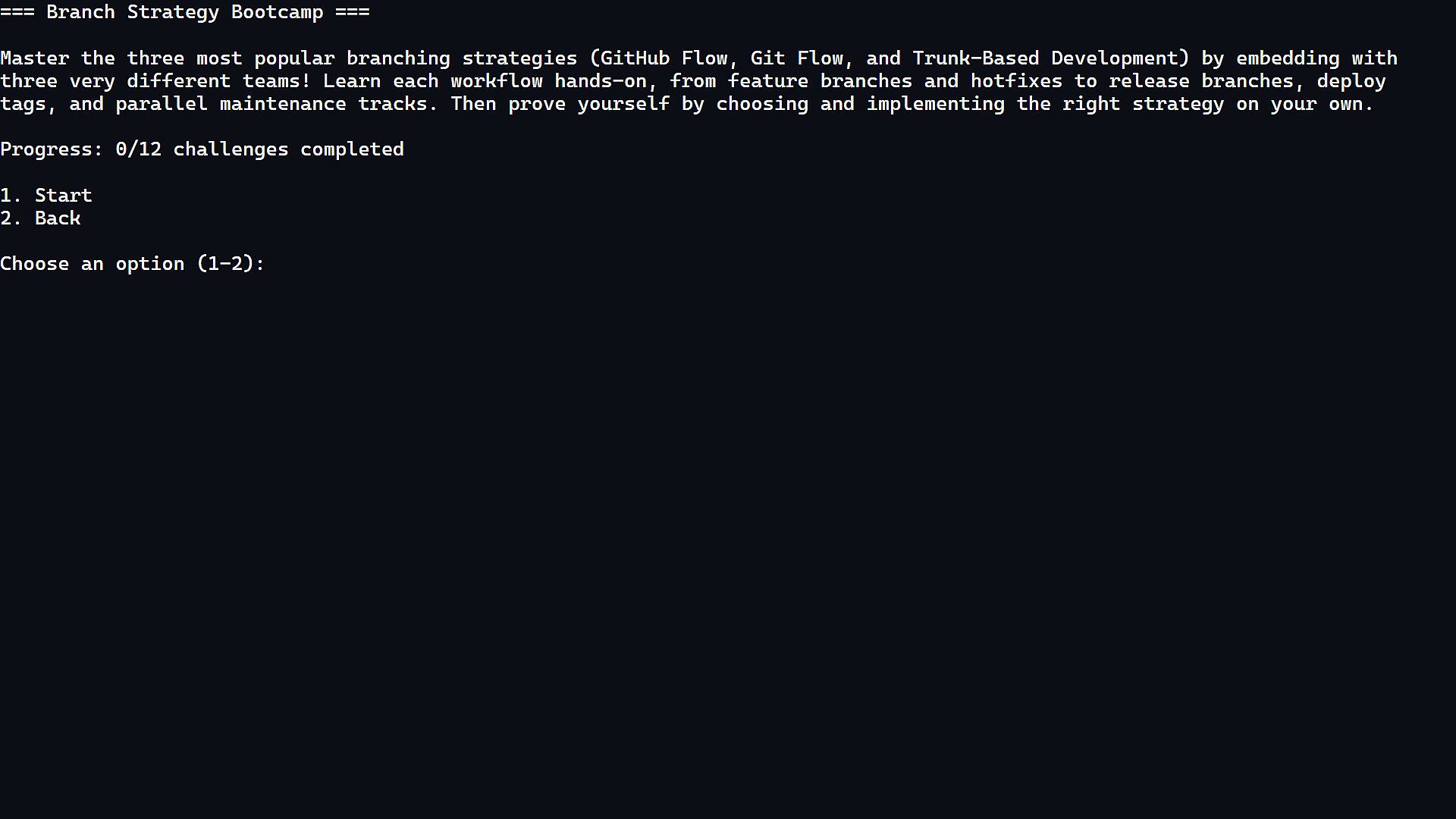
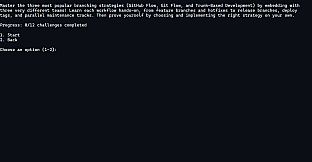
git gud - Branch Strategy Bootcamp is a casual simulation game on PC that builds directly on the terminal-based Git training experience. Players work through realistic version control tasks inside a fully simulated repository and command-line environment, learning how different professional teams structure their branching workflows.
Gameplay
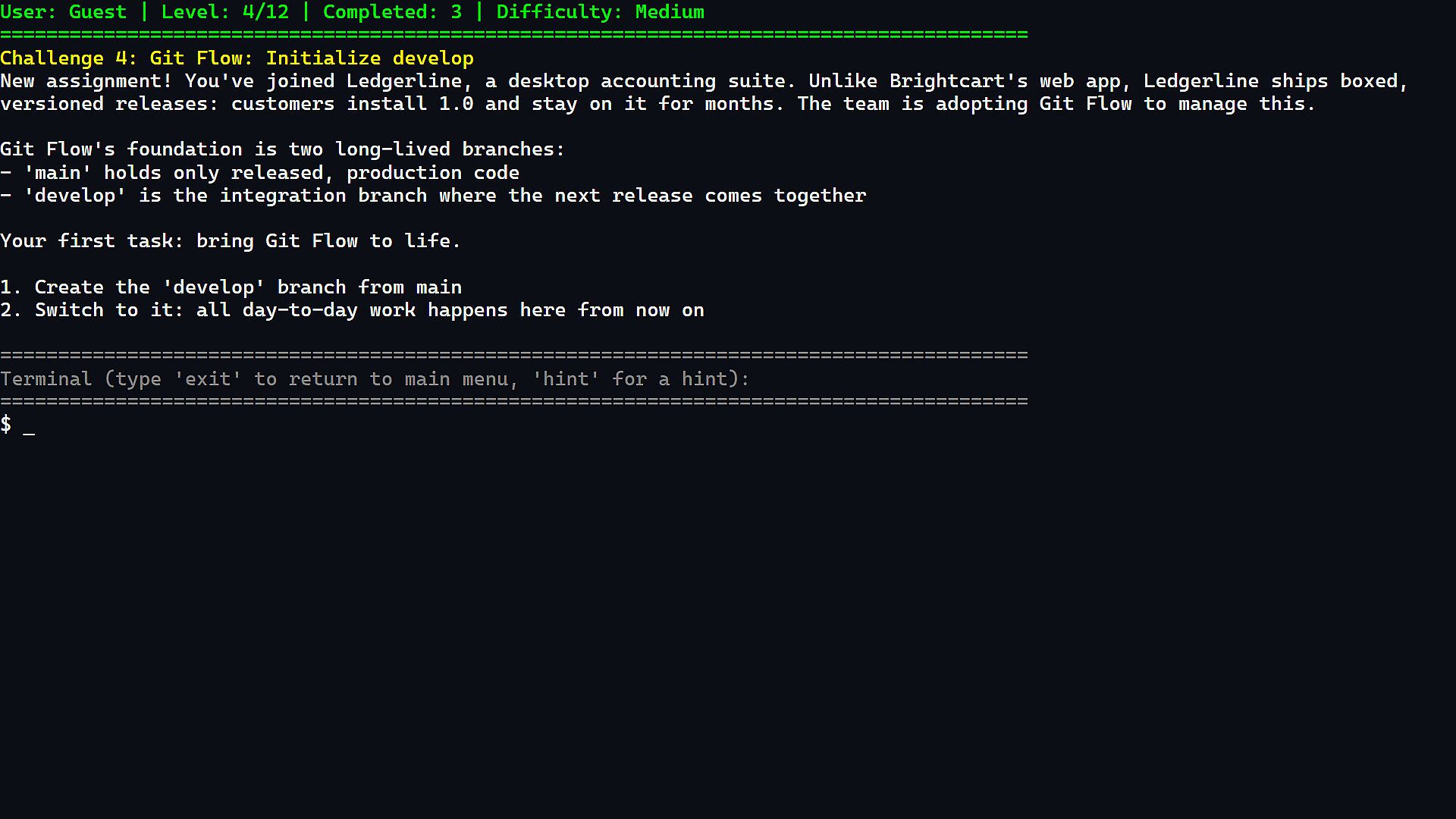
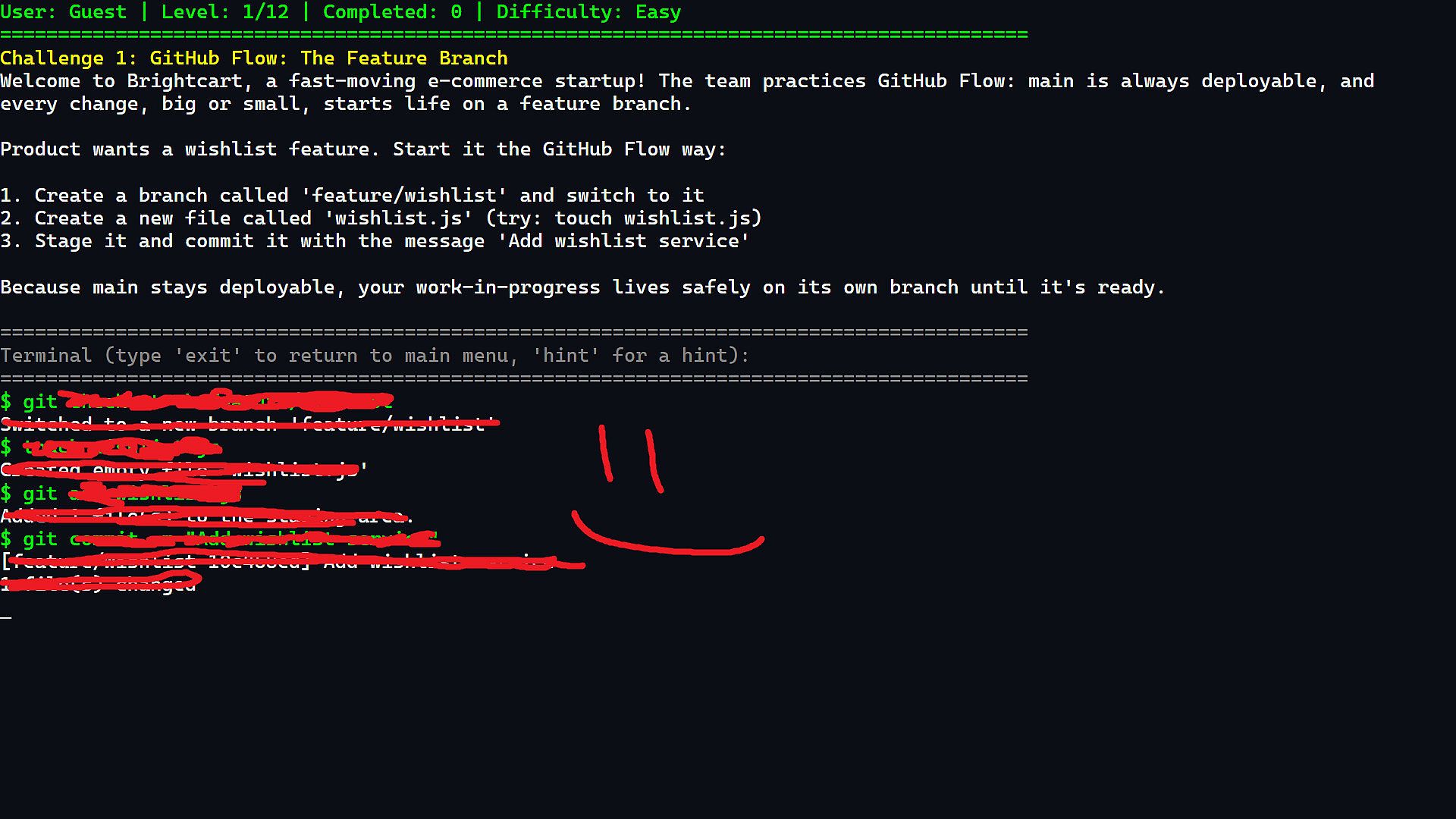
The core loop centers on executing actual Git commands to complete tasks that mirror real development situations. Each scenario places the player inside a company environment where a specific branching approach drives daily work. Commands produce authentic results, including merges, rebases, tags, and conflict resolutions that behave exactly as they would in a live repository.
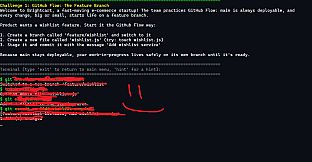
Progression follows a rotation across three distinct company settings. At the first stop, the focus stays on creating a feature branch, completing the work, and merging it cleanly back without extra steps. The next setting requires rapid hotfix delivery straight to the main line while maintaining deploy readiness. Later rotations introduce parallel development and release lines that must stay synchronized so fixes reach every active branch without duplication.
Mechanics emphasize fidelity to Git semantics. Players create branches, perform merges or rebases, apply cherry-picks across maintenance lines, and generate tags whose output matches real command-line behavior. Narrative framing explains the reasoning behind each workflow choice, turning every task into a decision about why one strategy fits the team's release rhythm better than another.
Game Modes
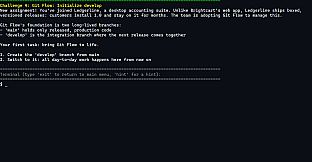
The content pack structures its twelve scenarios around three company rotations that demonstrate separate branching strategies. The first rotation follows a lightweight approach suited to fast iteration and direct merges. The second employs a structured model with dedicated development and release branches that keep production code isolated until ready. The third maintains a single evolving trunk where changes integrate frequently and history stays linear through rebasing.
Within each rotation, challenges scale from guided examples to independent execution. Early tasks supply explicit steps while later ones present only the business situation and require the player to select and implement the full workflow. The final set of scenarios removes all guidance, forcing a complete decision on strategy before carrying out the sequence of branch, merge, release, and tag operations.
Branching Strategies in Practice
Each company rotation highlights trade-offs that appear in actual software teams. Fast-moving environments benefit from minimal process overhead and quick merges that keep momentum high. Teams shipping boxed releases rely on separate lines to stabilize code while new work continues. Infrastructure groups favor frequent integration onto a moving trunk to reduce long-lived branches and maintain a clean commit history.
Players encounter concrete operations that test these differences. Hotfixes must land in multiple branches without reintroducing the original bug. Tags serve as deployment markers whose descriptive output functions like an operations dashboard. Old releases receive targeted fixes through cherry-picks that preserve parallel maintenance lines. These tasks reinforce how command choices affect long-term repository health and release reliability.
Who the Experience Targets
The pack assumes familiarity with basic Git operations and focuses on higher-level workflow decisions. It suits developers who have completed introductory levels and now want to compare how real teams organize branches for different release cadences. The simulation stays grounded in command-line reality rather than abstract puzzles, so every action translates directly to production use.
Is It Worth Playing?
Branch Strategy Bootcamp delivers targeted practice for anyone ready to move beyond single-command exercises into full workflow management. The twelve scenarios cover the practical differences between common strategies without requiring external documentation. Players who value seeing why a team chooses one approach over another will find the narrative framing useful for retention and decision-making.
Because the environment replicates real Git behavior exactly, skills transfer immediately to daily work. The final open-ended challenges test whether the player can apply the right strategy independently, which matches the goal of many professional teams. Availability on PC keeps the focus on the command-line interface that matches typical developer setups. Those seeking deeper insight into professional branching patterns will find the rotation structure a direct way to compare options side by side.