

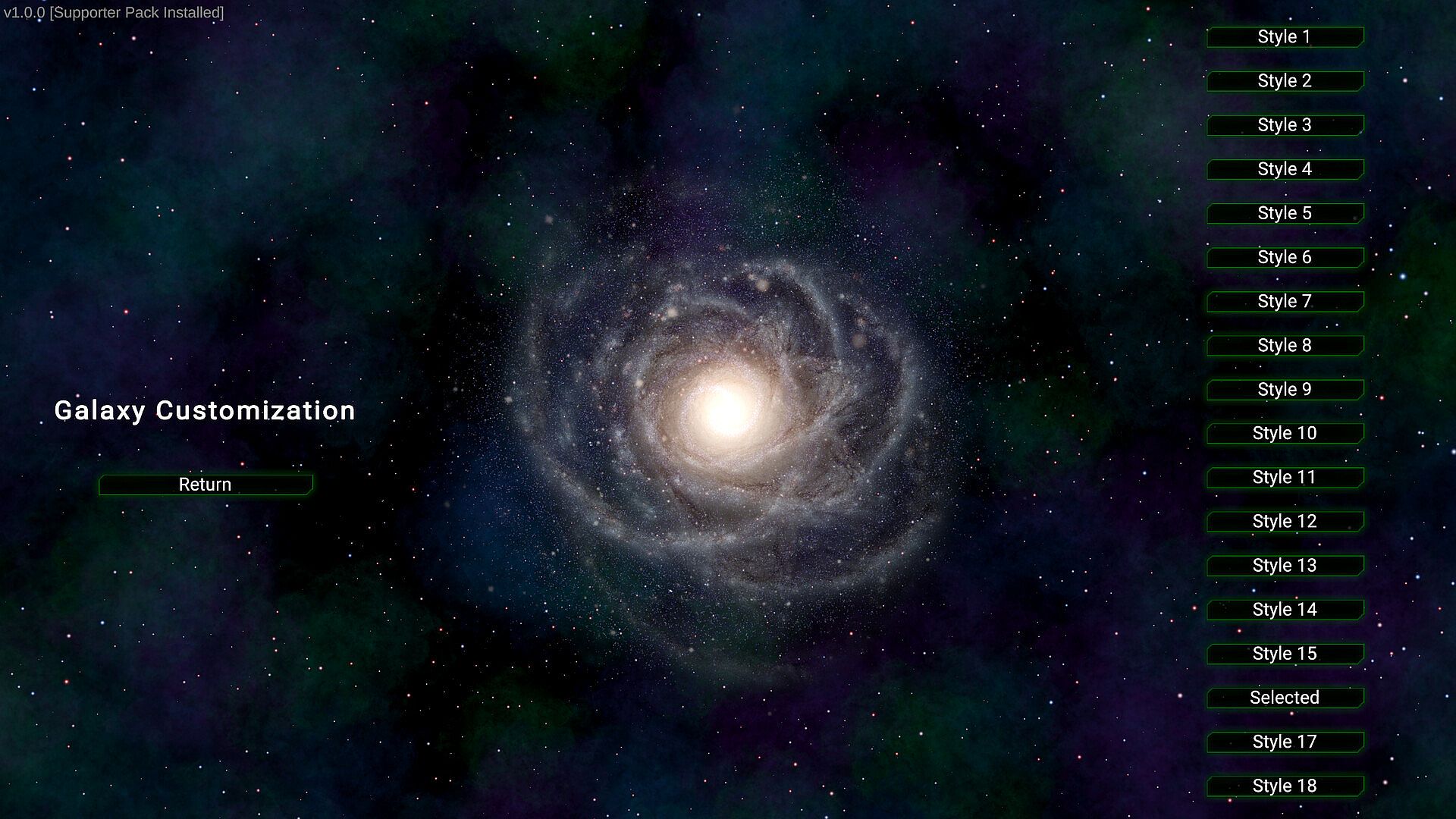
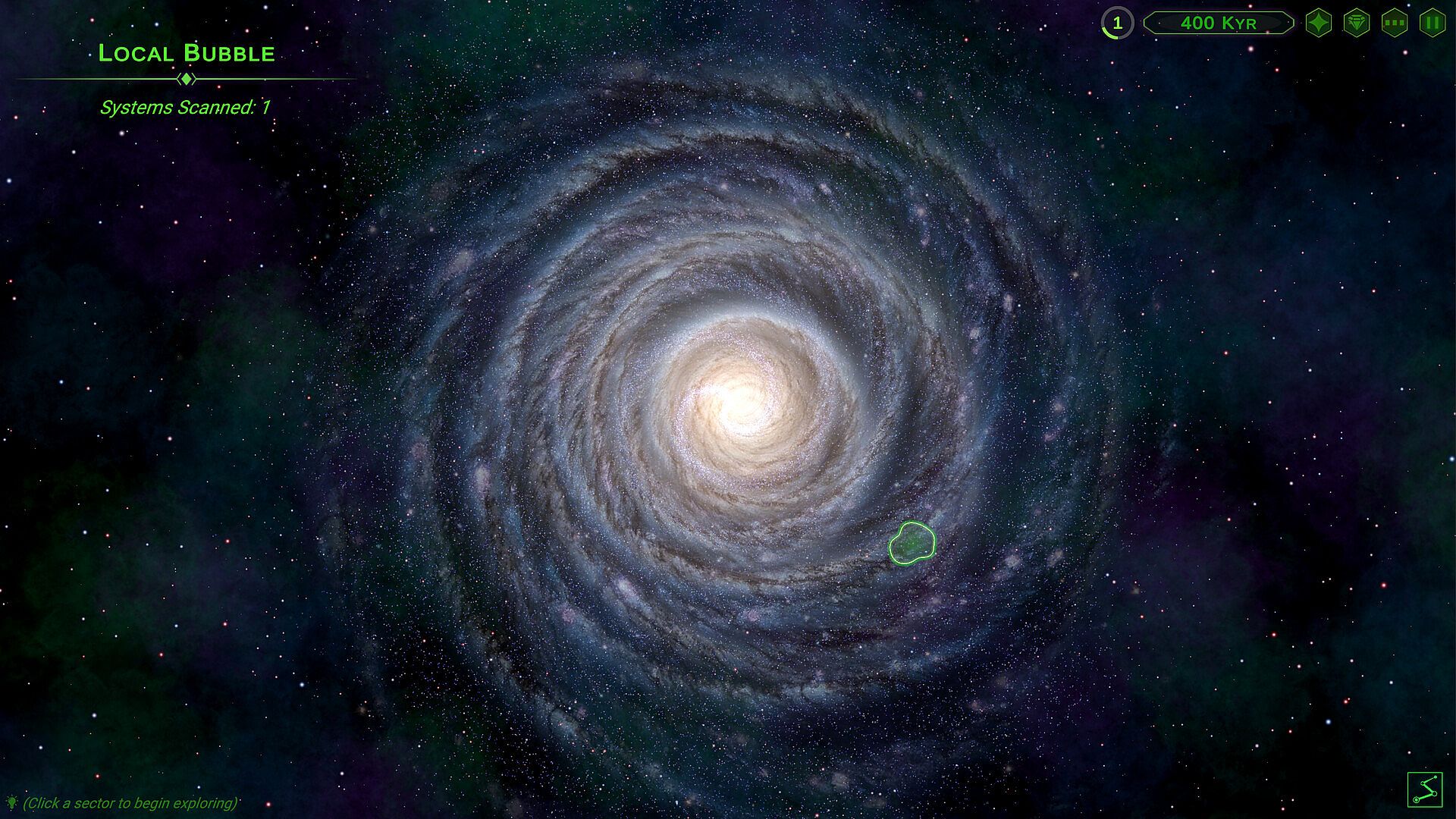
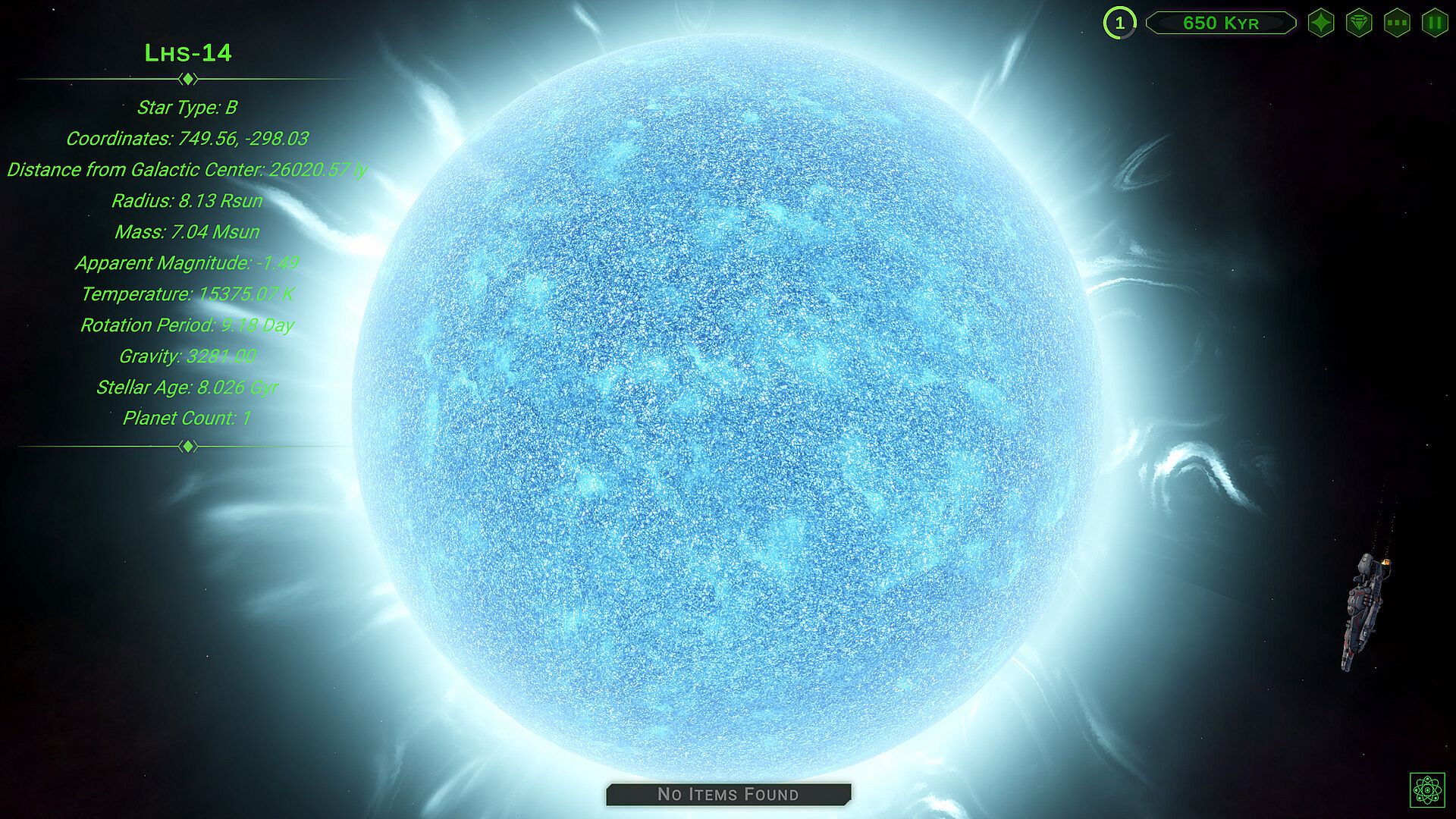

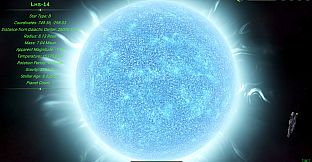
Galactic Simulator is a simulation game that puts players in the role of a cosmic observer. Built as a clicker experience, it explores the Fermi Paradox and the Great Filter theory through the gradual development of stars, planets, and civilizations across a galaxy.
Gameplay
The core loop centers on advancing evolutionary stages defined by the Great Filter. Players interact with variables that influence star formation, planet habitability, the emergence of organic molecules, prokaryotic and eukaryotic cells, multicellular life, intelligent organisms, tribal societies, and full civilizations. The galaxy continues to evolve independently even without direct input, creating a passive simulation layer alongside active clicks.
Camera controls allow free movement with WASD keys, rotation via Q and E, and zoom with Z and C. Leaderboards track standout planets created by players worldwide. A dedicated screensaver mode displays the evolving galaxy in full screen for extended viewing without active play.
Game Modes
Three distinct modes shape how the simulation unfolds. Casual Mode sets the success rate for most events and Great Filter transitions at 50 percent, offering a balanced pace suitable for relaxed sessions. Realistic Mode applies more grounded probabilities drawn from real-world data to mirror actual cosmic conditions. Sandbox Mode removes resource constraints entirely, enabling free time advancement through the universe timeline for unrestricted experimentation.
Multiplayer support extends these systems into shared galaxies. Players can collaborate online or across platforms to build and observe a single evolving galaxy together, with cross-platform functionality ensuring broad accessibility.
Additional Features
Steam achievements recognize progress through the evolutionary stages and galaxy milestones. Cloud saves and family sharing further support consistent play across sessions. The simulation incorporates the Drake equation components, letting players adjust parameters such as star formation rates, habitable planet frequency, and civilization lifespan to observe their effects on detectable life.
Is It Worth Playing?
Reception stands at mostly positive based on dozens of user reviews, reflecting appreciation for the thoughtful integration of scientific concepts into an accessible clicker format. The game suits those interested in space simulation, idle progression mechanics, or the scientific questions surrounding extraterrestrial life. Its single-player and co-op options accommodate both solo observers and groups seeking collaborative galaxy building. Ongoing availability on PC with regular language support makes it a straightforward choice for fans of simulation titles focused on long-term evolution rather than fast-paced action.