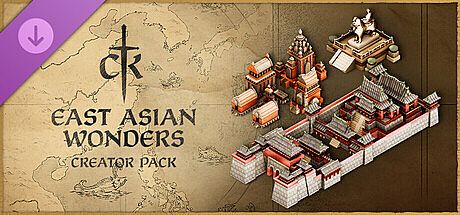



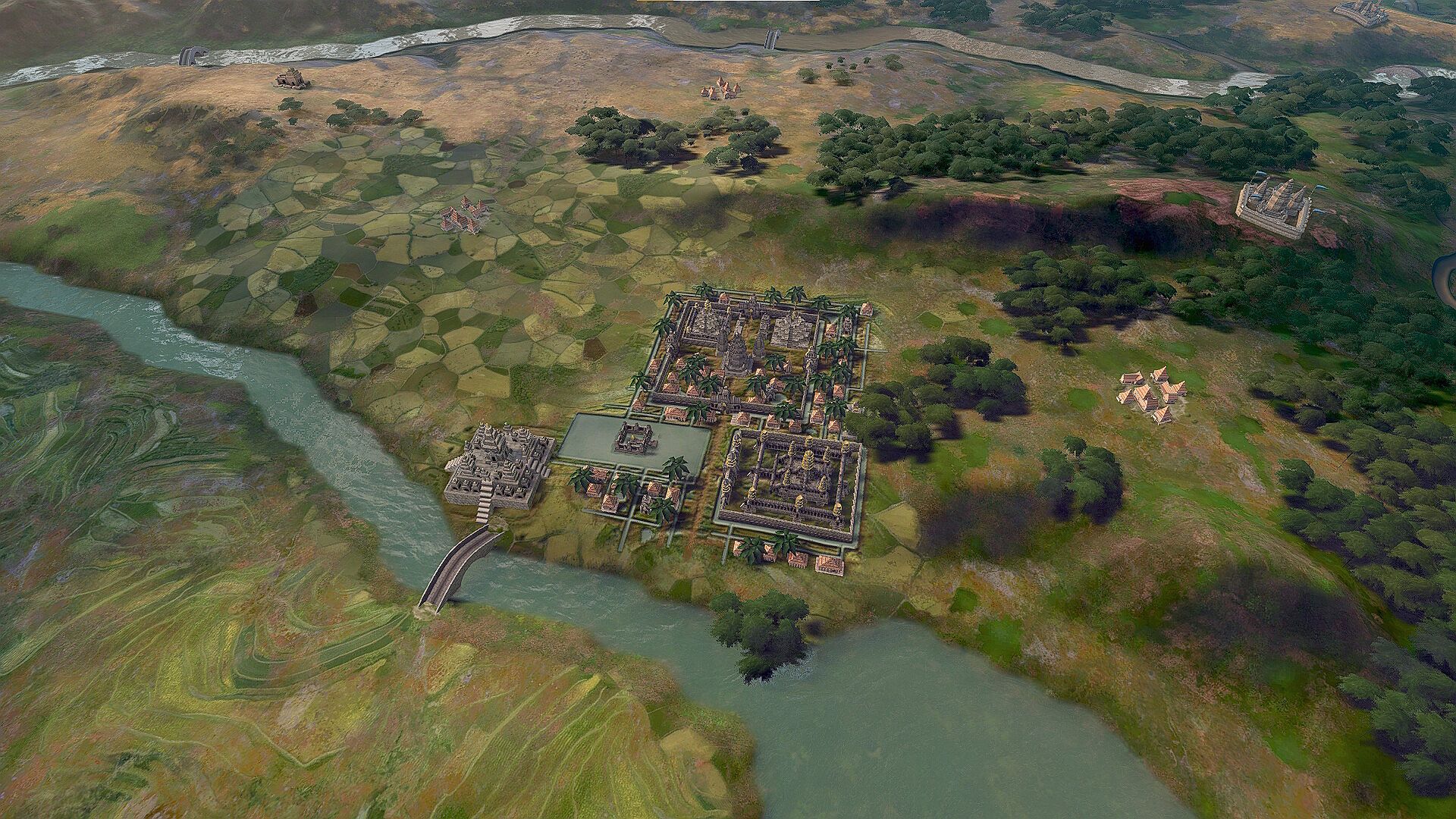
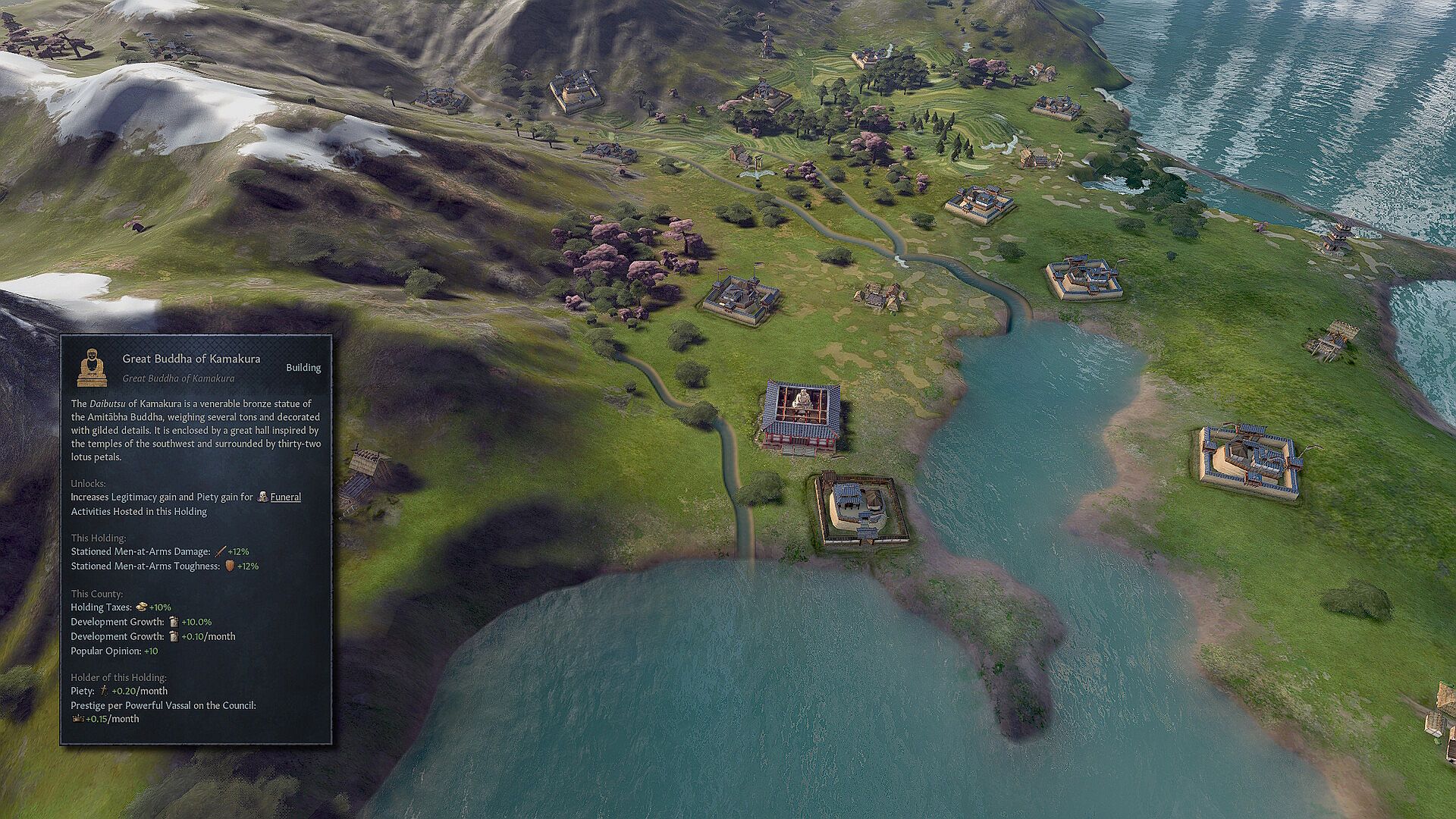
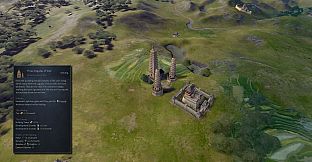
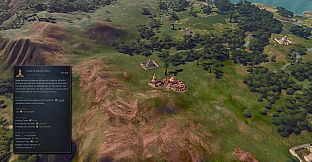
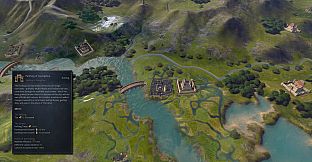
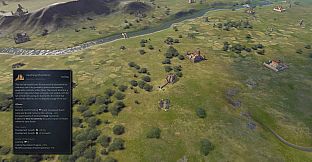
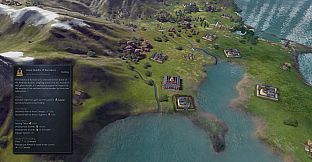
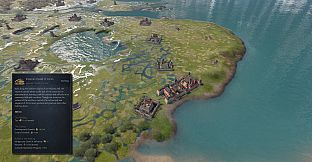
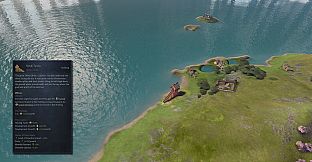
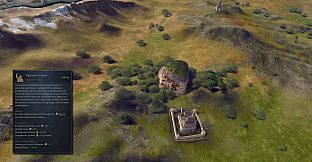
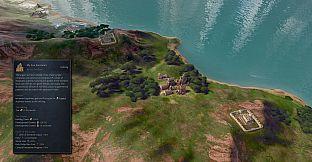
Crusader Kings III East Asian Wonders é um pacote cosmético que enriquece a experiência de simulação de RPG de grande estratégia de Crusader Kings III no PC. O conteúdo traz 22 marcos históricos do Leste e Sudeste Asiático para o mapa, permitindo que jogadores visualizem construções como o Grande Buda de Kamakura, o Templo de Confúcio e o complexo de Angkor Wat dentro de seus domínios. Essas adições aumentam o detalhe visual durante campanhas ambientadas na Ásia medieval, sem alterar mecânicas ou equilíbrio do jogo.
Jogabilidade
O foco central está na administração de personagens dentro de dinastias, expandindo e consolidando reinos por meio de diplomacia, guerra e política interna. Os jogadores escolhem datas de início que os colocam em diferentes contextos históricos e conduzem seus governantes por decisões pessoais que afetam sucessão, alianças e desenvolvimento cultural. Com East Asian Wonders, monumentos detalhados aparecem nas regiões correspondentes, oferecendo contexto visual para campanhas que envolvem esses territórios e reforçando a sensação de escala na gestão de grandes reinos.
A progressão dos personagens depende de escolhas de estilo de vida que desenvolvem habilidades como administração ou intriga, além de cadeias de eventos que refletem as consequências das ações anteriores. Os tipos de governo variam entre estruturas feudais, sistemas de clã e modelos administrativos, cada um com mecânicas próprias para relações entre vassalos e aplicação de leis. Os marcos cosméticos se integram naturalmente a esse sistema, surgindo como elementos fixos no mapa que os jogadores encontram durante expansões ou viagens, acrescentando atmosfera às províncias asiáticas sem introduzir novas regras.
Modos de Jogo
Crusader Kings III oferece campanhas single-player em que um jogador dirige uma dinastia ao longo de séculos, reagindo a eventos aleatórios e ações de rivais em tempo real. Sessões multiplayer permitem que vários participantes entrem no mesmo mundo, cada um controlando reinos diferentes e interagindo por meio de tratados, conflitos ou laços dinásticos compartilhados. Esses formatos permanecem inalterados com East Asian Wonders, que apenas adiciona os novos marcos ao mapa existente para que todos os jogadores possam vê-los.
Antes de iniciar, é possível ajustar as regras do jogo para modificar o nível de precisão histórica ou elementos de dificuldade, como a frequência de certos eventos ou mecânicas de independência para territórios distantes. Os jogadores costumam combinar essas opções com diferentes datas de início para criar experiências variadas, seja acompanhando a vida de um único governante ou acompanhando uma linhagem por várias gerações.
Aprimoramentos Visuais e Integração ao Mapa
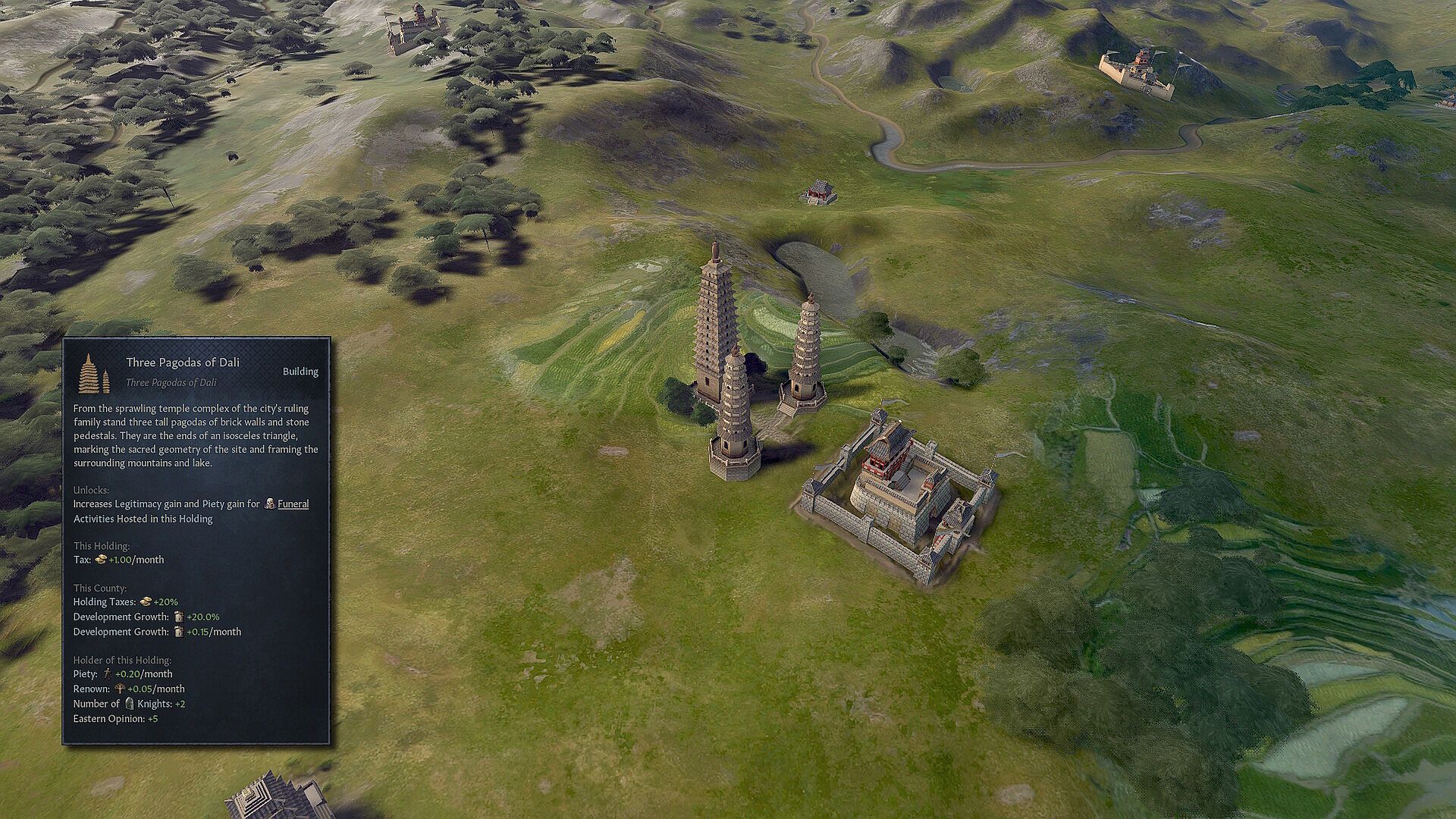
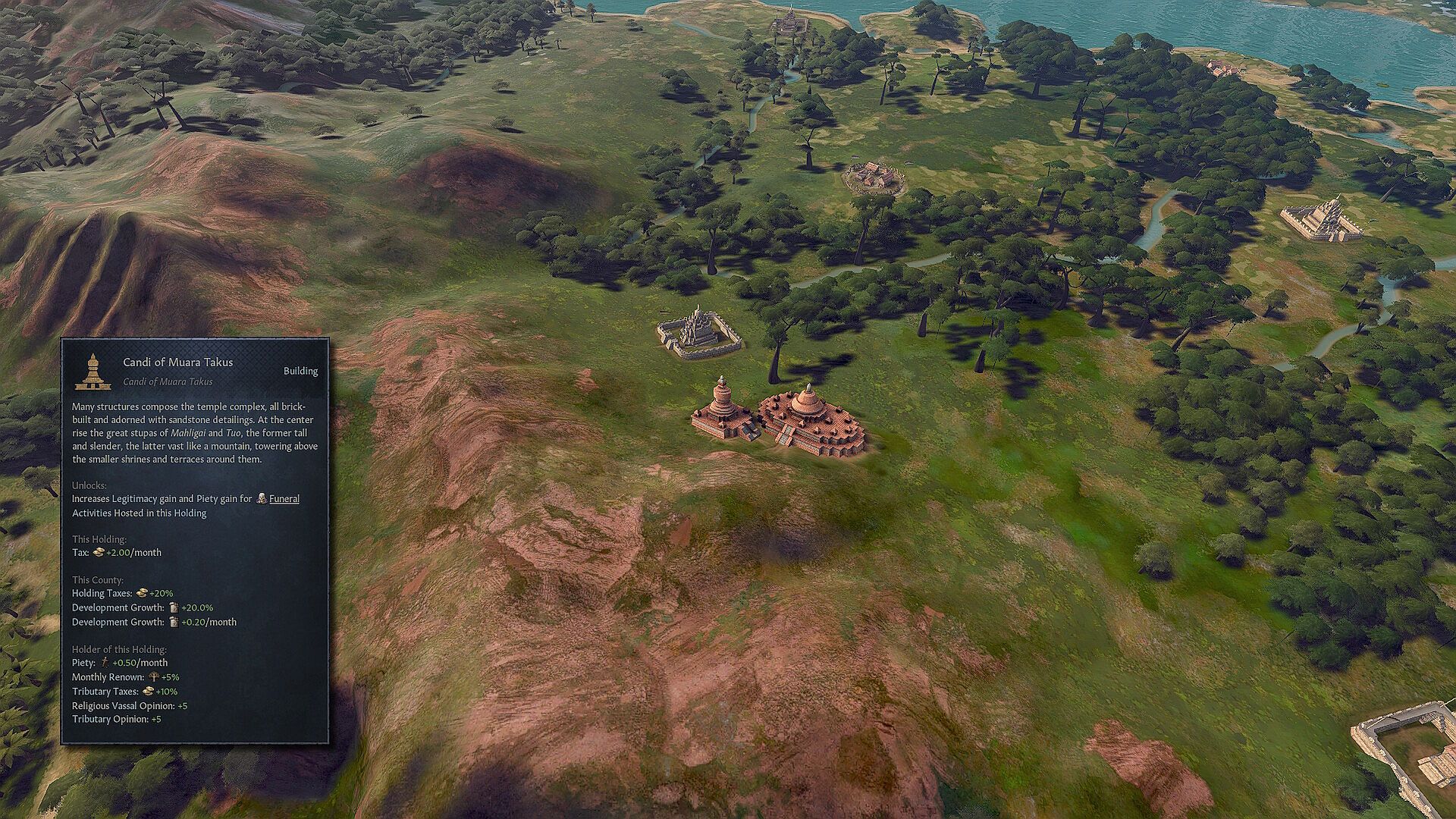
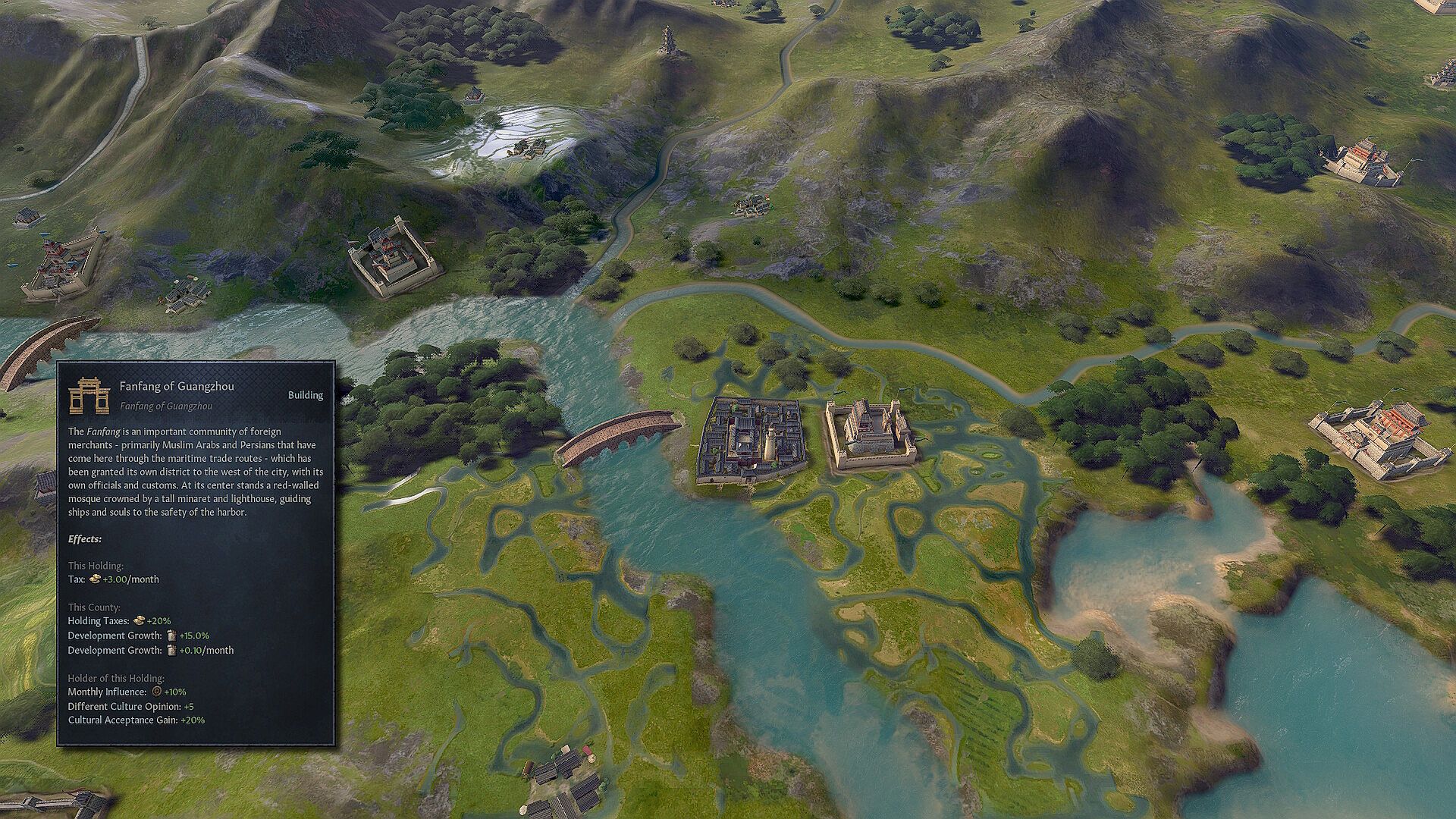
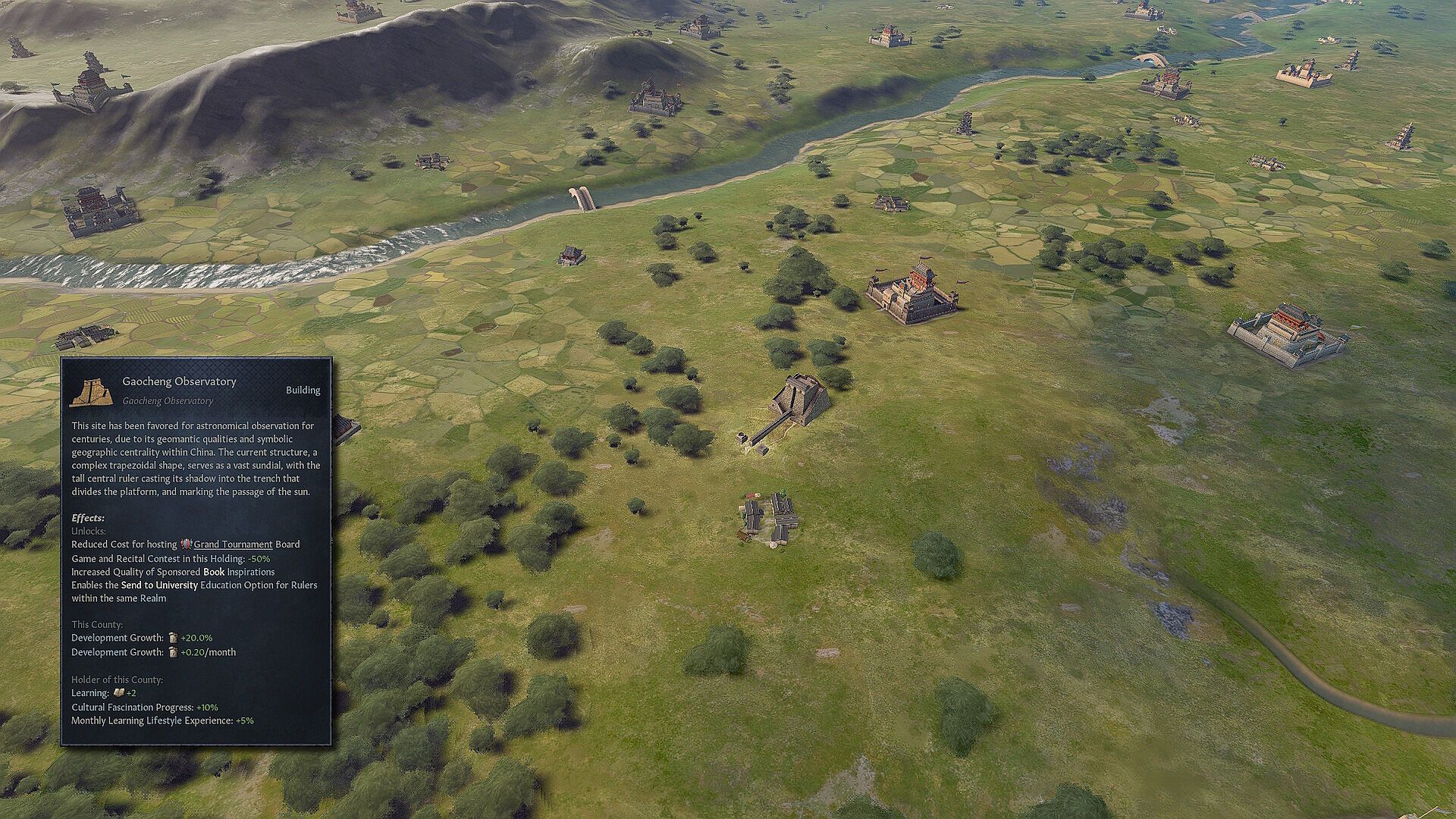
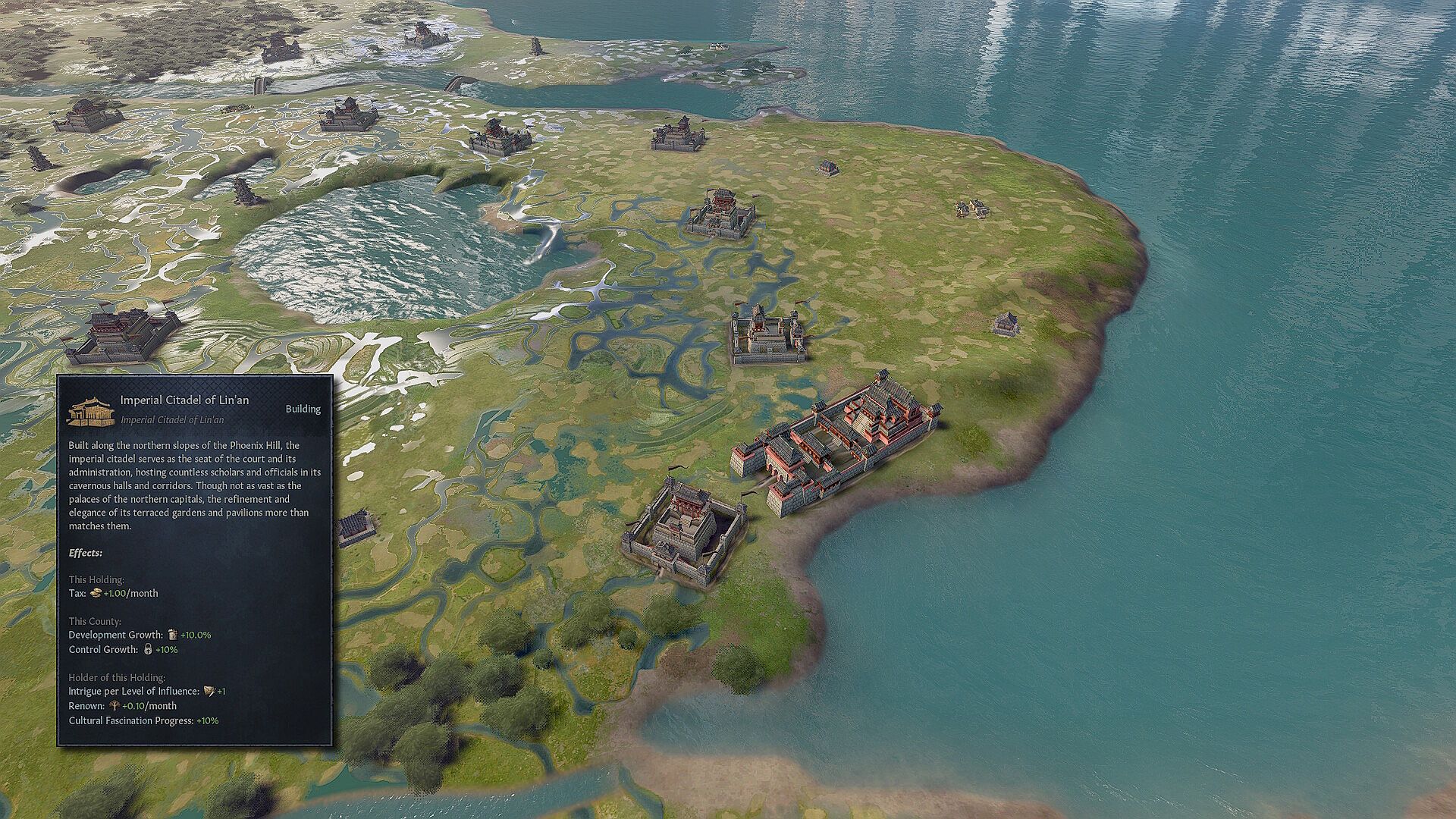
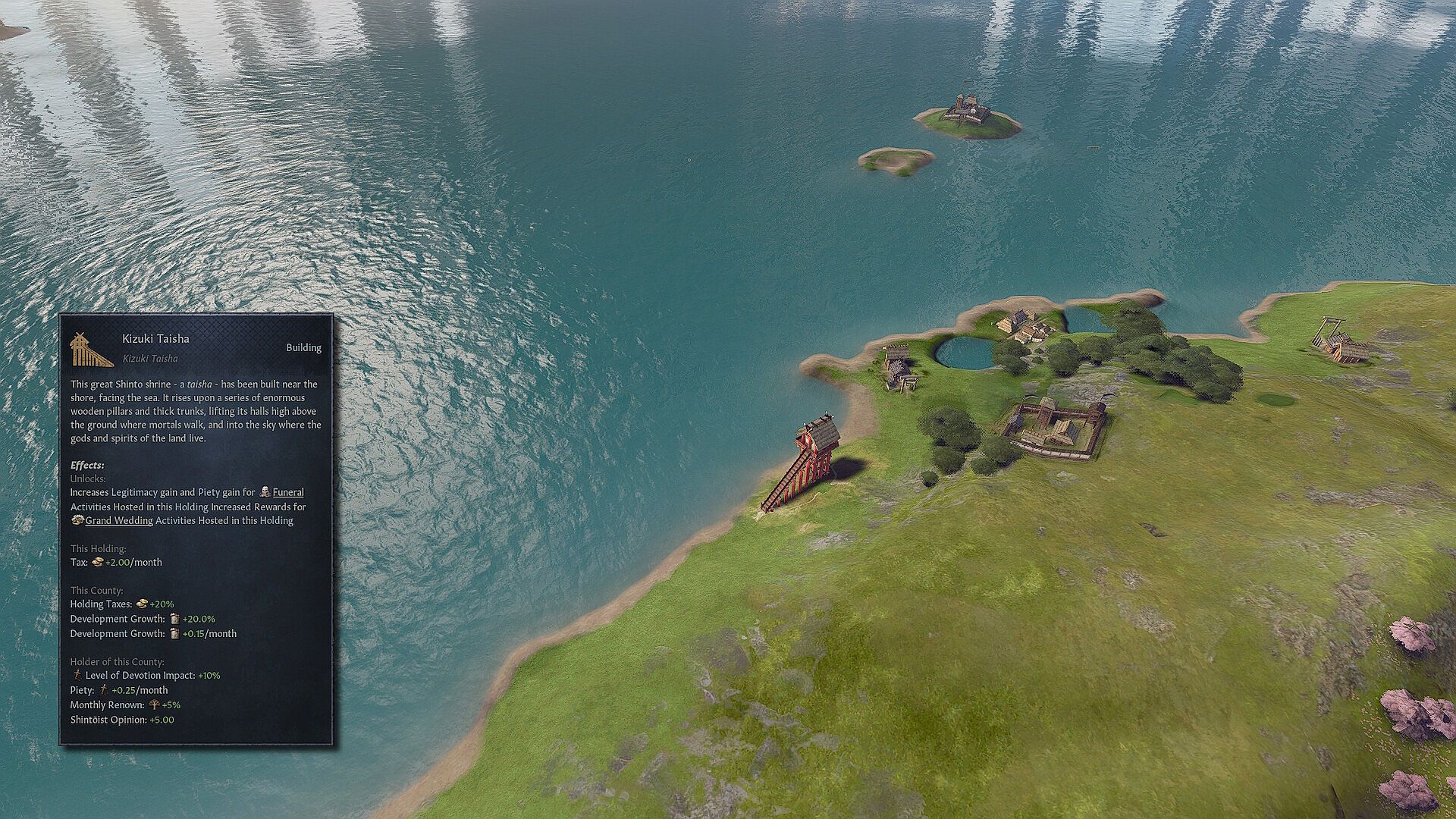
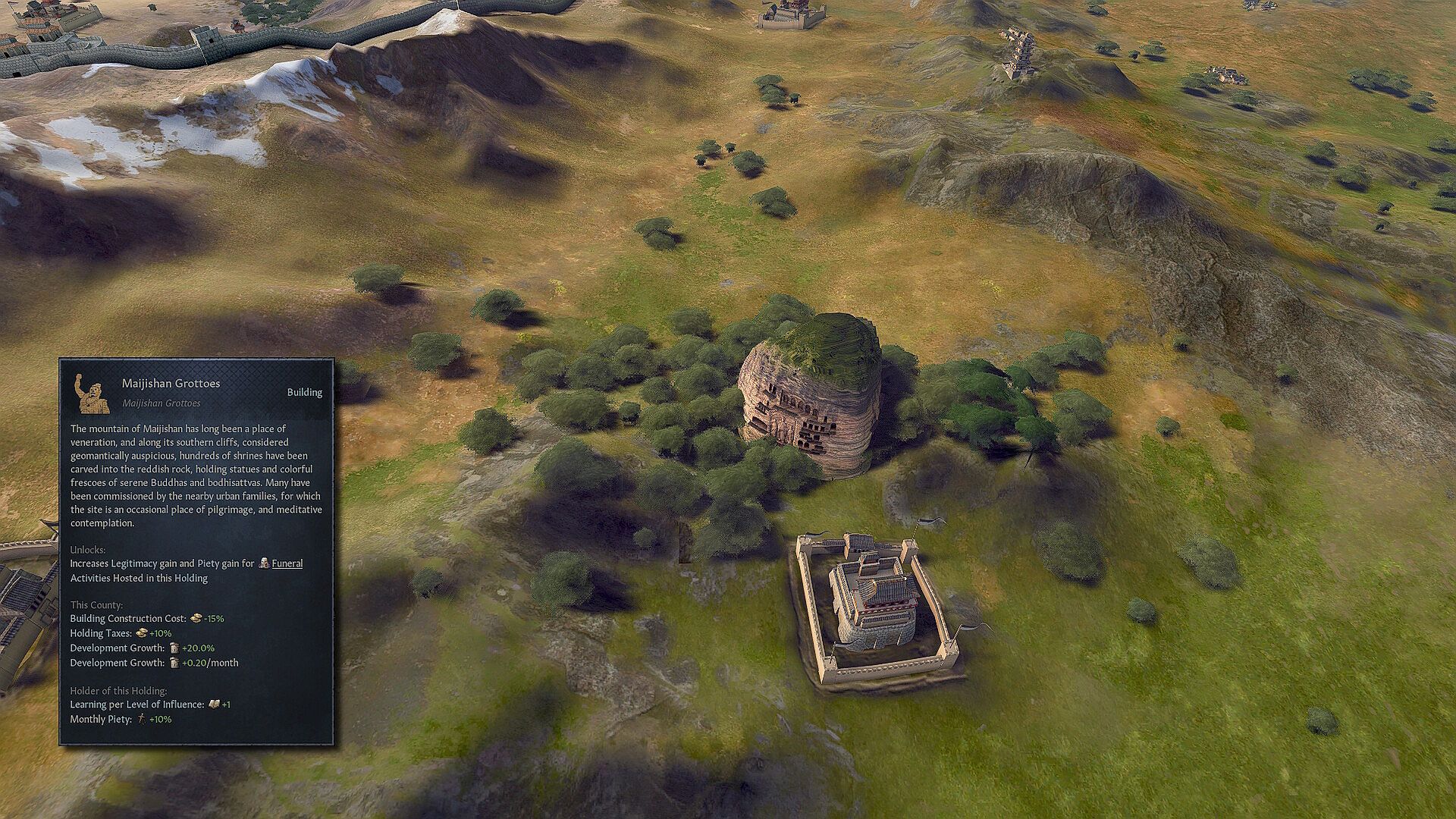
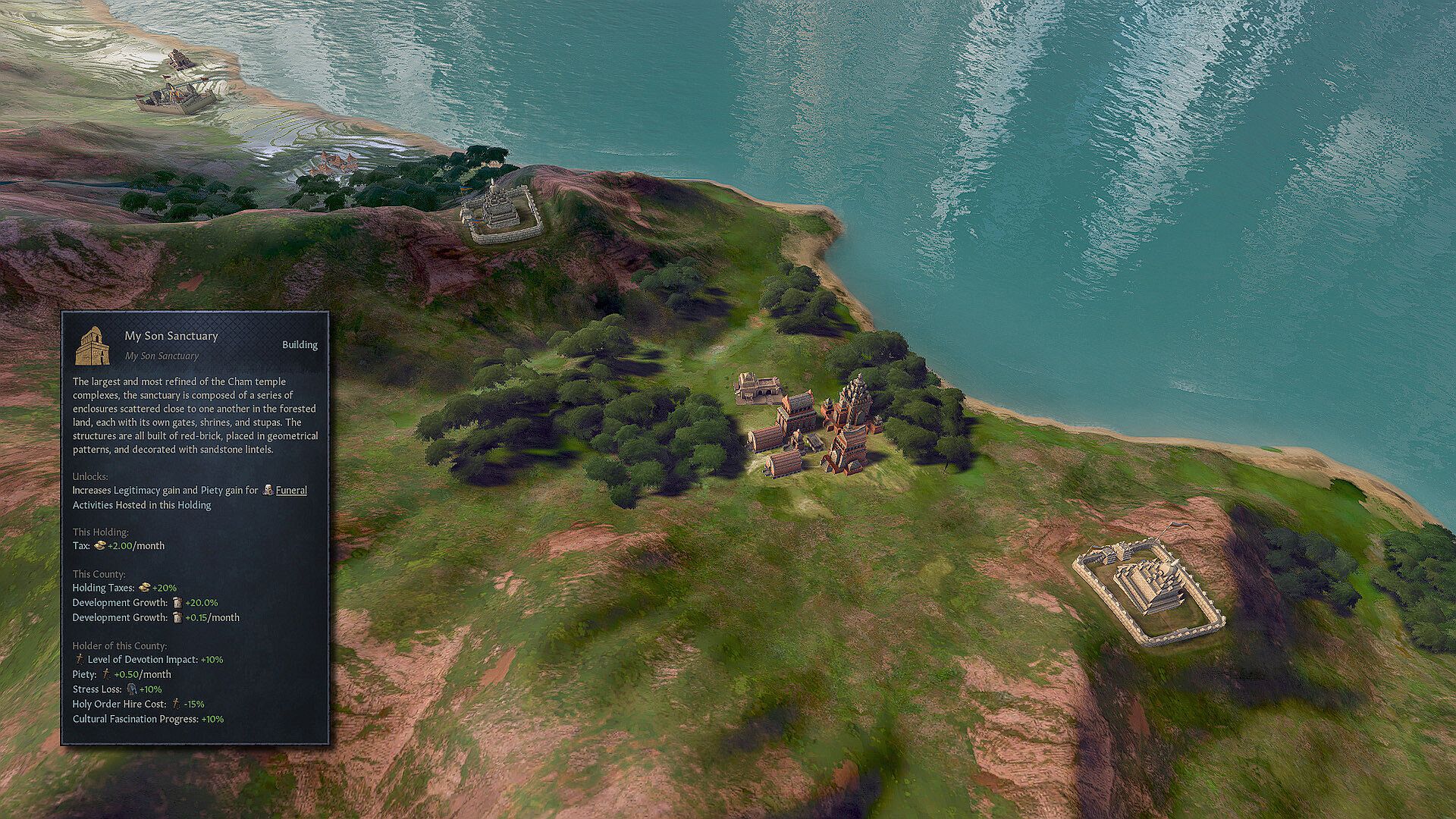
O pacote foca especificamente em locais do Leste e Sudeste Asiático, incluindo representações de Kizuki Taisha, o Túmulo de um Rei de Goguryeo, o Leão de Ferro de Cangzhou, o Observatório de Gaocheng, as Grutas de Maijishan, a Academia Yuelu, a Cidadela Imperial de Lin'an, o Fanfang de Guangzhou, o Santuário de My Son, a Baía de Ha Long, as Três Pagodes de Dali, os Fornos de Thuriang, a Pirâmide de Lingapura, o Candi de Muara Takus, o Palácio de Wilwatikta, o Vulcão Gunung Api, as Encostas de Russet e os Megálitos de Sulawesi. Esses elementos aparecem como modelos tridimensionais no mapa estratégico, visíveis tanto na visão geral dos reinos quanto em aproximações mais detalhadas.
Essas atualizações visuais são especialmente relevantes para jogadores cujas campanhas se estendem por territórios asiáticos, onde os marcos servem como pontos de referência reconhecíveis em meio a redes de conquista e comércio. O criador do conteúdo, Pietro "PiGu" Cavalli, baseou-se em referências históricas consolidadas para garantir que as localizações respeitem a precisão geográfica dentro do universo do jogo.
Vale a Pena Jogar?
Crusader Kings III recebe suporte contínuo por meio de atualizações regulares, incluindo pacotes de criadores como East Asian Wonders, lançado em março de 2026. A recepção dos jogadores ao jogo base é muito positiva nas principais plataformas de avaliação, com destaque para a profundidade da narrativa centrada em personagens e as opções estratégicas disponíveis. Quem aprecia a construção de dinastias em longo prazo e a tomada de decisões no mapa encontrará nos novos marcos uma melhoria visual que enriquece a imersão em campanhas focadas na Ásia.
O pacote é indicado para jogadores que já possuem Crusader Kings III e desejam maior variedade ambiental em suas campanhas. Ele exige a posse do jogo base e se integra diretamente às partidas existentes, sem relatos de problemas de compatibilidade nos canais oficiais. Para quem está começando, a combinação dos sistemas já estabelecidos com esses detalhes no mapa oferece uma entrada acessível à proposta do jogo, centrada em narrativas emergentes e na administração de reinos.