

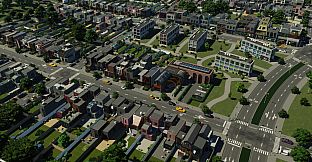
Cities: Skylines II is a city-building simulation that places players in charge of designing, zoning, and managing every aspect of an expanding urban area on PC. The Modern Suburbs Creator Pack adds a focused set of contemporary assets that expand options for low-density residential development.
Gameplay
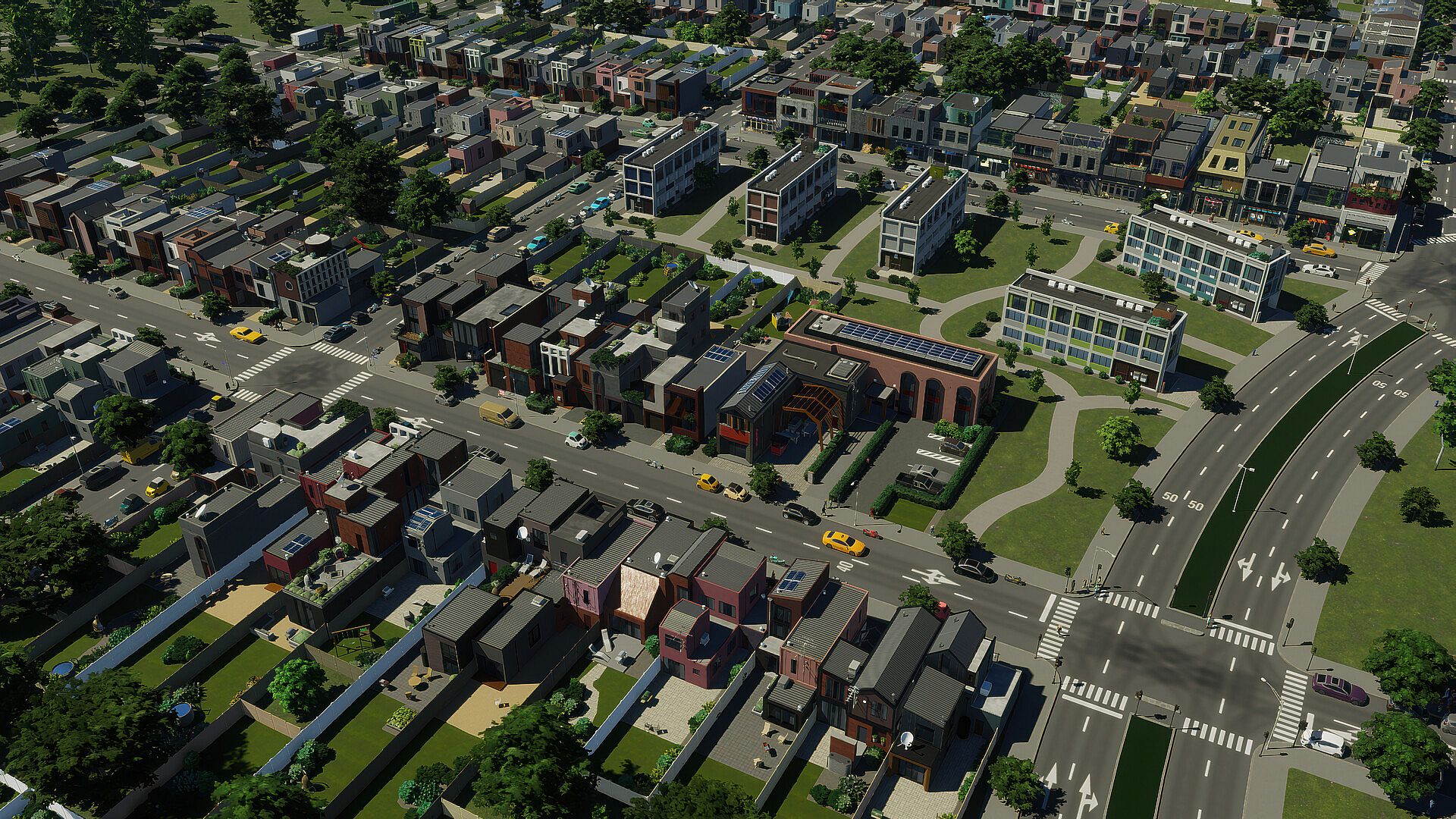
Players lay out road networks, apply zoning rules, and watch buildings grow through multiple stages as demand and services align. The pack introduces two new low-density zones built around row housing. One zone features single-household contemporary row houses available in five growable levels across 1x2, 1x4, and 1x6 cell lots. These structures use modern materials and designs that integrate with existing European and North American residential areas or serve as standalone neighborhoods.
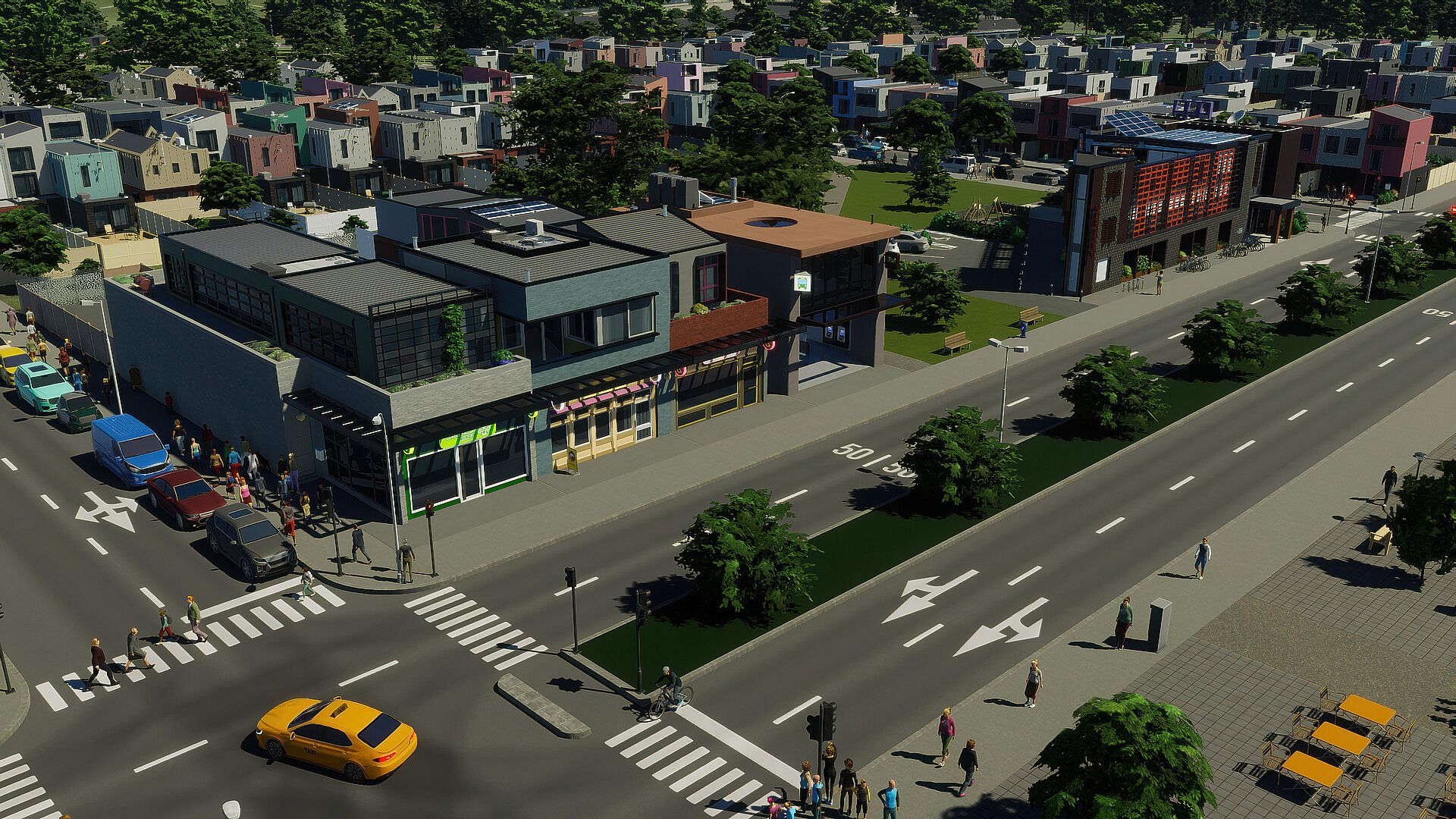
The second zone combines residential units above ground-floor commercial spaces in another set of five growable levels. This mixed approach supports street-level activity while maintaining a suburban character. Four service buildings accompany the zones: Civic Hall, Community Learning Centre, Contemporary Subway Station, and Community Library. Each fits the scale and aesthetic of the new row housing. Upgrades include a Supported Housing Unit for the Civic Hall and a Community Garden Extension for the Community Learning Centre, allowing further customization as neighborhoods develop.
Game Modes
Cities: Skylines II centers on a single-player sandbox experience where builders start with an empty map and shape a city through zoning, infrastructure, and ongoing management. Growth occurs organically as residential, commercial, and industrial demand rises, with buildings evolving across levels to reflect changing needs. The Modern Suburbs pack slots directly into this loop by supplying new zoning options that support gradual, layered residential expansion at the low-density scale.
Builders can apply the new zones from the start of a city or add them as infill to mature districts. The five-level progression in both row housing zones mirrors the core simulation loop, where households upgrade properties over time based on available services and economic conditions. Service buildings provide the supporting infrastructure required for these zones to function within the broader city economy.
Design and Integration
The assets emphasize realistic street-level detail. Contemporary facades and material choices create visual variety that blends with higher-density downtown zones or established row-house districts. Lot sizes allow flexible placement along streets of varying widths, while the mixed-use zone adds commercial vitality without shifting to higher-density zoning. Service buildings maintain consistent modern styling so they read as natural extensions of the residential fabric rather than separate elements.
Is It Worth Playing?
The base game continues to receive patches that address performance, simulation depth, and quality-of-life features under its current developer. The Modern Suburbs pack supplies targeted residential variety for players who prioritize visual coherence and neighborhood character in their cities. It appeals most to those already invested in the simulation's zoning and growth systems who want additional low-density options that evolve across multiple stages.
Players focused on large-scale infrastructure or specialized commercial districts may find the pack narrower in scope, while those building mixed suburban and inner-city areas gain immediate tools for more organic-looking development. Availability requires the base game, and the content integrates seamlessly with existing residential zones from other packs.