


Card Reversi é um jogo casual de simulação que combina coleção de cartas com controle de território em um tabuleiro compacto de 3x3. Os jogadores montam decks a partir de mais de 100 cartas exclusivas, cada uma com valores nas bordas e habilidades especiais, e disputam a maioria do tabuleiro por meio de posicionamento estratégico e viradas. O ciclo principal gira em torno da coleta de moedas para abrir pacotes e criar cartas, permitindo uma progressão mais rápida rumo a decks personalizados para diferentes estilos de jogo.
Gameplay
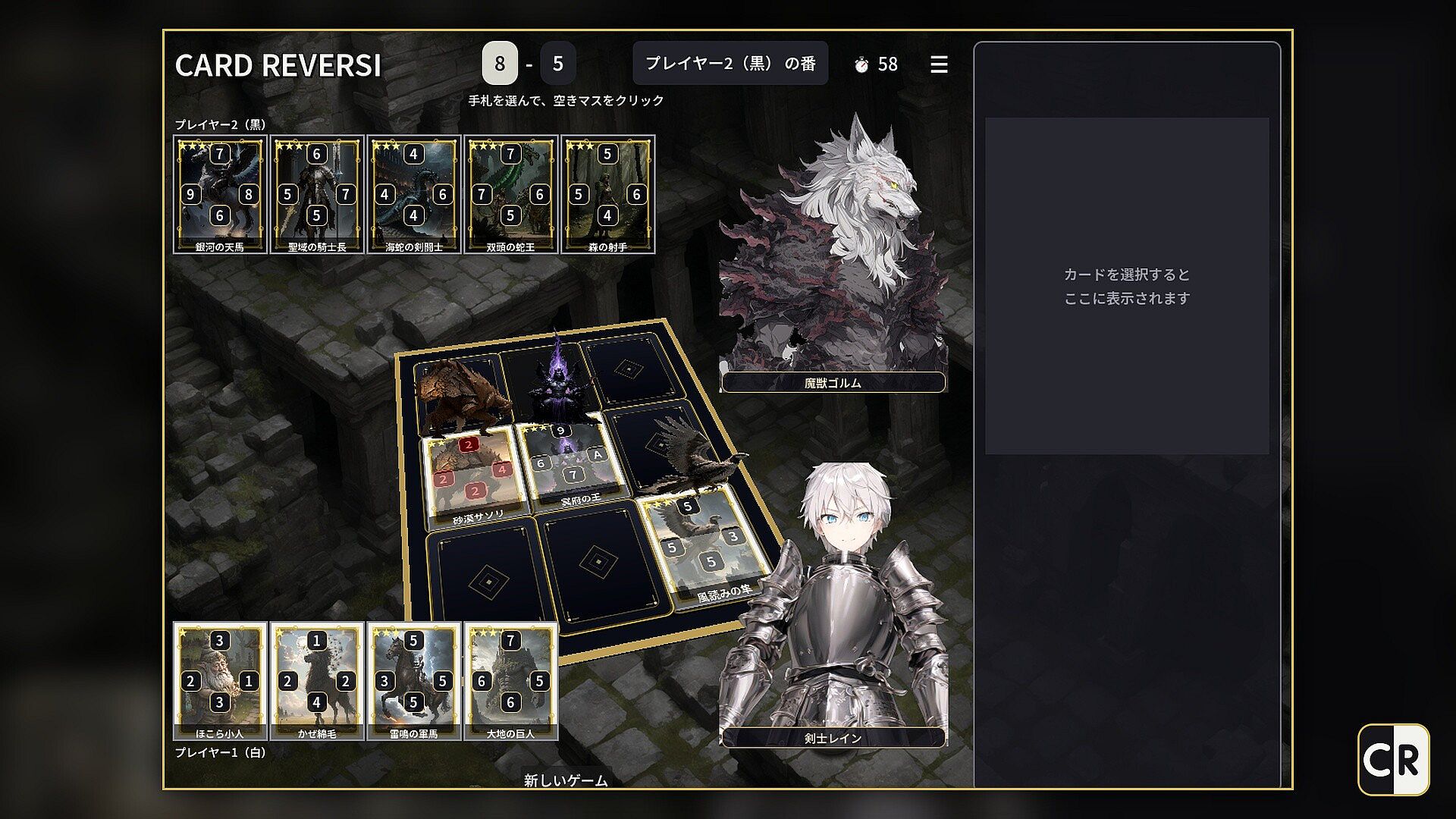
O mecanismo central consiste em posicionar cartas no tabuleiro em turnos alternados. Cada carta exibe um número em seus quatro lados, e quando duas cartas ficam lado a lado, o valor mais alto inverte a carta adversária para a cor do jogador. Essa comparação simples gera reações em cadeia à medida que o tabuleiro é preenchido. Habilidades especiais associadas às estrelas das cartas adicionam camadas de estratégia, como bônus para cartas aliadas, penalidades para oponentes, proteções contra viradas, capturas em cadeia em várias posições e remoção de efeitos.
A construção de decks é parte essencial da preparação. Os jogadores obtêm cartas por meio de pacotes comprados com moedas ou conquistados em partidas, e combinam efeitos ou distribuições numéricas para criar estratégias. O tamanho 3x3 mantém as partidas rápidas e concentradas, recompensando a antecipação de como as habilidades interagem nos espaços limitados. É possível alternar entre uma visualização 2D simples e uma representação 3D mais detalhada a qualquer momento, inclusive durante as partidas.
Modos de Jogo
O conteúdo single-player gira em torno de uma campanha narrativa dividida em seis capítulos, além de um estágio secreto liberado por condições específicas. Concluir a história desbloqueia a variante HARD, que aumenta o desafio dos oponentes controlados pelo CPU. Essas partidas testam a montagem de decks e o timing sem pressão externa.
As opções multiplayer incluem partidas diretas com amigos, matchmaking aleatório e modo ranqueado que registra pontuações e exibe tabelas de líderes. Todos os formatos online seguem as mesmas regras de posicionamento e virada, garantindo consistência entre o treino solo e as sessões competitivas. Partidas contra CPU servem como ponte para aprender ou testar novos decks antes de entrar em ambientes player versus player.
Progressão e Coleção
As moedas impulsionam o sistema de coleção e podem ser obtidas por meio de jogo regular ou compra direta. Elas financiam pacotes de cartas que ampliam o elenco disponível e permitem a criação de cartas específicas para completar conjuntos ou refinar estratégias. Esse ciclo incentiva partidas repetidas para acumular recursos enquanto se experimenta diferentes combinações de habilidades no tabuleiro.
O jogo oferece suporte a vários idiomas na interface e legendas, ampliando a acessibilidade. Os requisitos de sistema são modestos, rodando em hardware padrão com compatibilidade OpenGL ou Metal, o que o torna adequado para sessões casuais em diversos PCs.
Vale a pena jogar?
Card Reversi é indicado para quem gosta de jogos de estratégia compactos que unem construção de decks a decisões táticas imediatas em um tabuleiro pequeno. A combinação de comparações numéricas e interações de habilidades cria profundidade sem complexidade excessiva, tornando-o acessível para iniciantes em batalhas de cartas e ao mesmo tempo envolvente para sessões repetidas. Os recursos online ranqueados adicionam um aspecto competitivo para quem busca progressão por meio de pontuações e tabelas de líderes, enquanto a campanha oferece conteúdo solo estruturado com dificuldade crescente.
Com foco na coleção e criação de cartas por meio de moedas, o jogo recompensa o jogo constante por meio de recursos conquistados, além de compras opcionais para acelerar a montagem de decks. O lançamento iminente permite que os primeiros jogadores explorem todos os modos e cartas desde o início, especialmente se valorizam condições de vitória claras baseadas no controle do tabuleiro em vez de sessões longas. Quem se interessa por mecânicas de inversão de território combinadas com efeitos personalizáveis de cartas encontrará uma correspondência direta nos sistemas apresentados.